Start with a conversation.
Tell Pixo what you’re making—your idea, audience, style, and length. The agent turns your brief into a script and a production-ready plan.
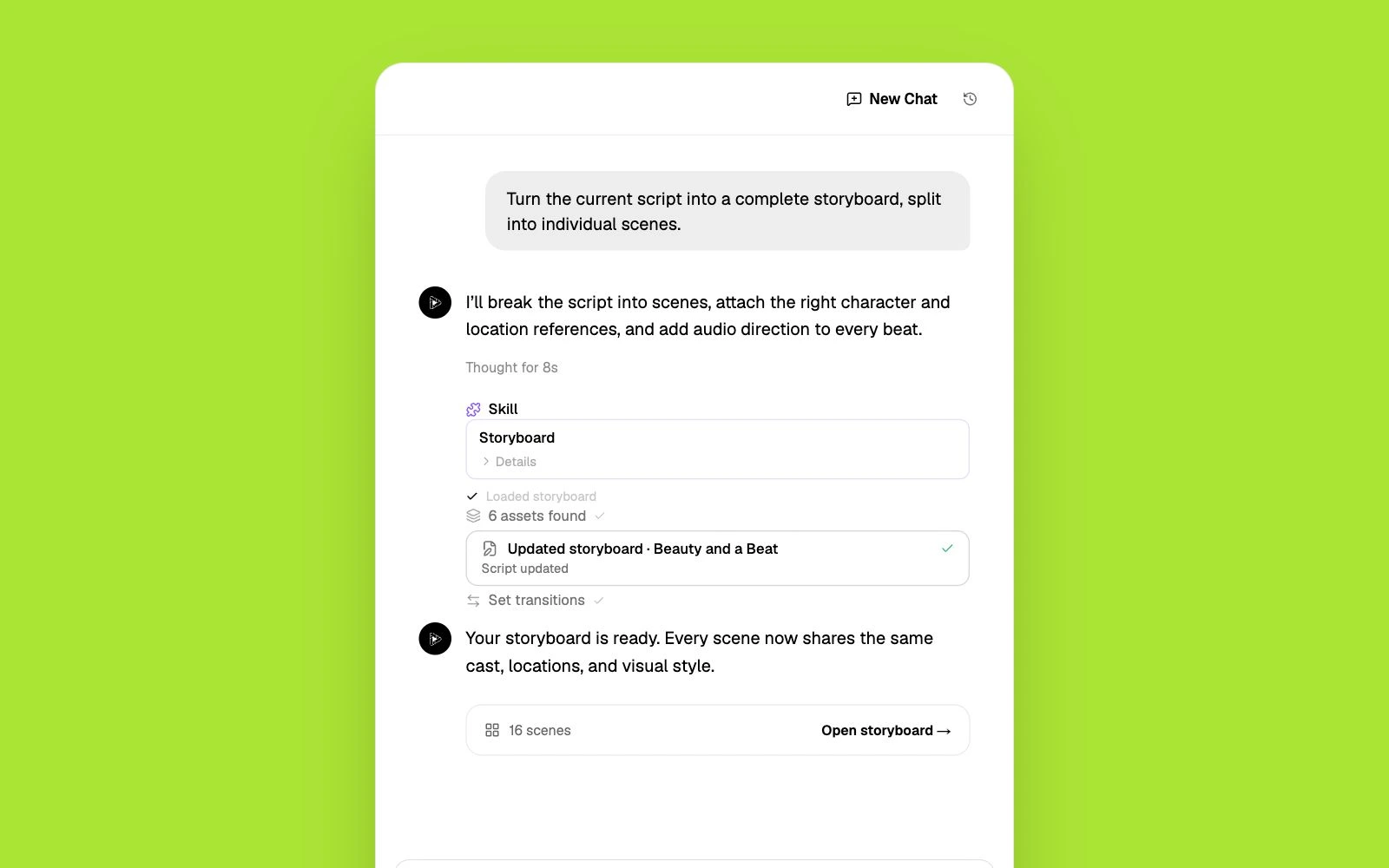
AUTOMATIC1111 is the open-source Stable Diffusion web UI that runs on your own GPU. Pixo is a cloud AI agent that scripts, storyboards and edits a finished 1080p video with Seedance, Kling, Veo, Hailuo and more.
AUTOMATIC1111 is the pseudonymous author of stable-diffusion-webui, the open-source, AGPL-licensed Gradio interface that made local Stable Diffusion usable for hundreds of thousands of people: txt2img, img2img, inpainting, upscaling, prompt editing, LoRA and embedding support, and an extension ecosystem — ControlNet, AnimateDiff, Deforum — that let hobbyists push frame-by-frame animation out of an image model. It is free, it runs on hardware you own, and with more than 160,000 GitHub stars it remains one of the most influential open-source AI projects. It is also, as of August 2026, effectively dormant: the last commit to the master branch landed in July 2024, the latest release is v1.10.1, and around 2,500 issues and pull requests sit open while much of the community has moved to the Forge fork or ComfyUI. It never supported today's video models, and getting a coherent multi-second shot out of AnimateDiff still means a GPU, a Python environment that breaks on newer versions, and a lot of patience. If you're searching for an AUTOMATIC1111 alternative because you want to make video rather than maintain a local install, you want an agent, not an image UI with animation extensions.
The master branch has not moved since July 2024 and the community has migrated to Forge and ComfyUI. New models and fixes land elsewhere first, if they land at all.
Everything renders on hardware you own. VRAM decides which models you can run, and a Python or torch upgrade can break the install until you pin versions and rebuild the environment.
AnimateDiff and Deforum produce frame sequences from an image model. Consistency across shots, a script, audio and a cut are all left to you and to other software.
AUTOMATIC1111 is a local image-generation UI you run and maintain yourself. Pixo is a cloud agent that scripts, storyboards, generates every shot with current video models and edits the result.
| Criterion | Pixo | AUTOMATIC1111 |
|---|---|---|
| Built for | Complete videos of any format — ads, demos, music videos, short films | Local Stable Diffusion image generation, with animation via extensions |
| Where it runs | In the browser on Pixo's infrastructure; no GPU, drivers or Python to maintain | On your own GPU, with a Python environment you install and keep working |
| Video models | Seedance, Kling, Veo, Hailuo and more, assigned per shot by the agent | Stable Diffusion checkpoints; frame-based animation through AnimateDiff or Deforum |
| Script & storyboard | Agent writes the script and shot list before anything renders | None — prompts, seeds and settings per image or batch |
| Consistency scope | Shared assets anchor characters, products and places across every shot | LoRAs, embeddings and seeds, tuned by hand per generation |
| Pricing approach | 200 free credits to start; monthly plans with top-ups | Free and open source under AGPL-3.0; you supply or rent the GPU |
Competitor details are based on publicly available information as of each page's last update and may change. Always verify current pricing and features on the vendor's site.
Tell Pixo what you’re making—your idea, audience, style, and length. The agent turns your brief into a script and a production-ready plan.
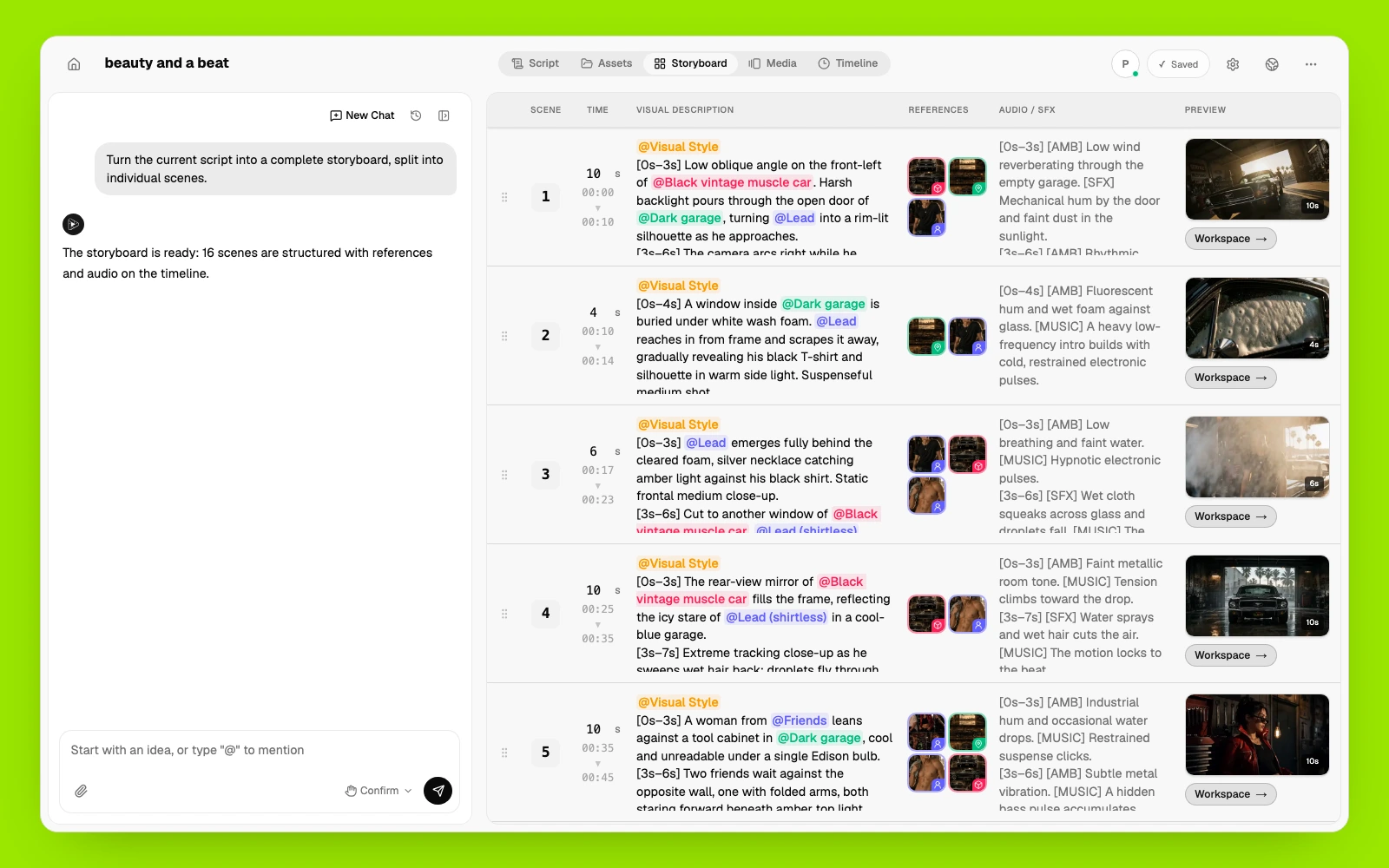
Pixo AI reviews every scene, camera move, reference, and sound cue before generation. Change one shot without starting the whole video over.
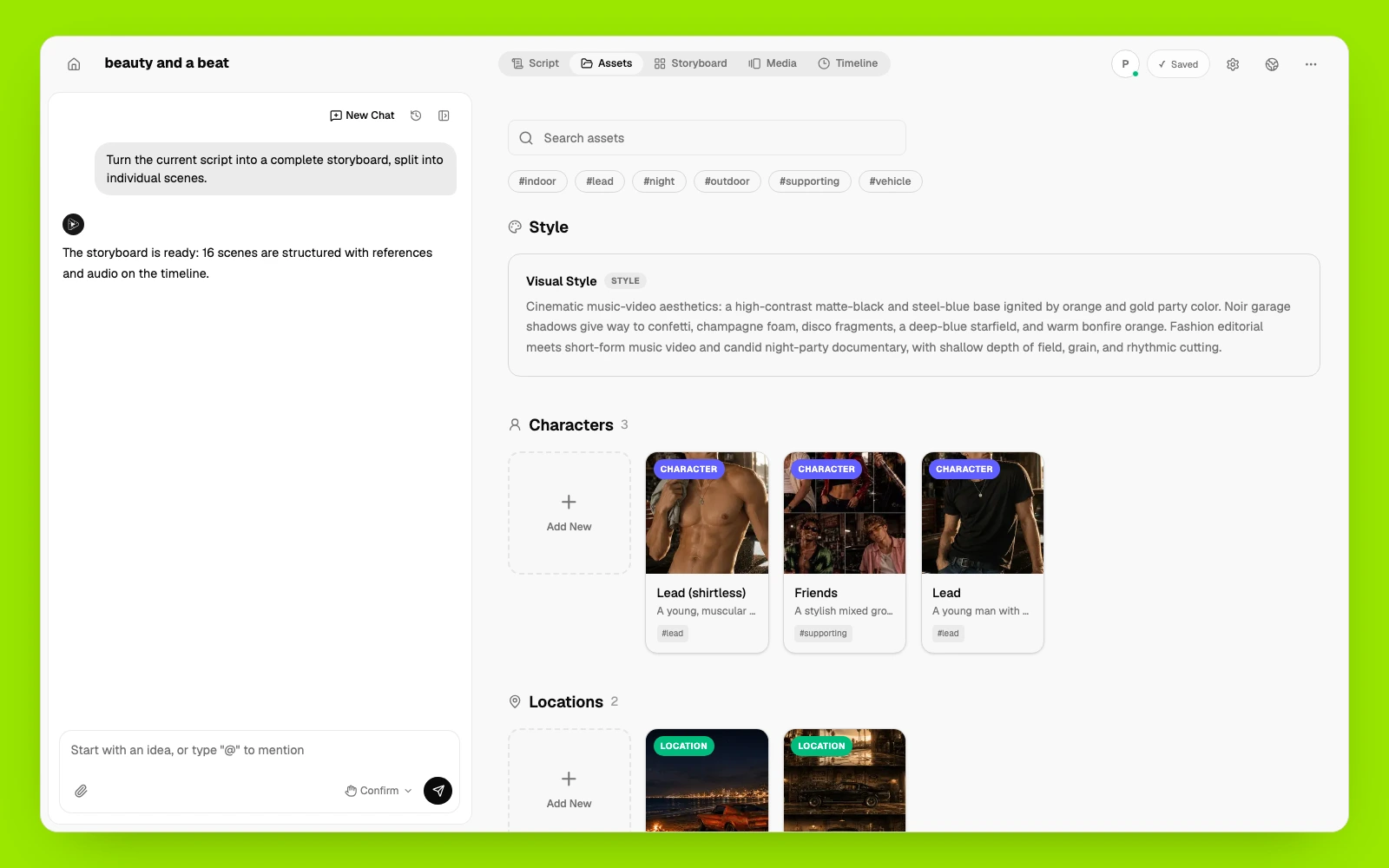
Pixo AI manages and reuses the same characters, products, locations, voices, and visual styles across every scene.
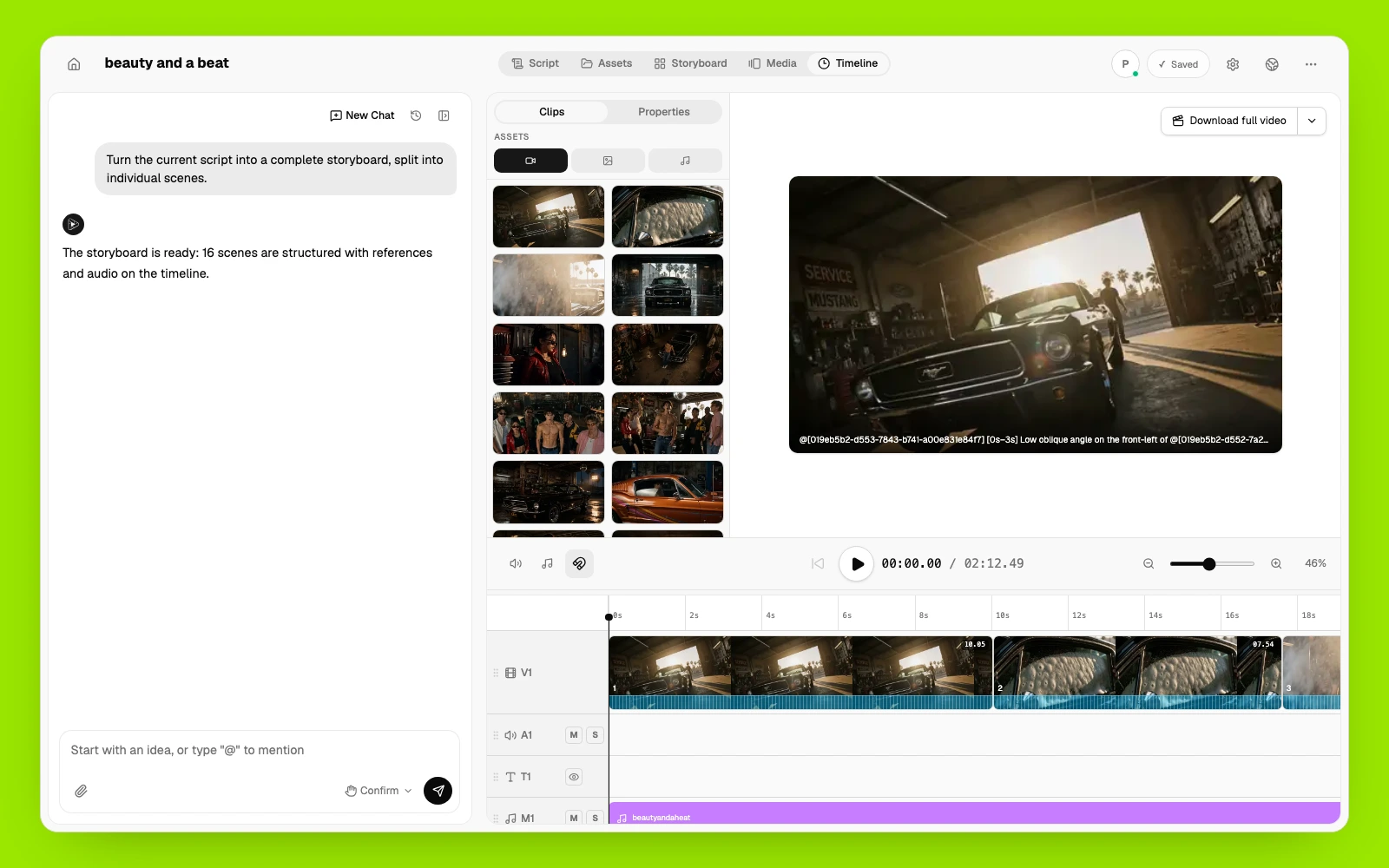
Pixo AI arranges clips, voiceover, music, and sound on one timeline. Regenerate what changed, keep what works, and export the finished video.
If local or community-model image generation is the core need, these are the natural successors to AUTOMATIC1111.
The node-based open-source UI where most local generation development now happens, including video model support.
Best for: power users who want full control of the graph.
A fork of the AUTOMATIC1111 UI with a faster backend and support for newer models.
Best for: keeping the familiar interface with better performance.
The community hub for checkpoints and LoRAs, with hosted generation on the site.
Best for: finding models and styles without a local setup.
A hosted platform for community models with cloud workflows.
Best for: running community models in the cloud.
Sign in to Pixo in a browser. There is nothing to install, no checkpoint to download and no VRAM limit to design around.
Upload the character sheets, products and locations you tuned LoRAs for. They become shared assets that anchor every shot.
Approve the storyboard, change only the shots that are wrong, and export a finished 1080p video with voiceover, sound effects and music.
Common questions from creators comparing AUTOMATIC1111 with Pixo.
Civitai is a model hub with an on-site image and clip generator. Pixo is an AI agent that scripts, storyboards, generates and edits a finished 1080p video.
SeaArt is a credit-metered art community for images and short clips. Pixo's AI agent scripts, storyboards and edits complete videos with Seedance, Kling, Veo and more.
Krea is the best place to find a look and the wrong place to finish a video. Pixo's AI agents script, storyboard, and edit complete videos with your choice of top models — Seedance, Kling, Veo, and more.
OpenArt gets you a specific look without learning to prompt. Pixo's AI agents script, storyboard, and edit complete videos with your choice of top models — Seedance, Kling, Veo, and more.
Turn a photo, illustration, product shot, or AI image into video. Describe the camera movement, subject motion, and atmosphere you want, then generate with leading models including Kling, Veo, and Hailuo—all in Pixo.
Morph any character on screen — a werewolf turn, a lifetime of aging, a body swap, a statue coming to life. Pixo storyboards the change shot by shot and keeps the same character recognizable through every stage of the morph.
No credit card required • Free 200 credits