Start with a conversation.
Tell Pixo what you’re making—your idea, audience, style, and length. The agent turns your brief into a script and a production-ready plan.
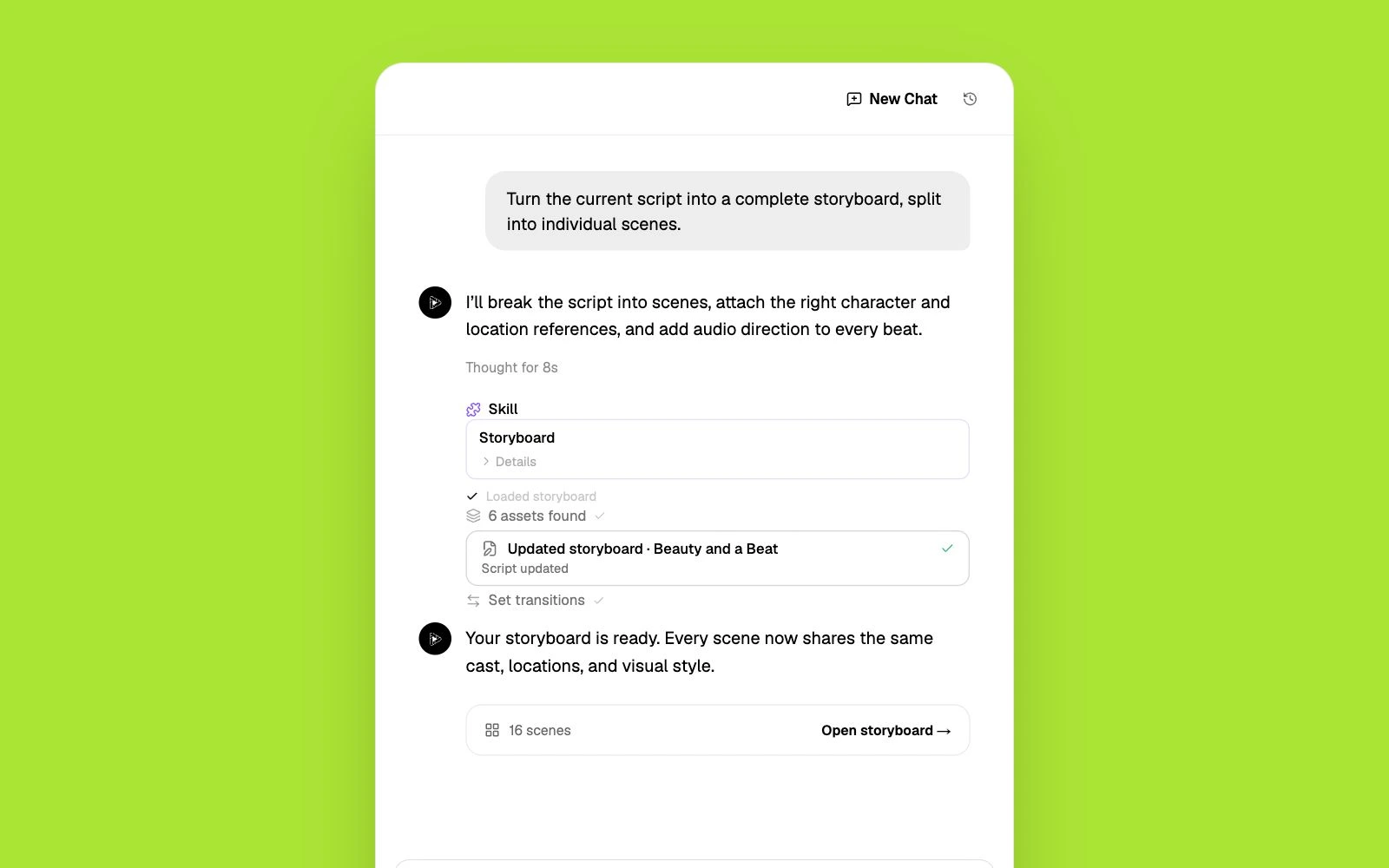
Use Veo 3.1 inside Pixo's AI director — it scripts, storyboards, and edits your final cut, switching to Seedance or Kling per shot. Free 200 credits, no credit card.
Google Veo 3.1 is DeepMind's flagship text-to-video model, and it's genuinely top-tier: cinematic motion plus native audio that generates synchronized dialogue, sound effects, and ambient sound in one pass — something most rivals still can't match. You reach it through the Gemini app, Flow, or the Vertex AI API, gated behind Google AI subscriptions (Plus at $4.99, Pro at $19.99 with ~1,000 Flow credits, Ultra at $99.99) or per-second Vertex billing. The friction isn't the quality — it's everything around it. Each generation caps at about 8 seconds, Flow credits burn fast on the Quality tier (~10 top-tier videos on Pro), and it's a single model with no script, no storyboard, no multi-shot character consistency, and no editing timeline. If you're searching for a Google Veo alternative, you probably don't want to give up Veo's quality — you want it without the gating, and inside a real production workflow. Pixo hosts Veo 3.1 for exactly that.
Veo lives inside Google AI Plus, Pro, or Ultra, or metered Vertex API billing. Flow credits deplete quickly — the Quality tier costs ~100 credits a clip — so a Pro plan is roughly ten top-tier videos a month before you're rationing or upgrading.
Veo 3.1 is a single engine that renders about 8 seconds per generation. There's no way to switch to a model that's stronger for a specific shot, and no built-in path from a clip to a multi-shot sequence with a through-line.
Veo generates clips, not productions. You write every prompt yourself, stitch clips together in a separate editor, and there's no shared-asset system to keep a character or scene consistent from one shot to the next.
Same top model, different surface: Veo gives you one excellent engine behind Google's gating. Pixo runs Veo 3.1 inside a multi-model agent that handles the whole video, start to finish.
| Criterion | Pixo | Google Veo |
|---|---|---|
| Built for | Producing a finished multi-shot video from a prompt — script, storyboard, shots, and edit | Generating individual short clips with best-in-class quality and native audio |
| Access to Veo 3.1 | Veo 3.1 is hosted inside Pixo — no separate Google AI subscription to manage | Via Gemini, Flow, or Vertex AI, gated behind Google AI Plus/Pro/Ultra or API billing |
| Model choice | Veo 3.1 plus Seedance, Kling, Hailuo, Sora — the agent switches models per shot | Veo family only (Lite, Fast, Quality tiers of the same model) |
| Script & storyboard | AI agent writes the script, storyboards every shot, and keeps characters and scenes consistent | None — you prompt each clip yourself, one at a time |
| Editing & length | Agent assembles shots into a finished 1080p video; you direct and approve, it regenerates only what changed | ~8 seconds per generation; stitching and editing happen in a separate tool |
| Pricing approach | 200 free credits to start; monthly plans with top-ups, Veo 3.1 included | Google AI Plus $4.99, Pro $19.99, Ultra $99.99/mo, or metered Vertex API (~$0.03–$0.40/sec) |
Competitor details are based on publicly available information as of each page's last update and may change. Always verify current pricing and features on the vendor's site.
Pixo also runs VEO — see every version and its specsTell Pixo what you’re making—your idea, audience, style, and length. The agent turns your brief into a script and a production-ready plan.
Pixo AI reviews every scene, camera move, reference, and sound cue before generation. Change one shot without starting the whole video over.
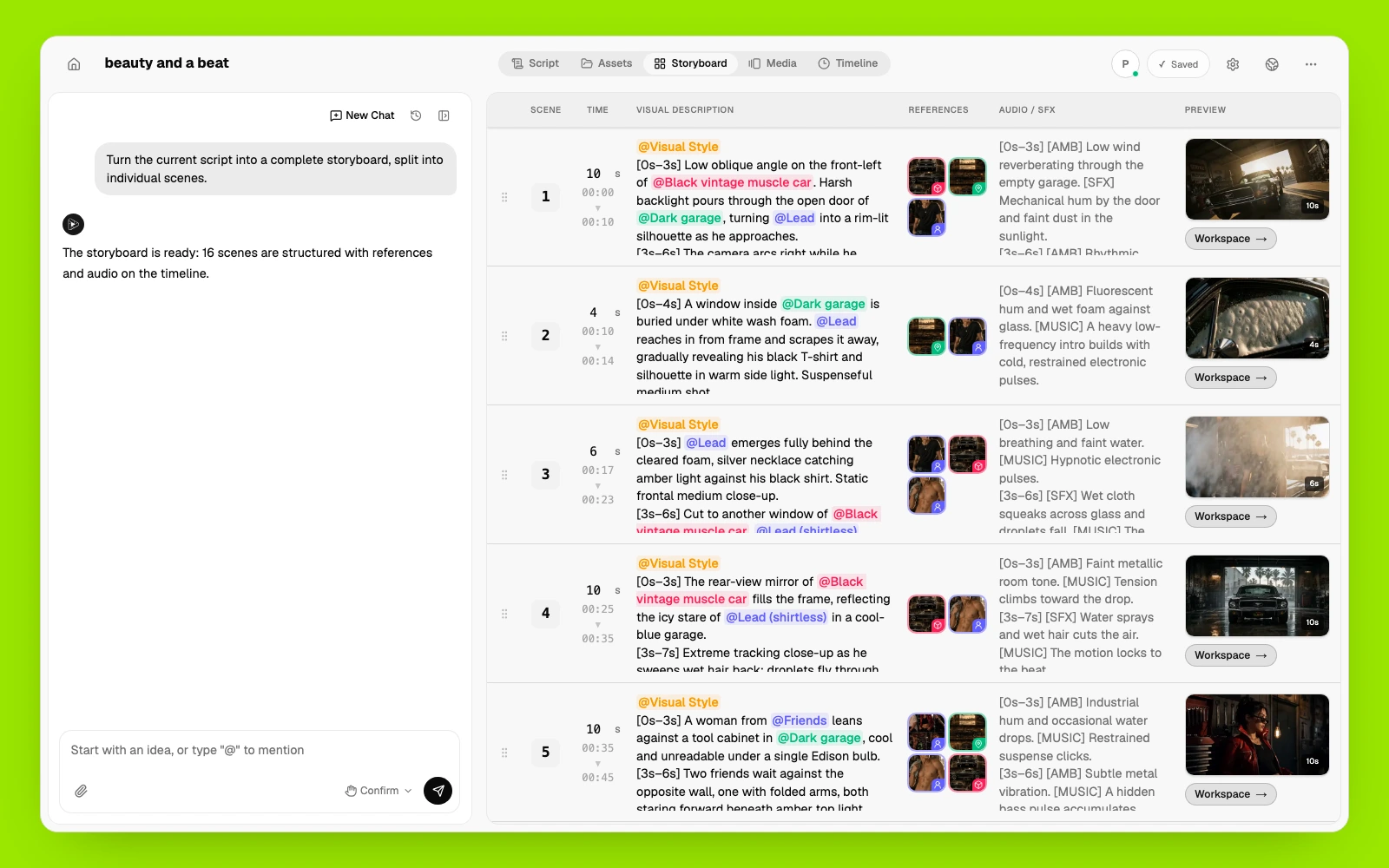
Pixo AI manages and reuses the same characters, products, locations, voices, and visual styles across every scene.
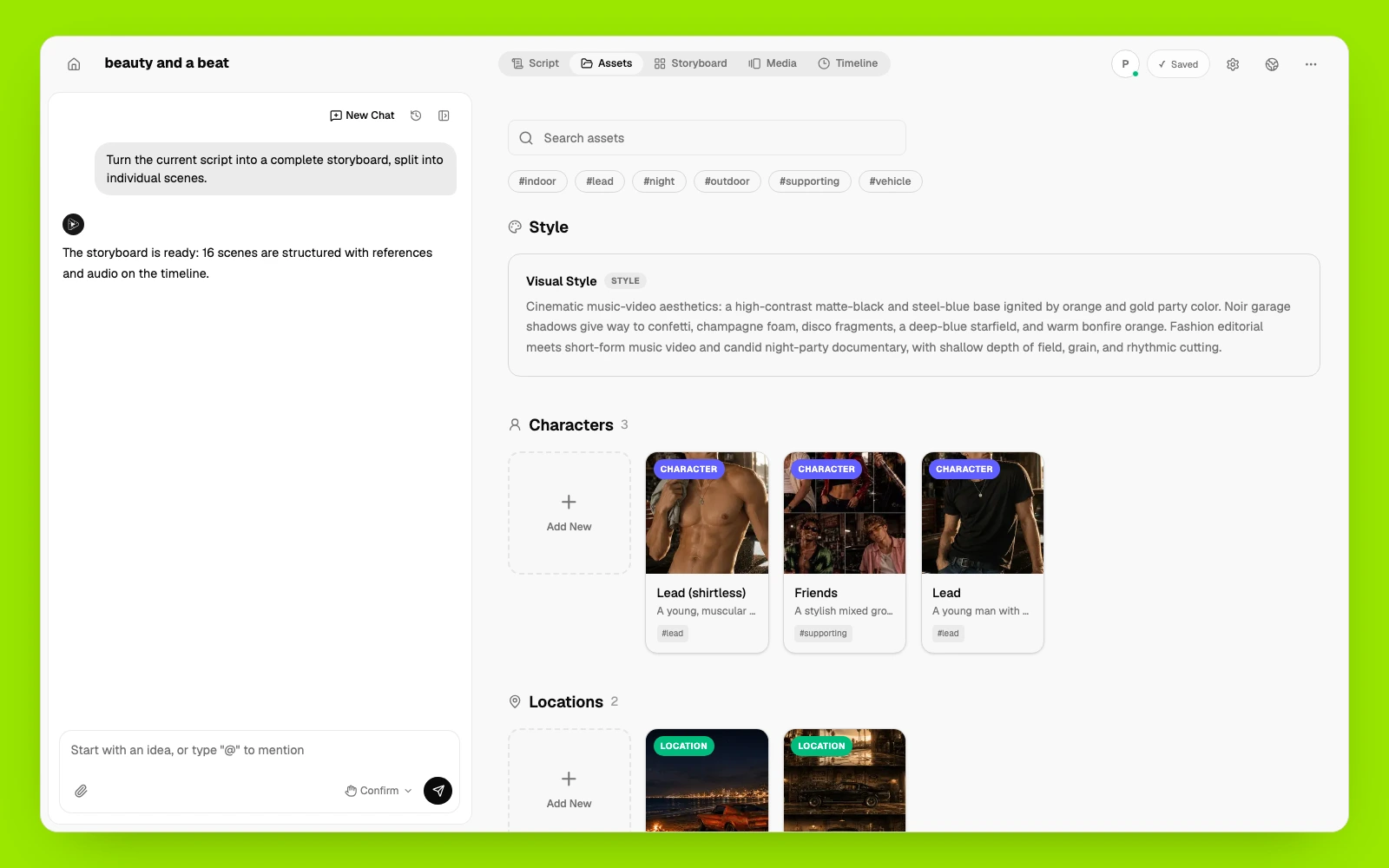
Pixo AI arranges clips, voiceover, music, and sound on one timeline. Regenerate what changed, keep what works, and export the finished video.
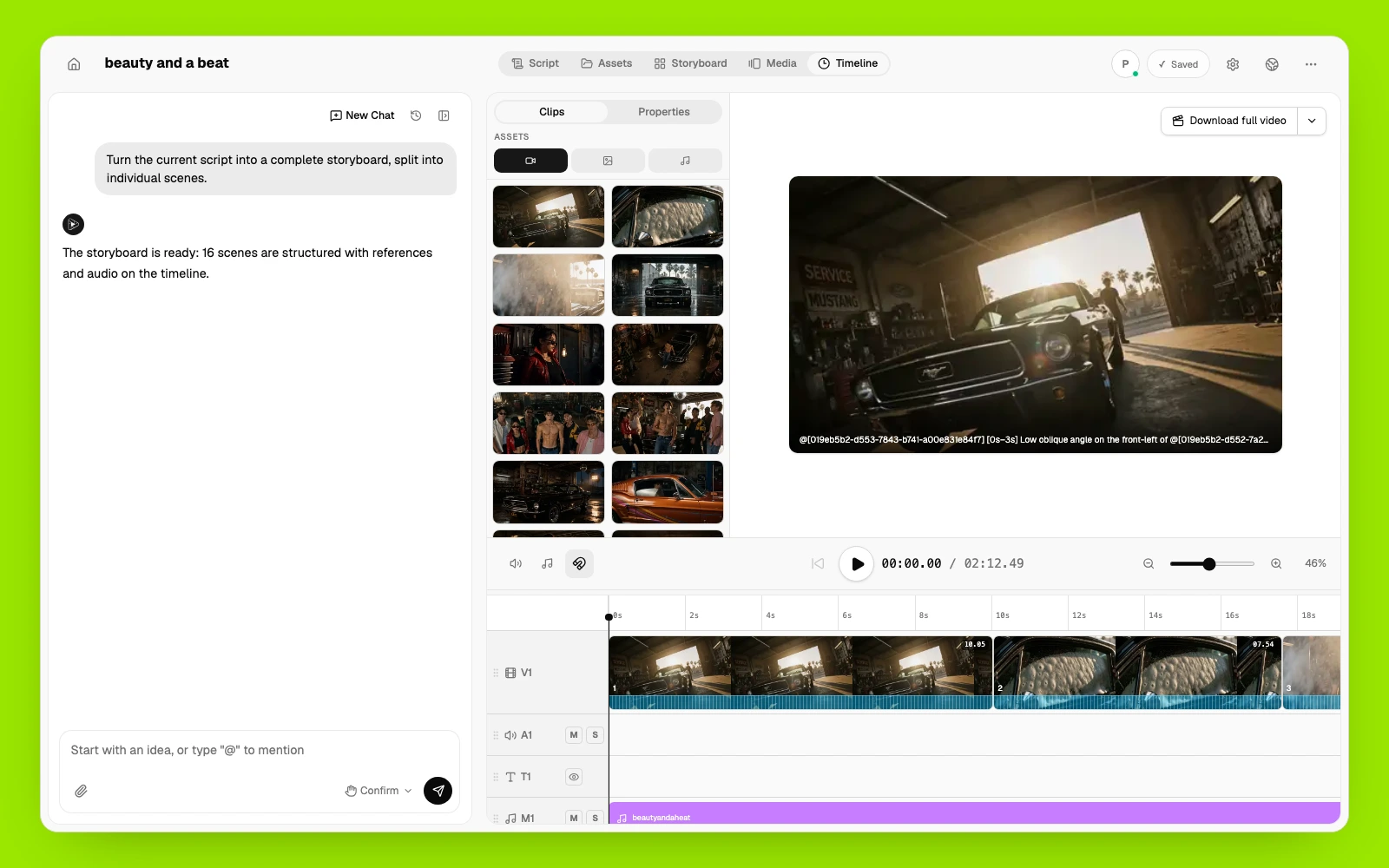
If you want a different standalone video model rather than a full production workflow, these compete directly with Veo on quality and features.
OpenAI's text-to-video model with strong physical realism, native audio, and a consumer app plus API access.
Best for: creators already in the OpenAI ecosystem who want a Veo-class model.
Kuaishou's model known for fluid motion, strong image-to-video, and longer clip durations than Veo's 8 seconds.
Best for: creators who need longer single takes and expressive character motion.
A mature creative suite (Gen-4) pairing generation with editing tools, camera controls, and a polished timeline.
Best for: editors who want generation plus hands-on post-production controls.
MiniMax's video model with a generous free tier, fast renders, and strong prompt adherence for the price.
Best for: creators who want Veo-style quality on a tighter budget.
Instead of prompting one 8-second clip at a time, tell Pixo's agent the whole idea — topic, style, length, and where it will run.
The agent scripts and storyboards every shot and picks a model per shot — Veo 3.1 or another. Approve it, or adjust shots and lines before anything renders.
Pixo generates the shots, keeps characters consistent, edits them together with audio, and exports a finished 1080p video ready to post.
Common questions from creators comparing Google Veo with Pixo.
Sora is a single model behind a cap and a social feed. Pixo runs Sora 2 inside a multi-model agent that scripts, storyboards, generates, and edits a finished 1080p video — plus Seedance, Kling, Veo, and Hailuo.
Kling 3.0 is an excellent video model, but on its own it's a single-model credit meter. Pixo runs Kling 3.0 inside an AI agent that scripts, storyboards, generates every shot, and edits a finished 1080p video.
Runway is a pro creative suite where you operate every tool by hand. Pixo is an AI agent that scripts, storyboards, generates, and edits a finished 1080p video from a single prompt.
Create YouTube content with Veo's photorealistic AI video. Natural lighting, realistic environments, and true-to-life scenes — combined with other models in Pixo's storyboard workflow.
Describe the video you want in everyday language. Pixo turns your text into a scene-by-scene storyboard, generates each shot with leading AI video models, and helps assemble a complete video you can refine before export.
No credit card required • Free 200 credits