Start with a conversation.
Tell Pixo what you’re making—your idea, audience, style, and length. The agent turns your brief into a script and a production-ready plan.
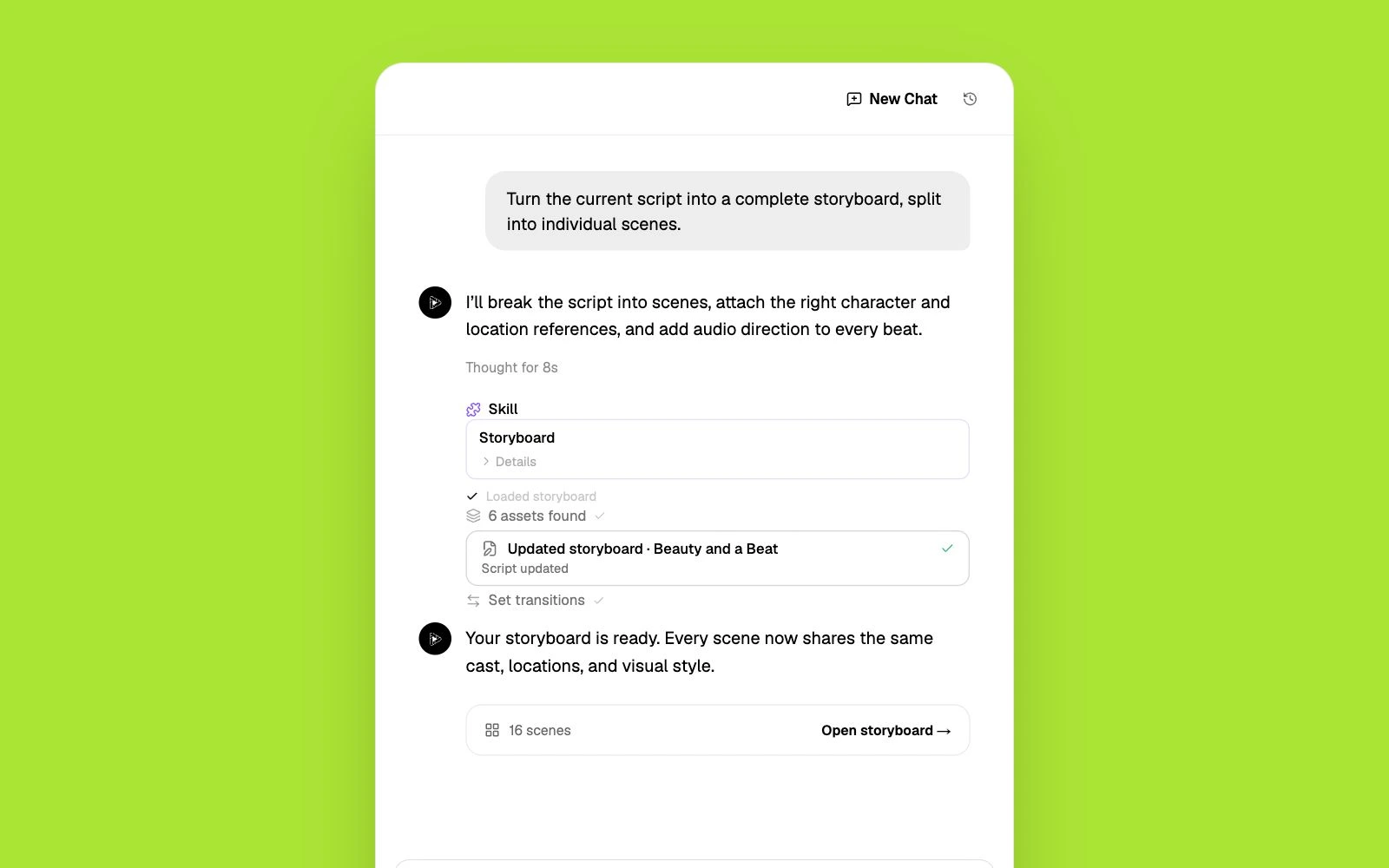
Canva is a design suite where video is one tab among many, built on templates and stock. Pixo is an AI agent that scripts, storyboards, generates, and edits a finished 1080p video from a single prompt.
Canva is the default design tool for millions of teams, and its video editor is a genuine part of that: a timeline, a large template library, stock footage and music, brand kits, and enough AI features to caption, resize and tidy a clip. For social graphics with motion, or a quick promo built from footage you already own, it does the job without anyone learning editing software. What it is not is a video production tool. Canva arranges assets — your photos, your clips, its stock — into a template. It does not write your script, plan a sequence of shots, generate a scene that has never been filmed, or keep the same character recognisable from shot 1 to shot 12. If you're searching for a Canva alternative because your videos keep looking like everyone else's templates, or because the shot you need does not exist in any library, you want an agent, not a design suite.
Canva's library is its strength and its signature. When millions of teams start from the same layouts, motion presets and stock clips, the output reads as competent and generic — which is the opposite of what brand video is for.
Every Canva video begins with material you supply or license. A product that was never photographed, a scene that was never filmed, a character who does not exist — none of these can appear, however good the template is.
Canva optimises for breadth across design, presentations, docs and social. That breadth means no script layer, no storyboard, no character continuity and no per-shot model choice — the things multi-scene video actually needs.
Two philosophies: Canva is a design suite that arranges assets into templates. Pixo is an agent that self-directs a whole video from prompt to finished cut.
| Criterion | Pixo | Canva |
|---|---|---|
| Built for | Prompt-to-finished video — an agent scripts, storyboards, generates, and edits for you | Design across formats, with video as one editor among many tools |
| Workflow | Describe it once; the agent plans the shots and assembles the edit — you review and approve | Pick a template, drop in your footage and stock, adjust text and timing by hand |
| Script & storyboard | AI agent writes the script and storyboards every shot before anything renders | None — you supply the plan and the material |
| Design and brand tooling | Focused on video; brand consistency held through shared assets across shots | Excellent — brand kits, fonts, colours, and design assets shared across a whole team |
| Models | Routes across Seedance, Kling, Veo, Hailuo and more automatically, per shot | No frontier video generation; AI features assist editing rather than create scenes |
| Pricing approach | 200 free credits to start; monthly plans with top-ups when you need more | Free tier; Pro and Teams subscriptions priced per user, with stock included |
Competitor details are based on publicly available information as of each page's last update and may change. Always verify current pricing and features on the vendor's site.
Tell Pixo what you’re making—your idea, audience, style, and length. The agent turns your brief into a script and a production-ready plan.
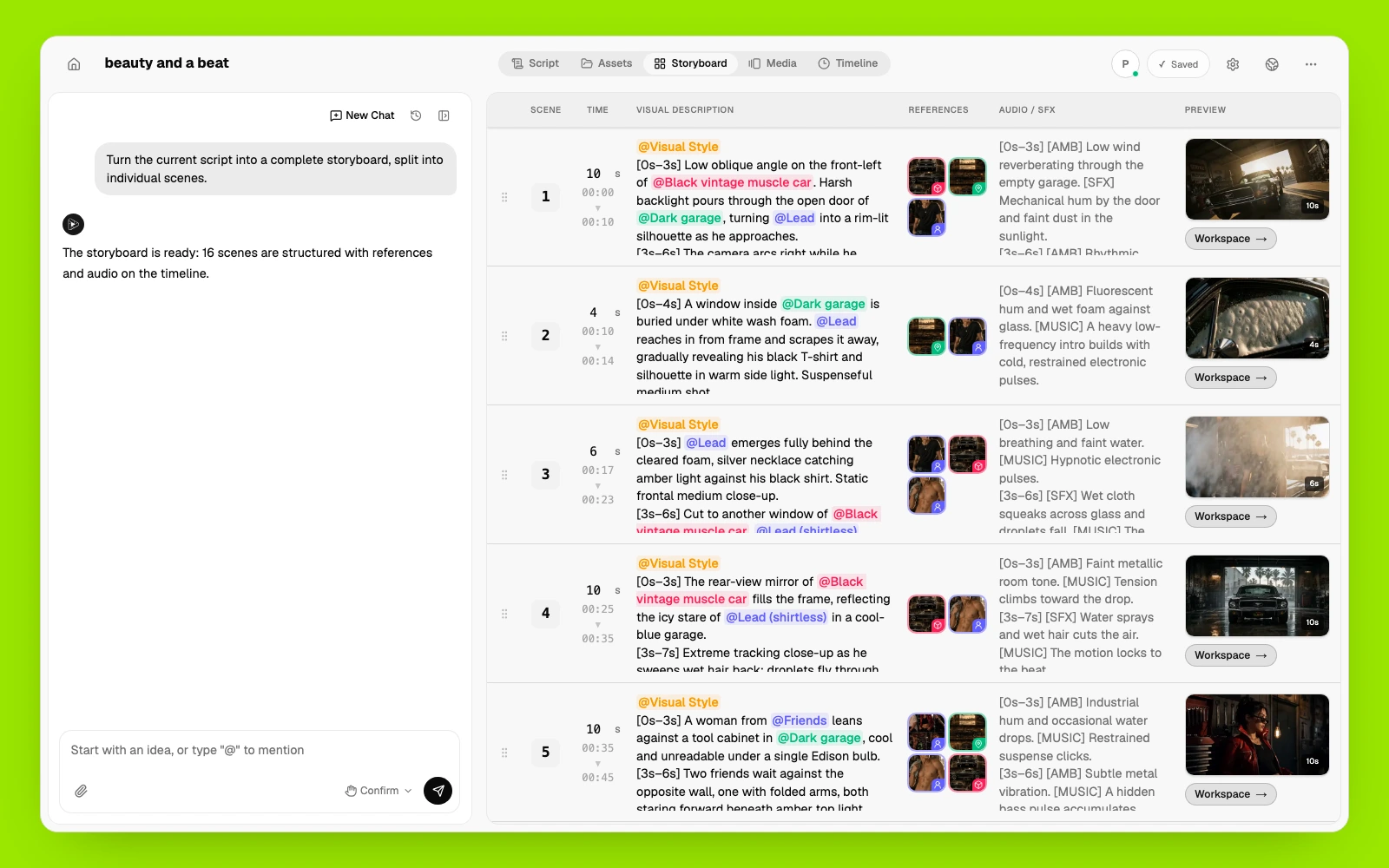
Pixo AI reviews every scene, camera move, reference, and sound cue before generation. Change one shot without starting the whole video over.
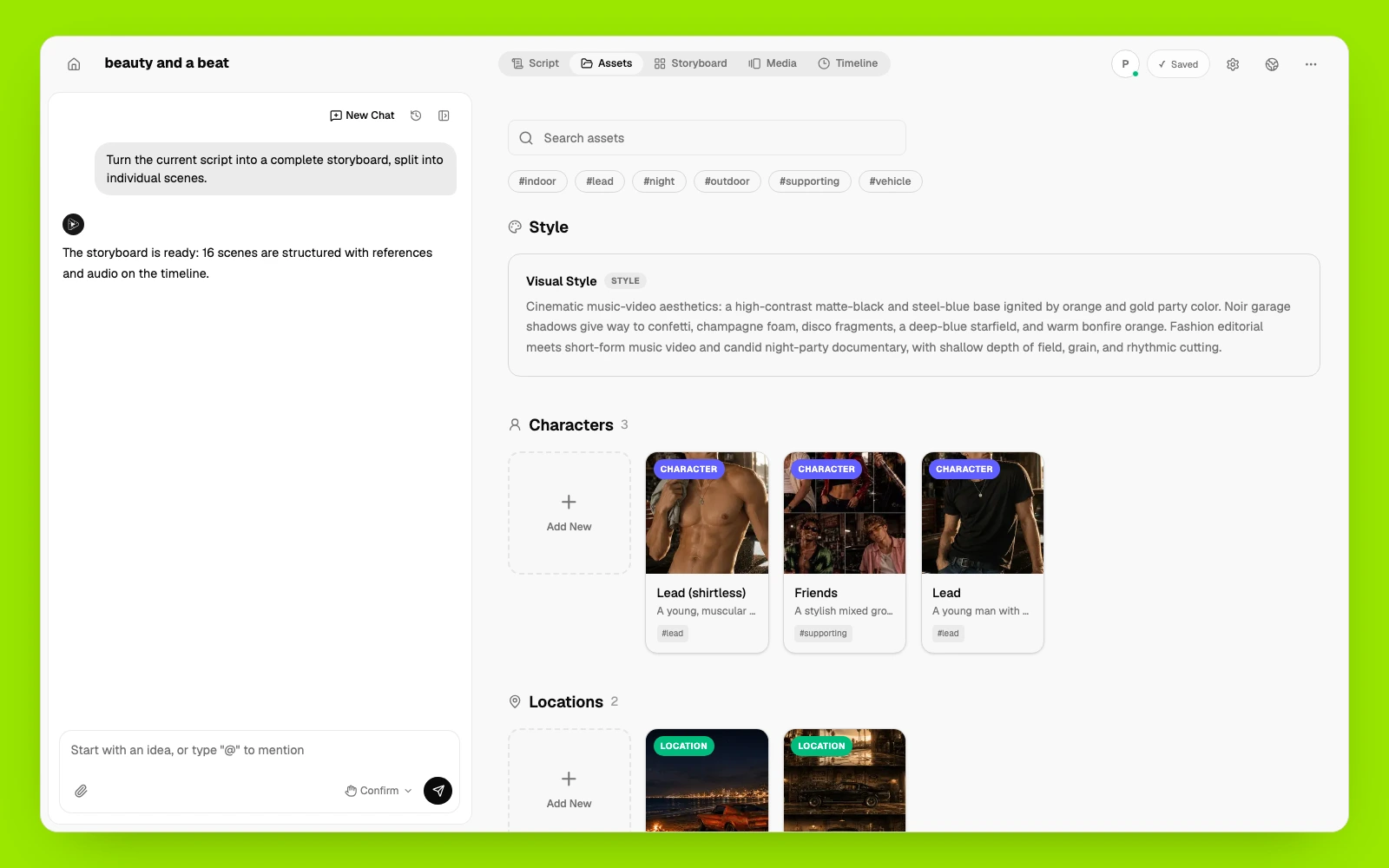
Pixo AI manages and reuses the same characters, products, locations, voices, and visual styles across every scene.
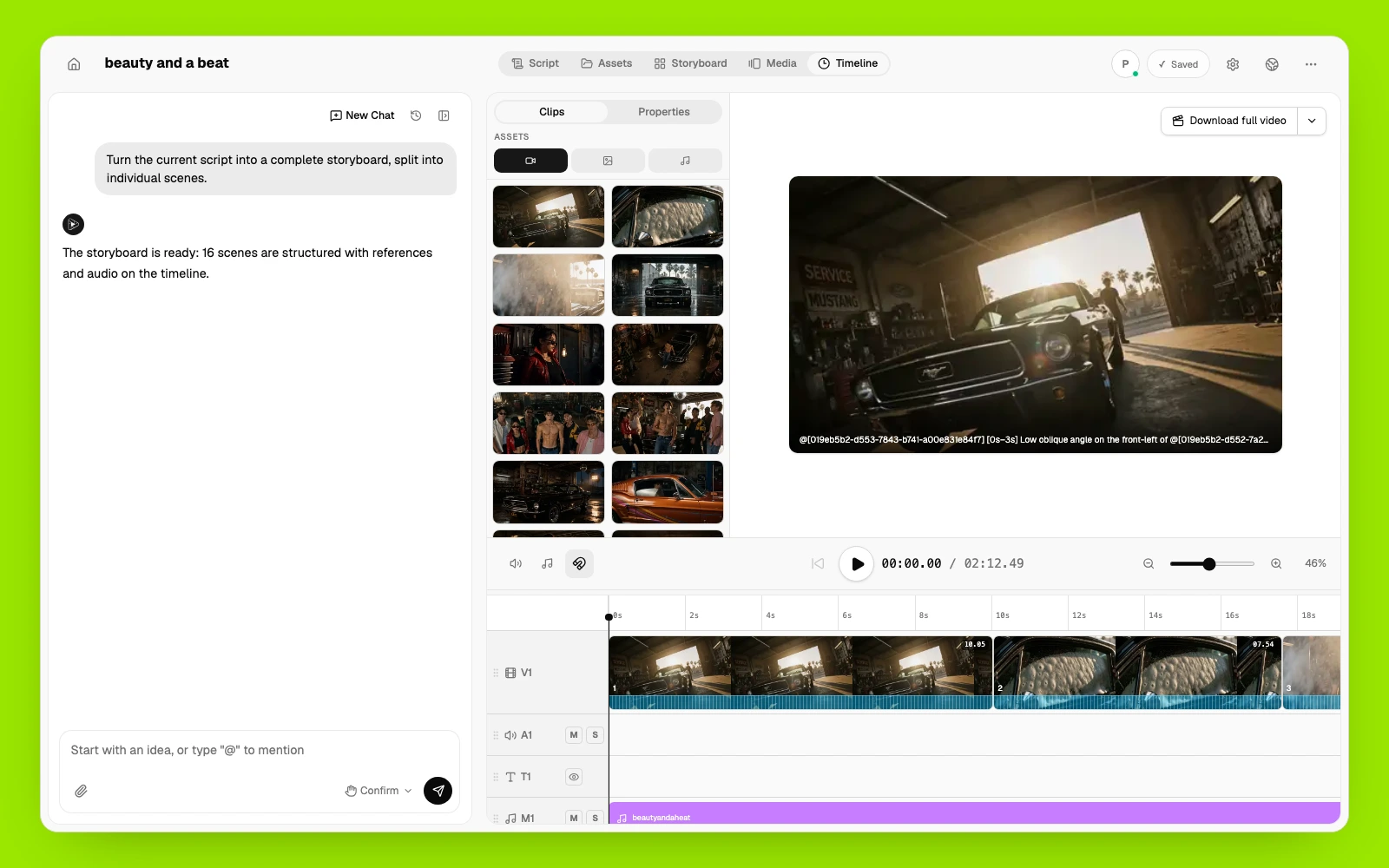
Pixo AI arranges clips, voiceover, music, and sound on one timeline. Regenerate what changed, keep what works, and export the finished video.
If you specifically want a template-driven editor or a design-first workflow rather than an end-to-end video agent, these compete directly with Canva.
A template and stock library with AI scripting, aimed squarely at marketing video.
Best for: teams that want a bigger video template collection than Canva's.
A free, full-featured editor with templates, captions and effects, popular with social creators.
Best for: hands-on editing without a subscription.
A browser editing suite with strong subtitles, translation and brand controls.
Best for: marketing teams finishing real footage collaboratively.
A scene-based template platform covering animated explainers, promos and logo reveals.
Best for: animated marketing formats built from presets.
Instead of hunting for a layout that nearly fits, tell Pixo's agent what you want — topic, style, length, and where it will run — in plain language.
The agent scripts and storyboards every shot. Approve it, or adjust shots and lines first — no manual timing, no dragging assets onto a timeline.
Pixo generates every scene from your brief, cuts them together with voiceover and music, and exports a finished 1080p video ready to post.
Common questions from creators comparing Canva with Pixo.
Pixo generates original footage from one prompt — an AI director scripts, storyboards, and edits a finished 1080p video with voiceover and music. Free 200 credits to start.
CapCut's AI generator makes short clips inside an editor. Pixo is generation-first — AI agents script, storyboard, and edit complete 1080p videos from a prompt.
Renderforest fills preset scenes with your logo and text. Pixo's AI agents script, storyboard, and edit complete videos with your choice of top models — Seedance, Kling, Veo, and more.
FlexClip is a template video maker with AI tools attached. Pixo's AI agent scripts, storyboards and generates every shot of a finished 1080p video with Seedance, Kling, Veo, Hailuo and more.
Turn a campaign brief, offer, audience, and brand direction into a complete promotional video with a clear message and channel-ready variants. Pixo's AI agent helps plan the storyboard, generate individual scenes with leading video models, add voice and sound, and refine the complete video in one workspace.
Describe the video you want in everyday language. Pixo turns your text into a scene-by-scene storyboard, generates each shot with leading AI video models, and helps assemble a complete video you can refine before export.
No credit card required • Free 200 credits