Start with a conversation.
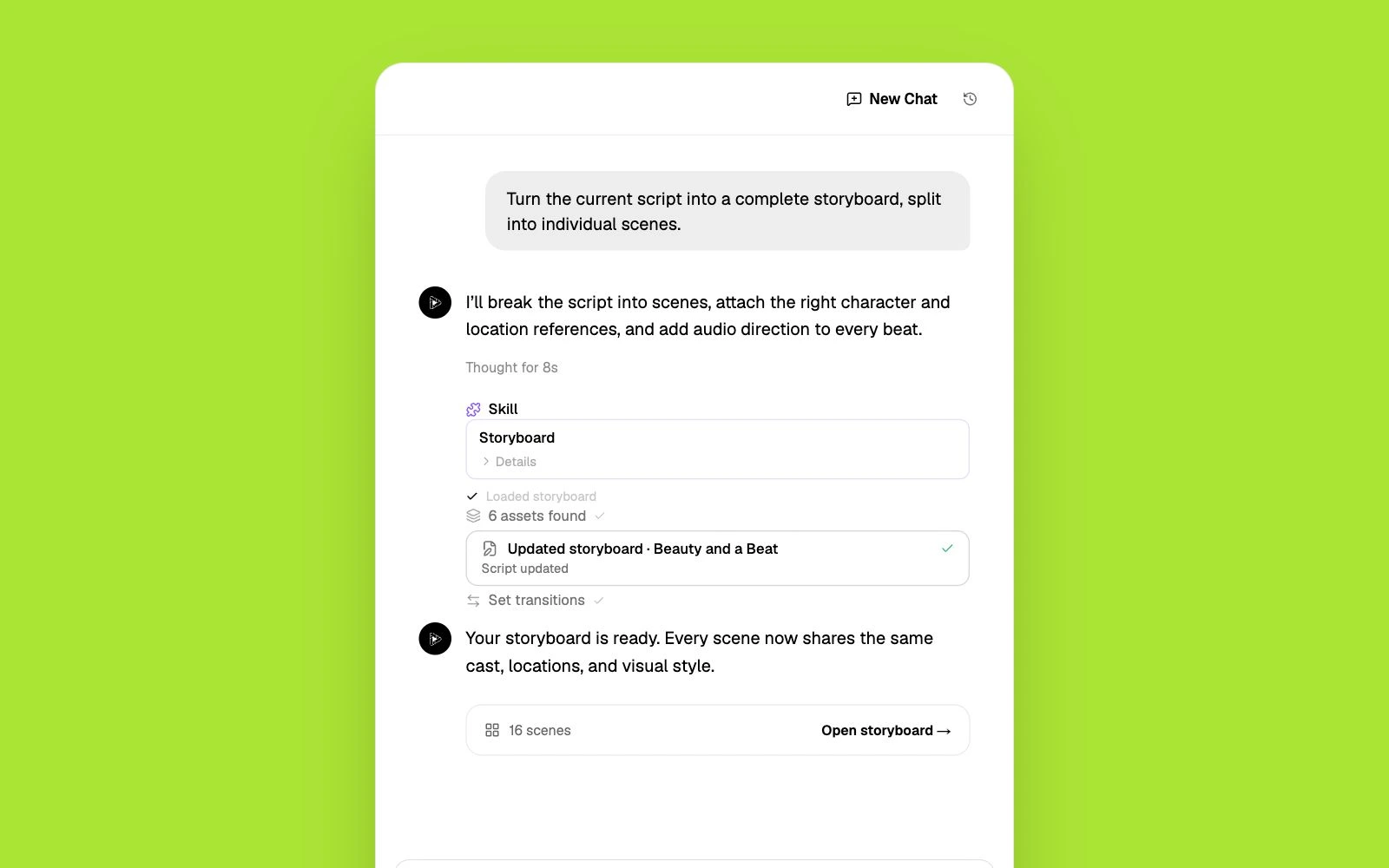
Tell Pixo what you’re making—your idea, audience, style, and length. The agent turns your brief into a script and a production-ready plan.
Luma Dream Machine is a shot generator with the most natural motion in the category. Pixo is an AI agent that scripts, storyboards, generates, and edits a finished 1080p video from a single prompt.
Luma AI built Dream Machine around the Ray model family, and its reputation is deserved: motion looks physically plausible, image-to-video is unusually faithful, keyframes let you set a start and end image and have the model fill the movement between them, and generations come back fast. Its roots in 3D capture show in how well it understands space and camera. What it does not do is plan anything. There is no script, no shot list, no memory of who your character was three shots ago, and no sound — so a five-second shot is the unit of work, and a three-minute video is a stitching job you do somewhere else. Credits drain during the regenerate-until-right loop that image-to-video demands, and each regeneration starts fresh. If you're searching for a Luma alternative because you want a finished video rather than a folder of beautiful clips, you want an agent, not a model.
Dream Machine's unit of output is a short shot. Anything longer — an explainer, an ad, a music video, a short film — means generating pieces and assembling them in an editor, and assembly is exactly where continuity falls apart.
There is no narrative layer. You supply the structure, hold the plan in your head, and re-describe your character in every prompt, because nothing in the tool remembers what shot 1 looked like when you generate shot 12.
Luma produces silent video. Voiceover, sound effects and music mean a second subscription, a second export cycle and a manual mix before anything is publishable.
Two philosophies: Luma is a model that makes one excellent shot at a time. Pixo is an agent that self-directs a whole video from prompt to finished cut.
| Criterion | Pixo | Luma Dream Machine |
|---|---|---|
| Built for | Prompt-to-finished video — an agent scripts, storyboards, generates, and edits for you | Short-form shot generation with best-in-class natural motion |
| Workflow | Describe it once; the agent plans the shots and assembles the edit — you review and approve | Prompt a clip, refine it, download it, and assemble the sequence yourself |
| Script & storyboard | AI agent writes the script and storyboards every shot before anything renders | None — Dream Machine generates individual shots; structure is up to you |
| Motion and keyframe control | Lighter frame-level control — you steer with prompts and shot swaps | Excellent — keyframes, extend, loop, and natural physical motion |
| Models | Routes across Seedance, Kling, Veo, Hailuo and more automatically, per shot | Own Ray model family only |
| Pricing approach | 200 free credits to start; monthly plans with top-ups when you need more | Credit-metered subscription tiers; regeneration consumes credits each time |
Competitor details are based on publicly available information as of each page's last update and may change. Always verify current pricing and features on the vendor's site.
Tell Pixo what you’re making—your idea, audience, style, and length. The agent turns your brief into a script and a production-ready plan.
Pixo AI reviews every scene, camera move, reference, and sound cue before generation. Change one shot without starting the whole video over.
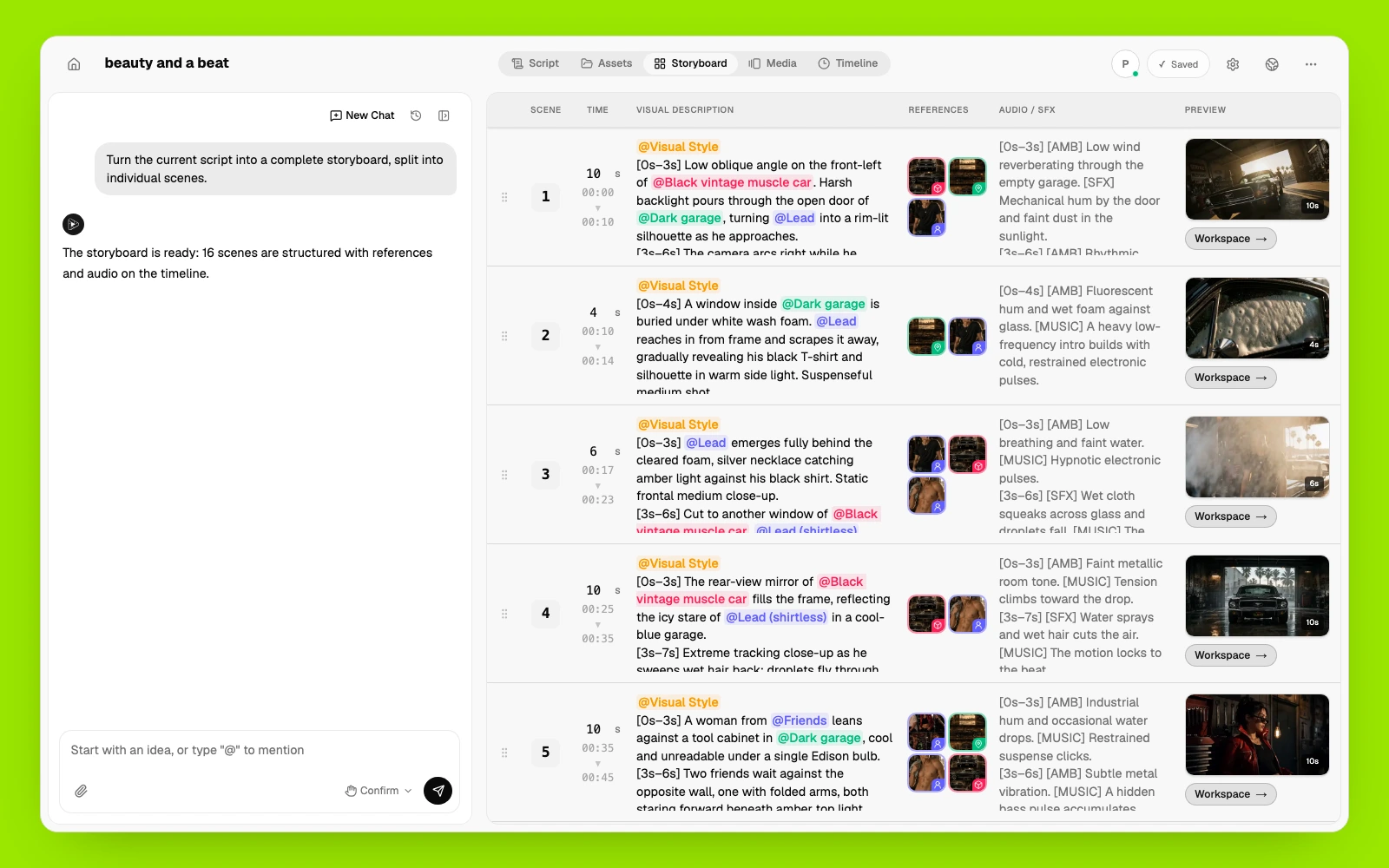
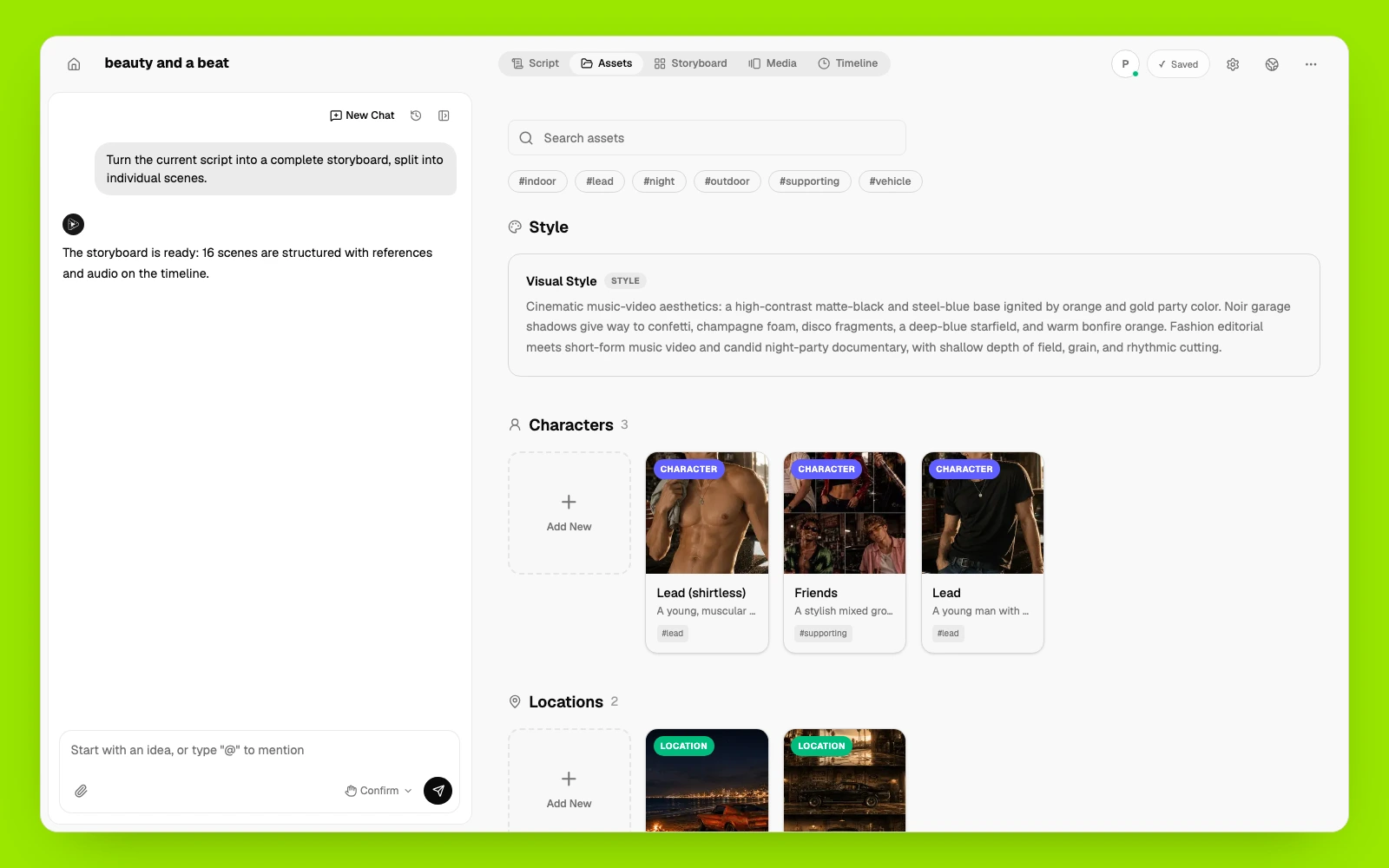
Pixo AI manages and reuses the same characters, products, locations, voices, and visual styles across every scene.
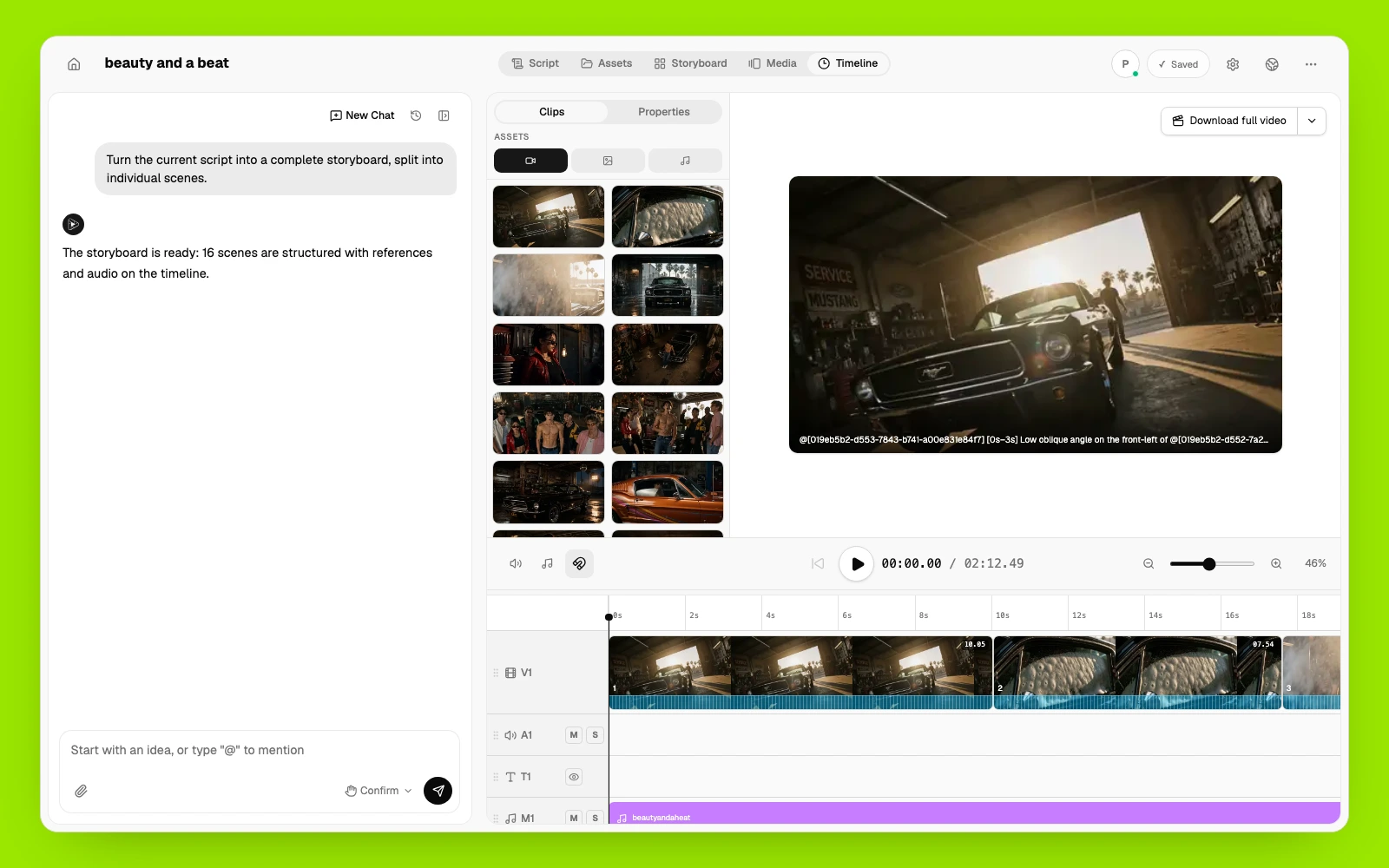
Pixo AI arranges clips, voiceover, music, and sound on one timeline. Regenerate what changed, keep what works, and export the finished video.
If you specifically want a single powerful model or manual shot control rather than an end-to-end agent, these compete directly with Luma.
A leading video model known for fluid motion and film-like camera work, with image-to-video and lip-sync tools.
Best for: creators who prioritise cinematic movement and shot length.
A professional creative suite with Motion Brush, camera controls, and in-video editing for hands-on shot craft.
Best for: VFX-adjacent creators who sculpt individual shots.
Google's model, strong on photorealism, high resolution, and native audio generation.
Best for: creators who need photoreal shots with sound.
A playful generator with effects and lip-sync focused on short, shareable social clips.
Best for: social creators making fun, fast short-form video.
Instead of prompting shots one at a time, tell Pixo's agent what you want — topic, style, length, and where it will run — in plain language.
The agent scripts and storyboards every shot, and locks your cast to shared assets. Approve it, or adjust shots and lines before anything renders — no keyframes to set by hand.
Pixo generates the shots across top models, cuts them together with voiceover, sound effects and music, and exports a finished 1080p video ready to post.
Common questions from creators comparing Luma with Pixo.
Runway is a pro creative suite where you operate every tool by hand. Pixo is an AI agent that scripts, storyboards, generates, and edits a finished 1080p video from a single prompt.
Kling 3.0 is an excellent video model, but on its own it's a single-model credit meter. Pixo runs Kling 3.0 inside an AI agent that scripts, storyboards, generates every shot, and edits a finished 1080p video.
Pika is built for short, effect-led clips you post and move on from. Pixo's AI agents script, storyboard, and edit complete videos with your choice of top models — Seedance, Kling, Veo, and more.
Grok Imagine makes one clip per prompt inside Grok and X. Pixo's AI agent runs Grok Imagine, Seedance, Kling, Veo and more inside a scripted, storyboarded, edited 1080p video.
Turn a story idea, outline, or short-film script into a connected short film with a storyboard, consistent characters, voice, sound, and final edit. Pixo's AI agent helps plan the storyboard, generate individual scenes with leading video models, add voice and sound, and refine the complete video in one workspace.
Describe the video you want in everyday language. Pixo turns your text into a scene-by-scene storyboard, generates each shot with leading AI video models, and helps assemble a complete video you can refine before export.
No credit card required • Free 200 credits