Start with a conversation.
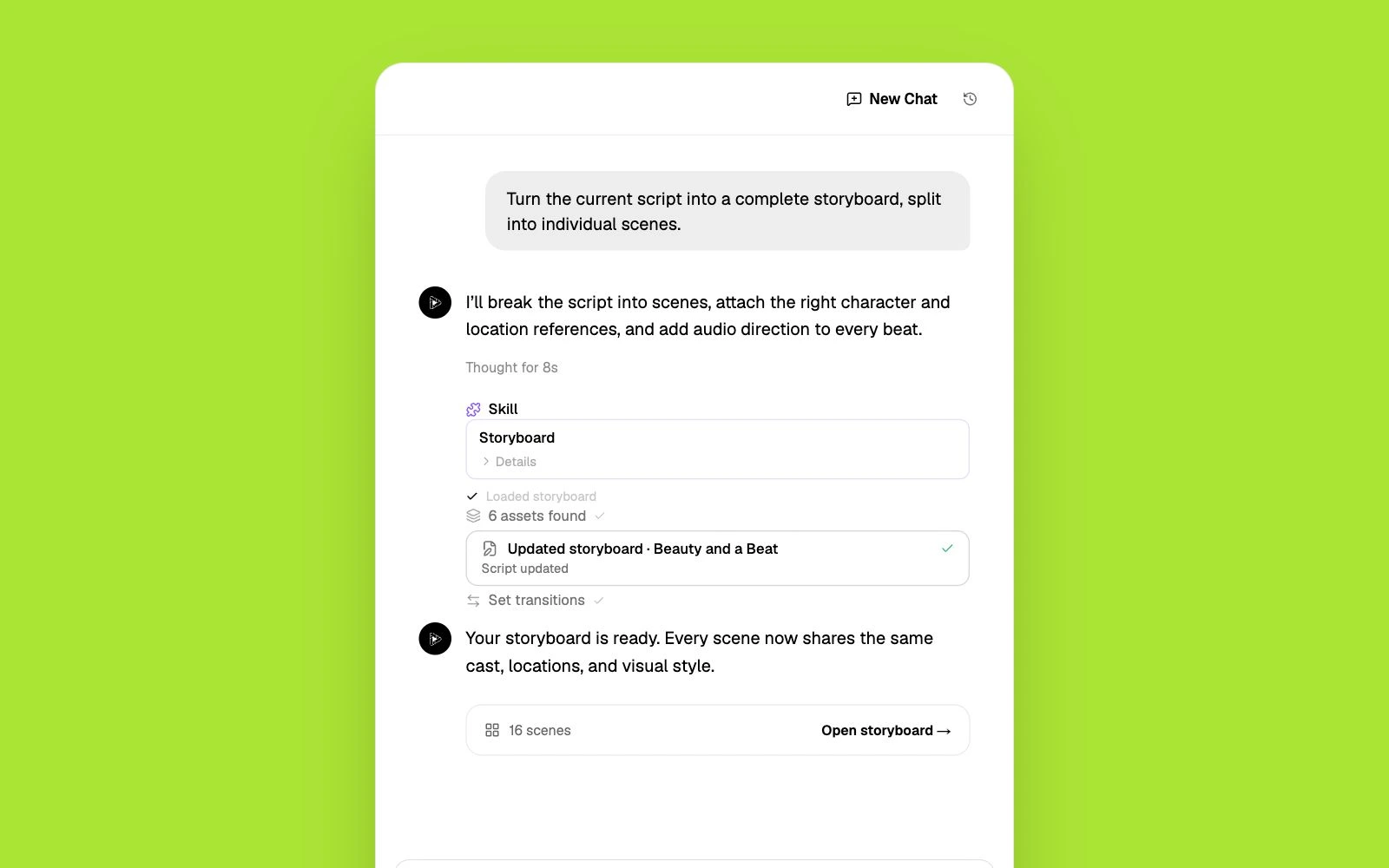
Tell Pixo what you’re making—your idea, audience, style, and length. The agent turns your brief into a script and a production-ready plan.
NovelAI writes stories and paints anime stills. Pixo's AI agent scripts, storyboards, generates and edits a finished 1080p video with a consistent cast.
NovelAI is a subscription creative suite with two halves: an AI storyteller that co-writes long-form fiction and text adventures with you, and an anime-focused image generator whose current model advertises sharper detail, more characters per image and full comic pages. The image side is unusually deep — Vibe Transfer, Multi-Character Prompting, Precise Reference, Director Tools, inpainting and Image2Image give an illustrator real control over a single frame. Tiers run from $10 to $25 a month, image generation draws on a monthly pool of Anlas credits, and the Paper trial offers a small number of free text and image generations. For writers and anime artists it is one of the most focused tools available. What it does not do is move. NovelAI ends at prose and stills: there is no video output, no storyboard that turns a chapter into shots, no timeline, and no audio. A character you have tuned across fifty portraits still has to be described again for each new image, and nothing carries that character into motion. If you're searching for a NovelAI alternative because the story is written and you now want to watch it, you want an agent, not a storyteller with a paintbox.
NovelAI produces text and still images and nothing in between. Turning a finished chapter into a trailer, a short film or a series episode means leaving the product and rebuilding the whole thing elsewhere.
Vibe Transfer and Precise Reference help a single generation match a look. They do not hold a cast across a sequence of shots, so a character drawn in scene one has to be re-anchored in scene two, and again in every scene after that.
Anlas pays for individual images, and Opus lifts that only under specific size, step and model conditions. Storyboarding a scene means budgeting one still at a time, with no sense of the sequence you are actually building.
NovelAI is a writing and illustration suite. Pixo is an agentic video platform that takes the same story through script, storyboard, generation and edit.
| Criterion | Pixo | NovelAI |
|---|---|---|
| Built for | Complete videos — short films, series episodes, music videos, trailers | Long-form fiction, text adventures and anime illustration |
| Output | A finished 1080p video with native audio | Prose and single still images; no video or animation |
| Cast consistency | Shared assets anchor characters, places and props across every shot | Per-image references such as Vibe Transfer and Precise Reference |
| Script & storyboard | Agent writes the script and storyboards every shot before rendering | Storyteller writes prose; no shot list or storyboard for images |
| Audio | AI voiceover, sound effects and music generated and mixed in | Text-to-speech for reading stories aloud; no soundtrack or mix |
| Pricing approach | 200 free credits to start; monthly plans with top-ups | Free trial of 50 text and 30 image generations; $10–25/mo tiers with monthly Anlas image credits |
Competitor details are based on publicly available information as of each page's last update and may change. Always verify current pricing and features on the vendor's site.
Tell Pixo what you’re making—your idea, audience, style, and length. The agent turns your brief into a script and a production-ready plan.
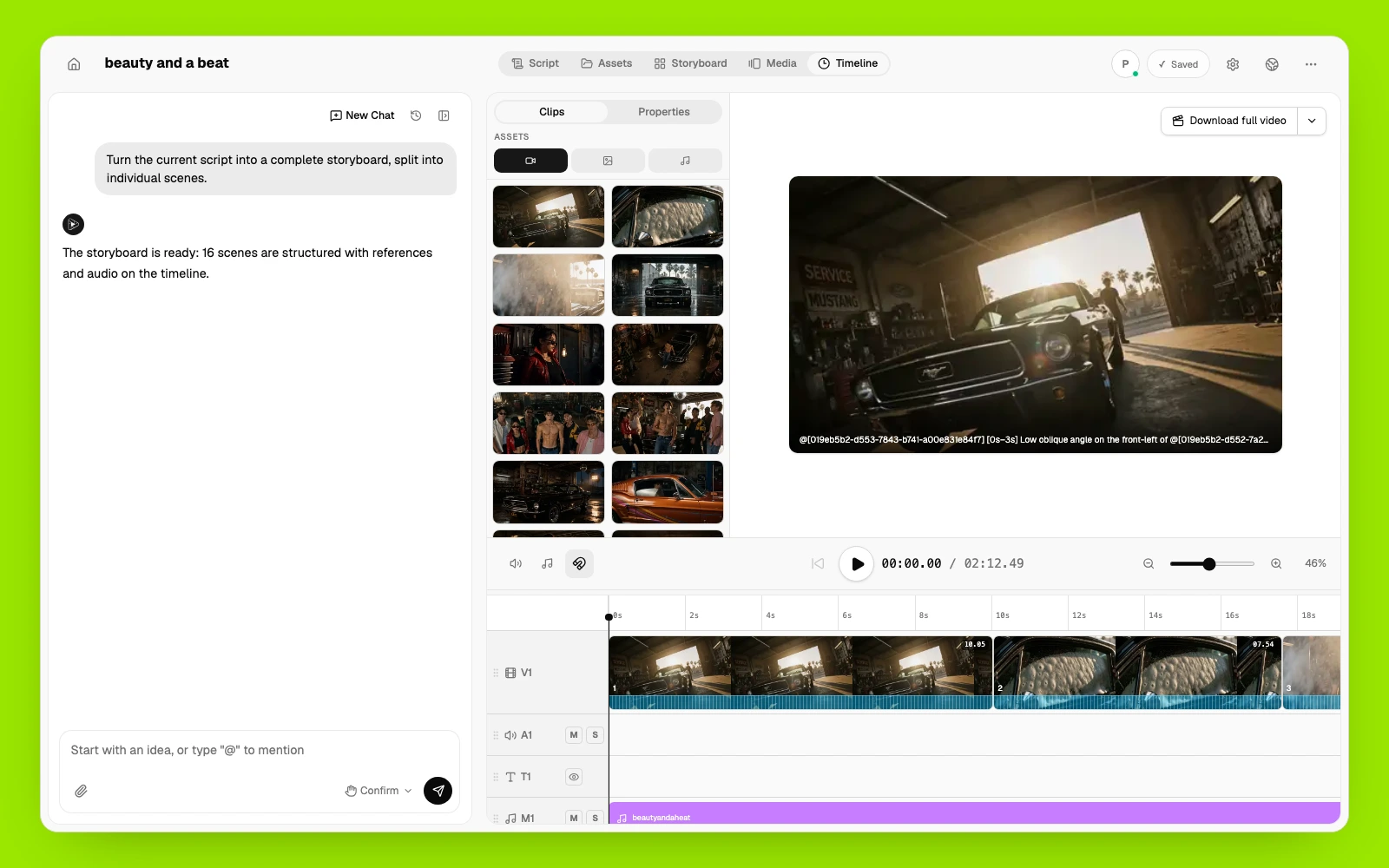
Pixo AI reviews every scene, camera move, reference, and sound cue before generation. Change one shot without starting the whole video over.
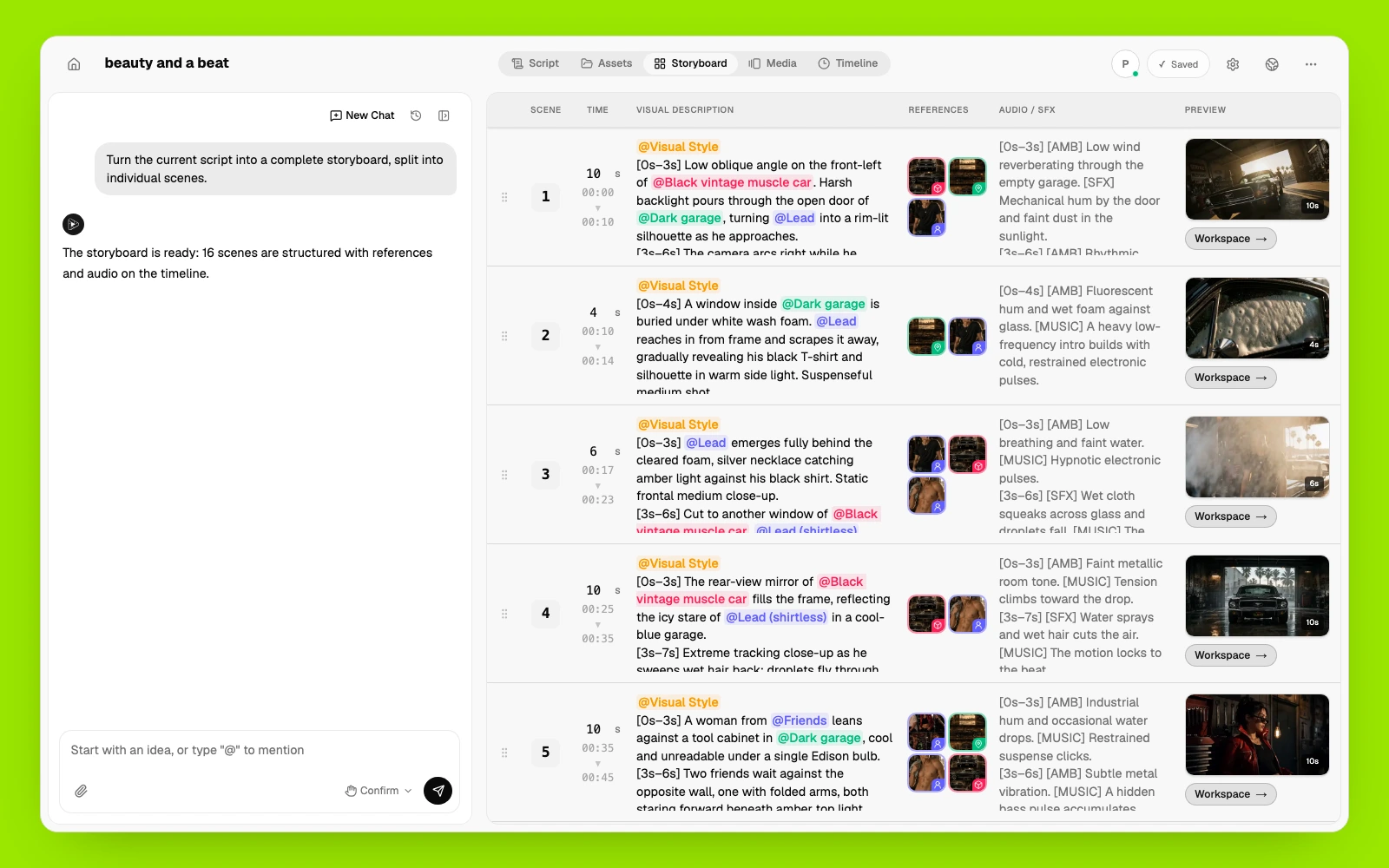
Pixo AI manages and reuses the same characters, products, locations, voices, and visual styles across every scene.
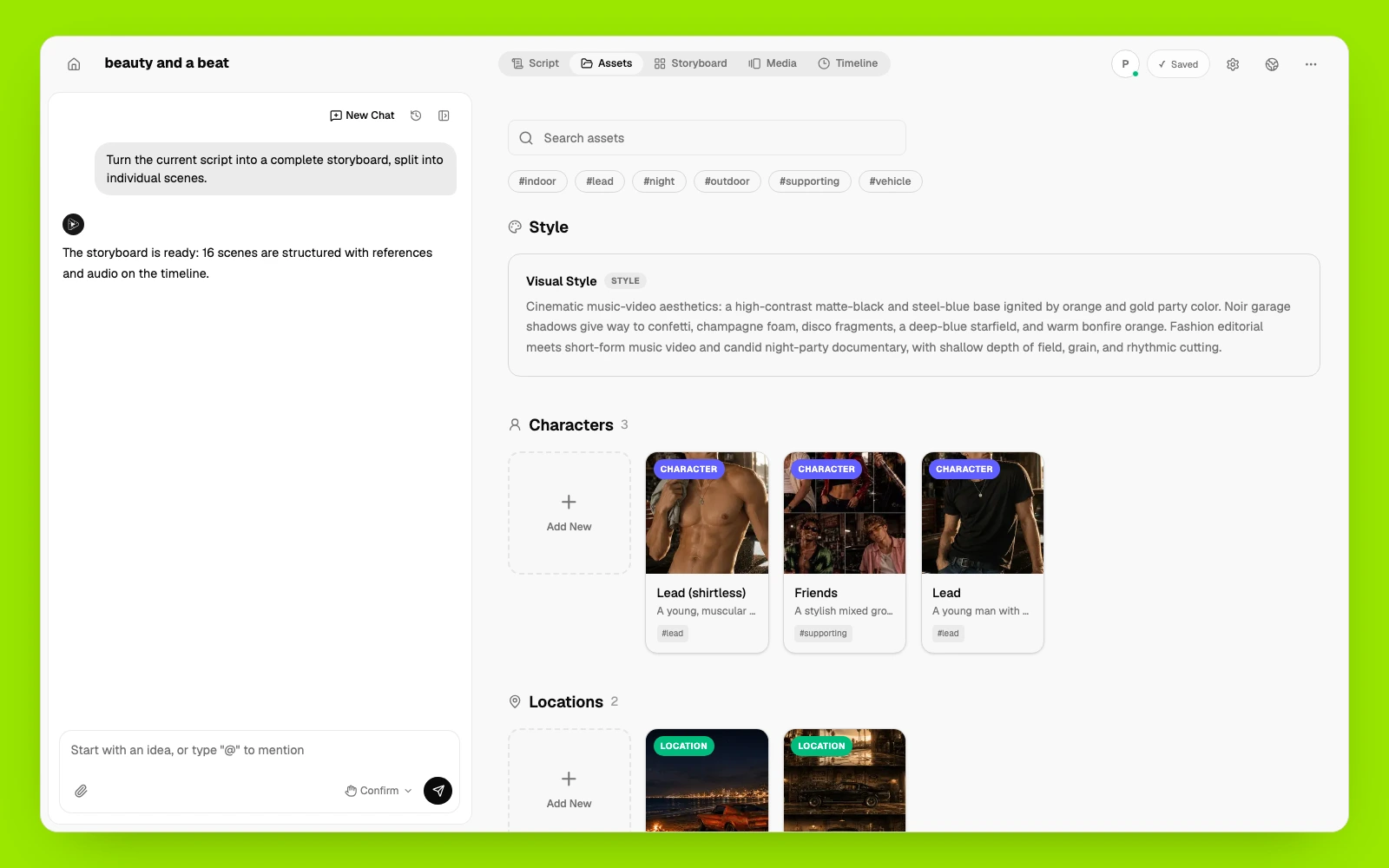
Pixo AI arranges clips, voiceover, music, and sound on one timeline. Regenerate what changed, keep what works, and export the finished video.
If writing or anime illustration is still the core need, these compete directly with NovelAI.
A fiction-writing assistant built around drafting, rewriting and brainstorming long manuscripts.
Best for: novelists who want an AI co-writer, not an image tool.
An AI text adventure where the story unfolds turn by turn from your actions.
Best for: interactive, game-like storytelling.
An anime image generator with a large community model library and character tools.
Best for: anime illustrators comparing models and styles.
A community image platform with many hosted models and workflow tools.
Best for: exploring a wide range of art models in one place.
Paste a chapter, a synopsis or a lorebook entry. The agent writes the script and breaks it into shots, so you direct a story instead of prompting one frame at a time.
Set up each character, location and prop as a shared asset. Every shot draws on the same anchors, so the cast holds across scenes and episodes.
Review the storyboard, adjust what is wrong and approve the rest. Pixo generates each shot with the best-fit model, cuts it together with voiceover and audio, and exports a finished 1080p video.
Common questions from creators comparing NovelAI with Pixo.
PixAI is an anime-focused art platform where video sits alongside image generation. Pixo is an AI agent that scripts, storyboards, generates, and edits a finished 1080p video from a single prompt.
Civitai is a model hub with an on-site image and clip generator. Pixo is an AI agent that scripts, storyboards, generates and edits a finished 1080p video.
SeaArt is a credit-metered art community for images and short clips. Pixo's AI agent scripts, storyboards and edits complete videos with Seedance, Kling, Veo and more.
OpenArt gets you a specific look without learning to prompt. Pixo's AI agents script, storyboard, and edit complete videos with your choice of top models — Seedance, Kling, Veo, and more.
Turn a story idea, outline, or short-film script into a connected short film with a storyboard, consistent characters, voice, sound, and final edit. Pixo's AI agent helps plan the storyboard, generate individual scenes with leading video models, add voice and sound, and refine the complete video in one workspace.
Turn a premise, story outline, or screenplay into a storyboard-led AI movie with consistent characters and connected scenes. Pixo's AI agent helps plan the storyboard, generate individual scenes with leading video models, add voice and sound, and refine the complete video in one workspace.
No credit card required • Free 200 credits