Start with a conversation.
Tell Pixo what you’re making—your idea, audience, style, and length. The agent turns your brief into a script and a production-ready plan.
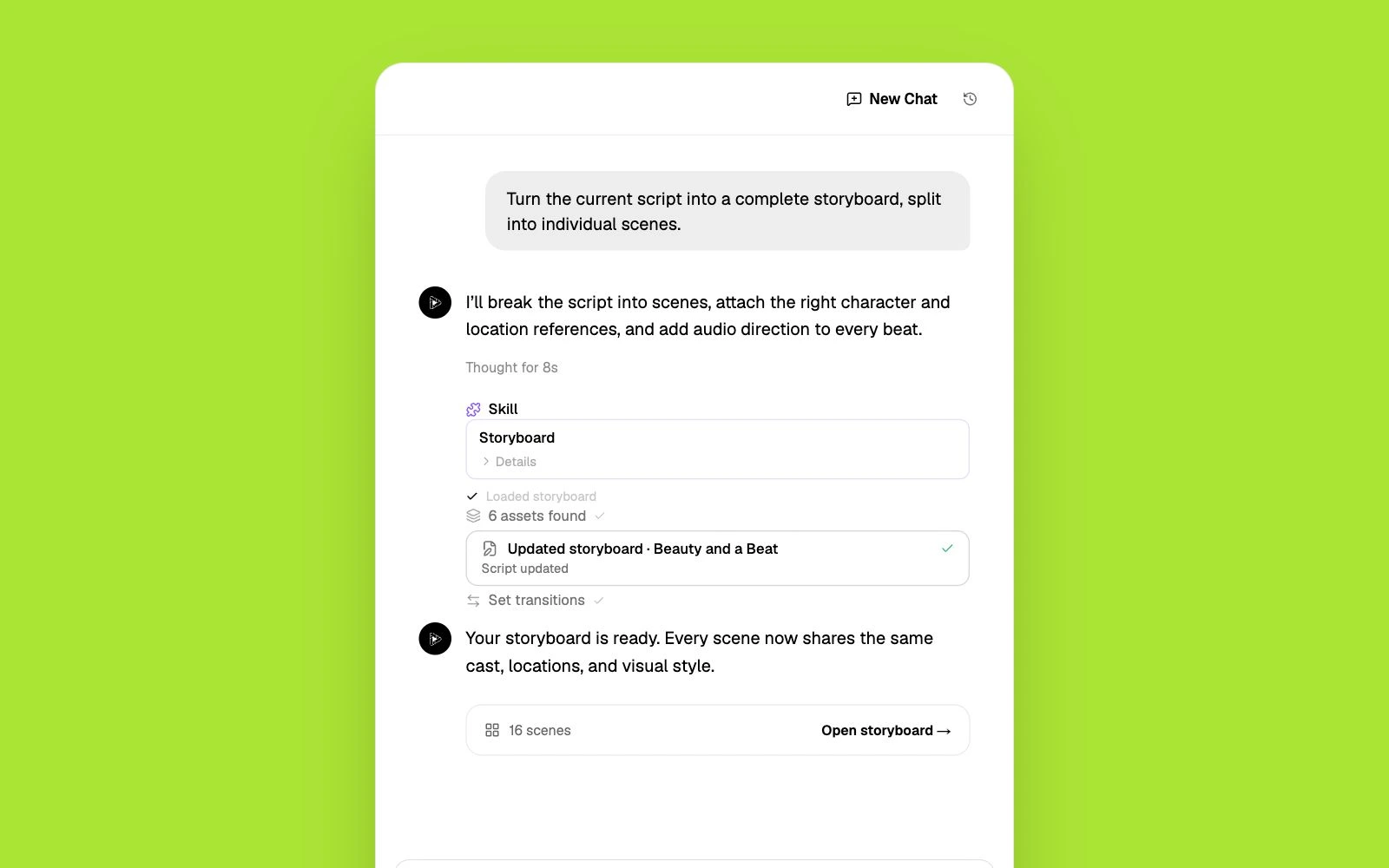
PixelDojo is a credit-based studio and API for dozens of image and video models. Pixo's AI agent scripts, storyboards, and edits a complete 1080p video with Seedance, Kling, Veo, Hailuo and more.
PixelDojo is a multi-model studio: one account, one credit balance and a long menu of models behind it — 78 image models and 54 video models as of August 2026, including Kling, Veo, Seedance and Wan for video, with LoRA training, a character studio, speech and music tools and a developer API alongside. For someone who wants to see what different models do with the same prompt, that breadth is the point. What the studio does not do is decide anything for you. Each generation is a form — model, prompt, inputs, resolution, duration — that returns one image or one clip and debits the balance, and reviewers describe credits going quickly once generations are high-resolution or a LoRA is training. There is no script, no shot list, no timeline, and the character studio holds a look for a generation rather than a cast for a sequence. Assembling clips into something you can publish, with voiceover and music, happens somewhere else. If you're searching for a PixelDojo alternative because you want the video made rather than a menu of models to make it with, you want an agent, not a credit-metered model menu.
Fifty-odd video models is a catalogue, not a plan. Which one suits a product close-up, which holds a face in motion, which handles a wide establishing shot — you learn by spending.
A generation returns a single clip. A one-minute piece is a dozen forms, a dozen debits and a dozen downloads, with nothing keeping the order or the pacing.
The character studio keeps a subject consistent for the generation in front of you. Across a sequence of shots, in different framings and light, continuity is back on you.
PixelDojo is a menu of models with a credit meter. Pixo is an agentic video platform that scripts, storyboards, routes each shot to a model and edits the result.
| Criterion | Pixo | PixelDojo |
|---|---|---|
| Built for | Complete videos of any format — ads, demos, music videos, short films | Generating single images and clips across a large catalogue of models |
| Working surface | A storyboard with a prompt, model and assets per shot | A generation form per model: prompt, inputs, resolution, duration |
| Script & storyboard | Agent writes the script and shot list before anything renders | None — sequence and pacing are assembled outside the tool |
| Model choice | Seedance, Kling, Veo, Hailuo and more, assigned per shot by the agent | Dozens of image and video models, each chosen and configured by you |
| Audio & edit | AI voiceover, sound effects and music generated and mixed into the cut | Speech and music generators available; the edit happens elsewhere |
| Pricing approach | 200 free credits to start; monthly plans with top-ups | Monthly credit subscriptions; every generation debits the balance |
Competitor details are based on publicly available information as of each page's last update and may change. Always verify current pricing and features on the vendor's site.
Tell Pixo what you’re making—your idea, audience, style, and length. The agent turns your brief into a script and a production-ready plan.
Pixo AI reviews every scene, camera move, reference, and sound cue before generation. Change one shot without starting the whole video over.
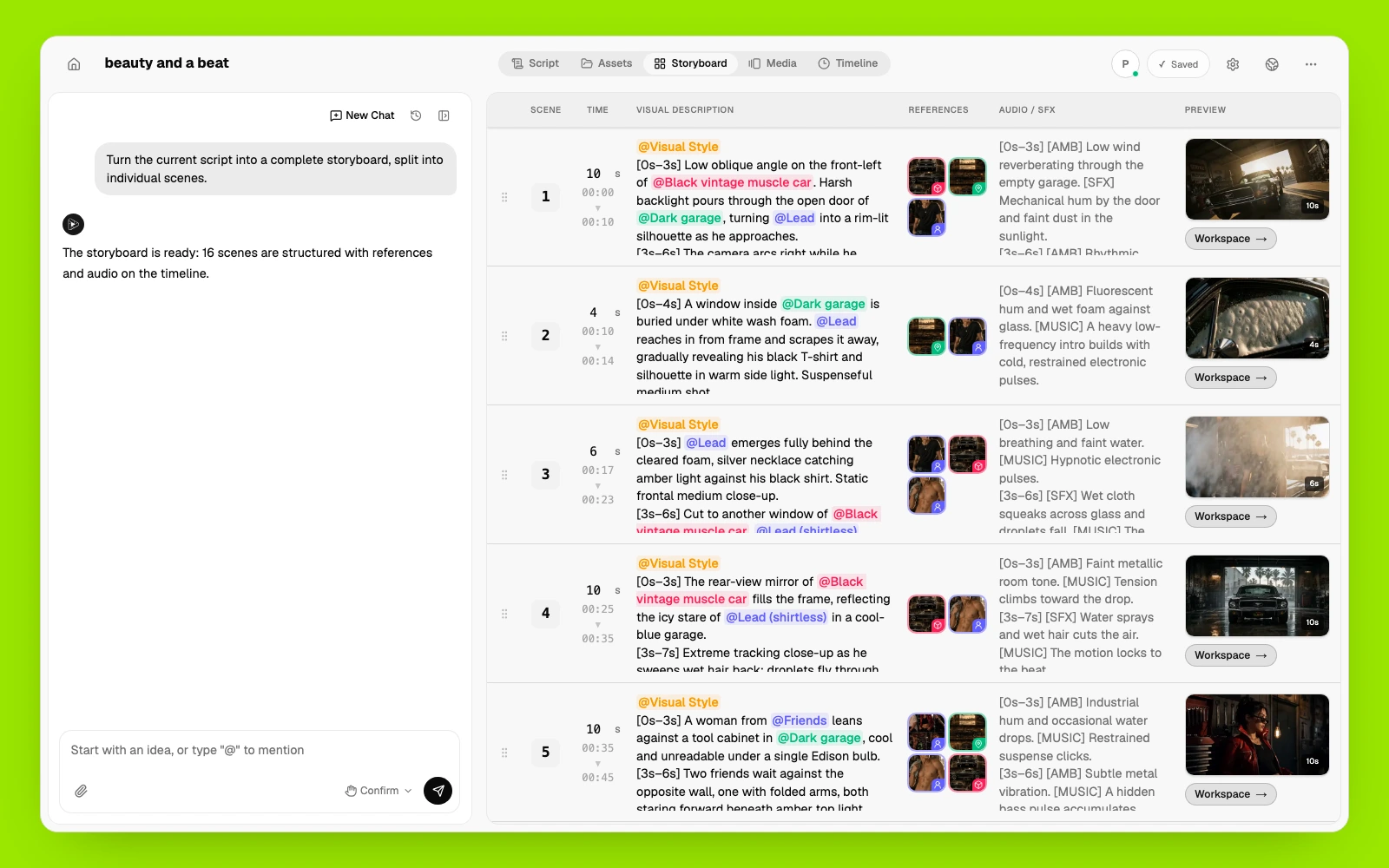
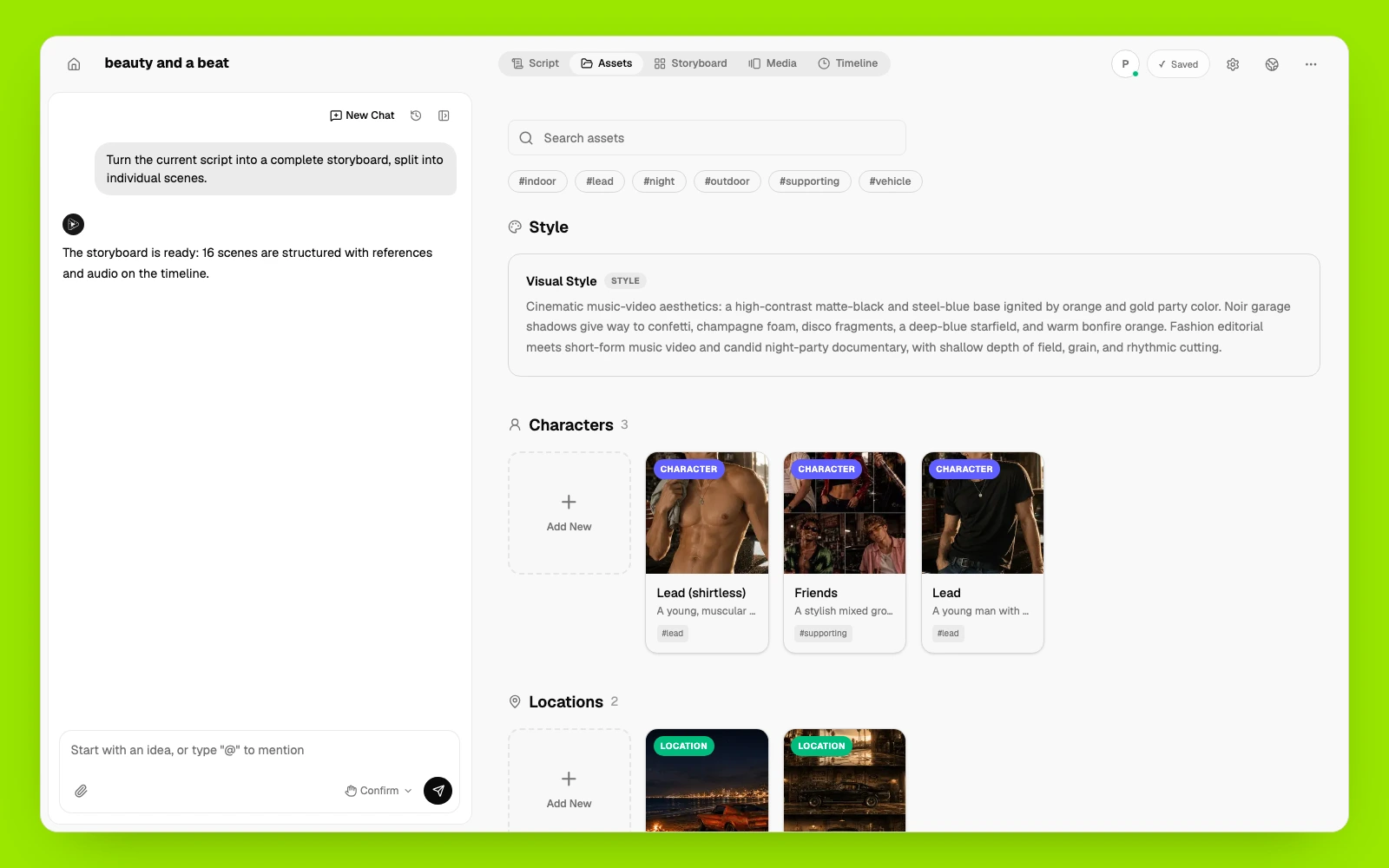
Pixo AI manages and reuses the same characters, products, locations, voices, and visual styles across every scene.
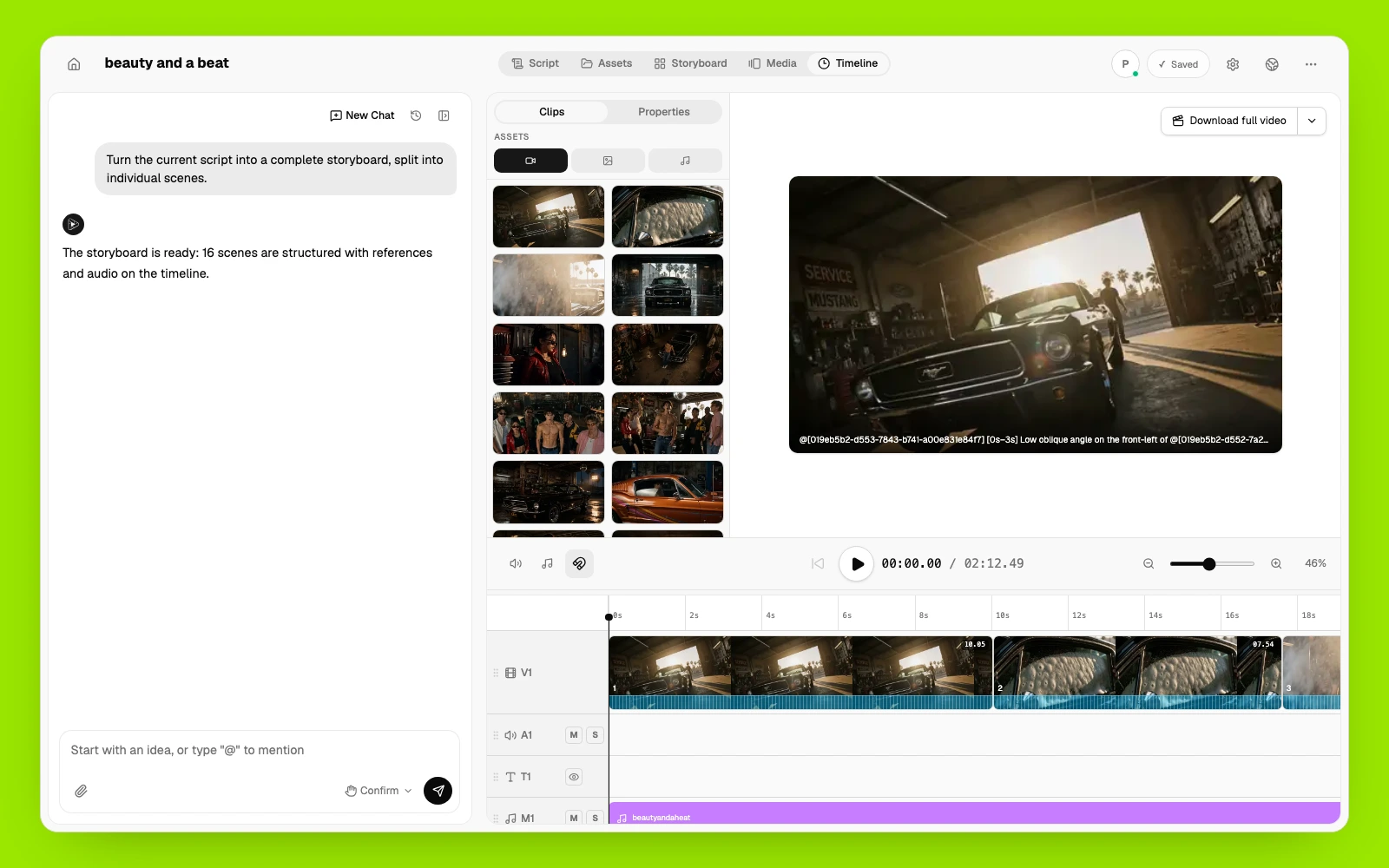
Pixo AI arranges clips, voiceover, music, and sound on one timeline. Regenerate what changed, keep what works, and export the finished video.
If a multi-model generation front end is what you want, these compete directly with PixelDojo.
A paid multi-model workspace for images, video, music and speech.
Best for: generating across models without building a workflow.
Dozens of video models behind one interface, with templates and effects.
Best for: comparing video models on the same prompt.
A hub for running prompts through a dozen-plus third-party video, image and music models on credits.
Best for: casual multi-model experiments.
Fast generation with a large library of effects and templates.
Best for: quick social clips with a hook.
Upload the character, product and location images you built in the character studio. In Pixo they become shared assets that anchor every shot.
Describe the video once. The agent writes the script and storyboard and assigns a model to each shot — you review the plan rather than the catalogue.
Once the storyboard is right, Pixo generates each shot, adds voiceover, sound effects and music, and exports a finished 1080p video.
Common questions from creators comparing PixelDojo with Pixo.
getimg.ai is a paid multi-model workspace for images, video, music and speech. Pixo puts an AI agent in front of the models — it scripts, storyboards, generates each shot and edits a finished 1080p video.
WaveSpeed is a pay-per-use inference API for 1,000+ models, Seedance and Kling among them. Pixo's AI agent scripts, storyboards, and edits a complete 1080p video with Seedance, Kling, Veo, Hailuo and more — no code.
MindVideo AI is a hub for running prompts through a dozen-plus third-party video, image and music models on credits. Pixo's AI agent scripts, storyboards and generates whole videos with Seedance, Kling, Veo, Hailuo and more.
Pollo AI puts dozens of video models behind one interface. Pixo is multi-model too — but adds an AI agent that scripts, storyboards, keeps characters consistent, and edits a finished 1080p cut.
Describe the video you want in everyday language. Pixo turns your text into a scene-by-scene storyboard, generates each shot with leading AI video models, and helps assemble a complete video you can refine before export.
Turn a photo, illustration, product shot, or AI image into video. Describe the camera movement, subject motion, and atmosphere you want, then generate with leading models including Kling, Veo, and Hailuo—all in Pixo.
No credit card required • Free 200 credits