Start with a conversation.
Tell Pixo what you’re making—your idea, audience, style, and length. The agent turns your brief into a script and a production-ready plan.
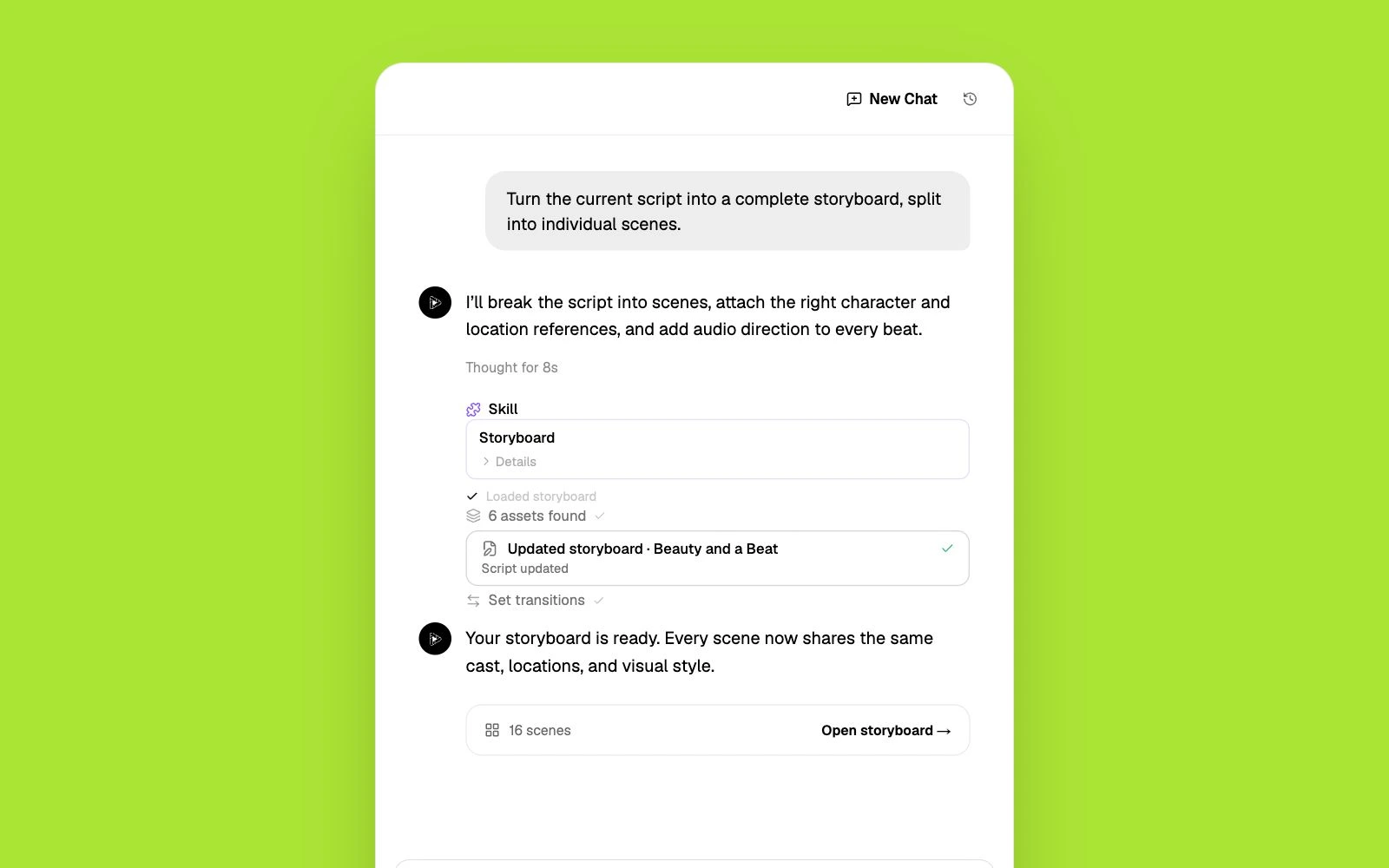
After Effects is Adobe's motion-graphics and compositing tool, animated keyframe by keyframe. Pixo's AI agent scripts, storyboards, generates the footage, and edits a finished 1080p video.
After Effects is Adobe's industry-standard application for motion graphics, visual effects and compositing. Title sequences, animated logos, lower thirds, rotoscoping, tracking, particle systems, expressions, a deep plugin ecosystem and tight links to Premiere Pro and Photoshop — if a shot needs to be built or fixed frame by frame, this is the tool professionals reach for, and nothing on this page changes that. The people who search for an After Effects alternative split into two groups. The first wants the same kind of software with a different price or licence, and the "other alternatives" section below is for them. The second group is larger and quieter: people who opened After Effects because they need a video — an ad, a trailer, an explainer, a product launch — and discovered that it expects a plan, footage, design assets and hours of keyframing before anything appears. They do not want to animate; they want the result. If you're searching for an After Effects alternative because you need a finished video and not a composition, you want an agent, not an animation tool.
Nothing moves until you make it move. Each element gets its own layer, keyframes, easing and effects, and a thirty-second piece can be a day's work for an experienced motion designer — longer for everyone else.
After Effects animates and composites what you bring. Live footage, 3D renders, stock, illustrations — the scenes themselves are produced elsewhere, which means a camera, a stock licence or another application before the real work starts.
The single-app subscription is US$22.99 a month on an annual plan billed monthly, and the interface assumes you already know what a precomp, a null and an expression are. That is fair for a professional tool; it is a poor fit for someone who needs one video by Friday.
These are different tools for different jobs. After Effects animates and composites layers by hand. Pixo directs a whole video — script, shots, footage, cut — from a brief.
| Criterion | Pixo | Adobe After Effects |
|---|---|---|
| Built for | Finished videos — ads, trailers, explainers — produced from a brief by an AI agent | Motion graphics, VFX and compositing, animated by hand at keyframe precision |
| Workflow | Describe the video; the agent scripts, storyboards, generates and cuts it — you review and approve | Build compositions layer by layer with keyframes, expressions, effects and tracking |
| Script & storyboard | Agent writes the script and storyboards every shot before anything renders | None — you arrive with a plan and material; After Effects animates them |
| Motion graphics & compositing | Not the job — scenes are generated by AI video models, not animated or composited by hand | Industry standard — rotoscoping, tracking, particles, expressions, plugins |
| Footage source | Generated per shot with Seedance, Kling, Veo, Hailuo and more | Footage, renders and design assets you bring or make in other Adobe apps |
| Pricing approach | 200 free credits to start; monthly plans with top-ups | Subscription — single app US$22.99/mo on an annual plan billed monthly, or bundled with Creative Cloud All Apps; 7-day free trial |
Competitor details are based on publicly available information as of each page's last update and may change. Always verify current pricing and features on the vendor's site.
Tell Pixo what you’re making—your idea, audience, style, and length. The agent turns your brief into a script and a production-ready plan.
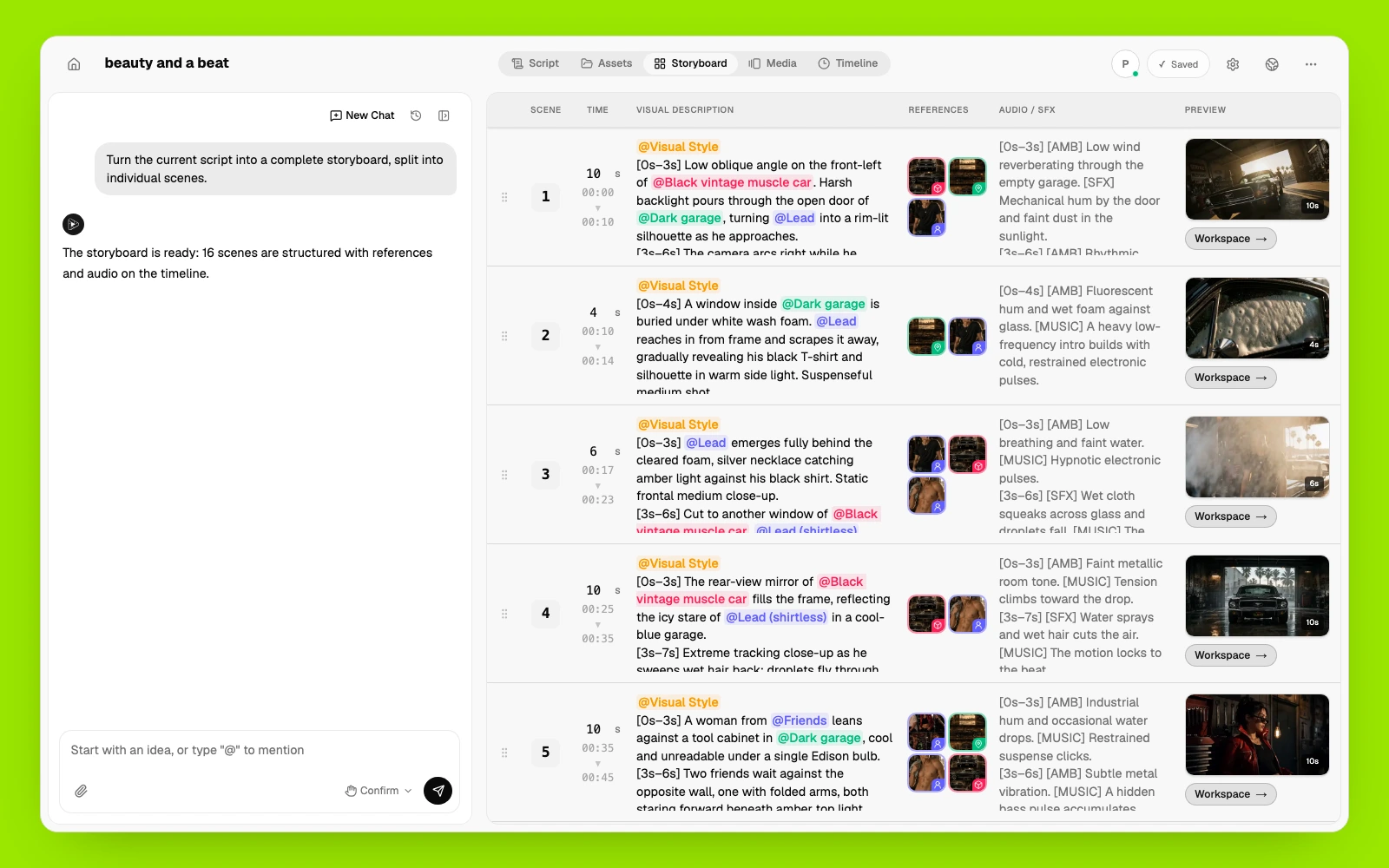
Pixo AI reviews every scene, camera move, reference, and sound cue before generation. Change one shot without starting the whole video over.
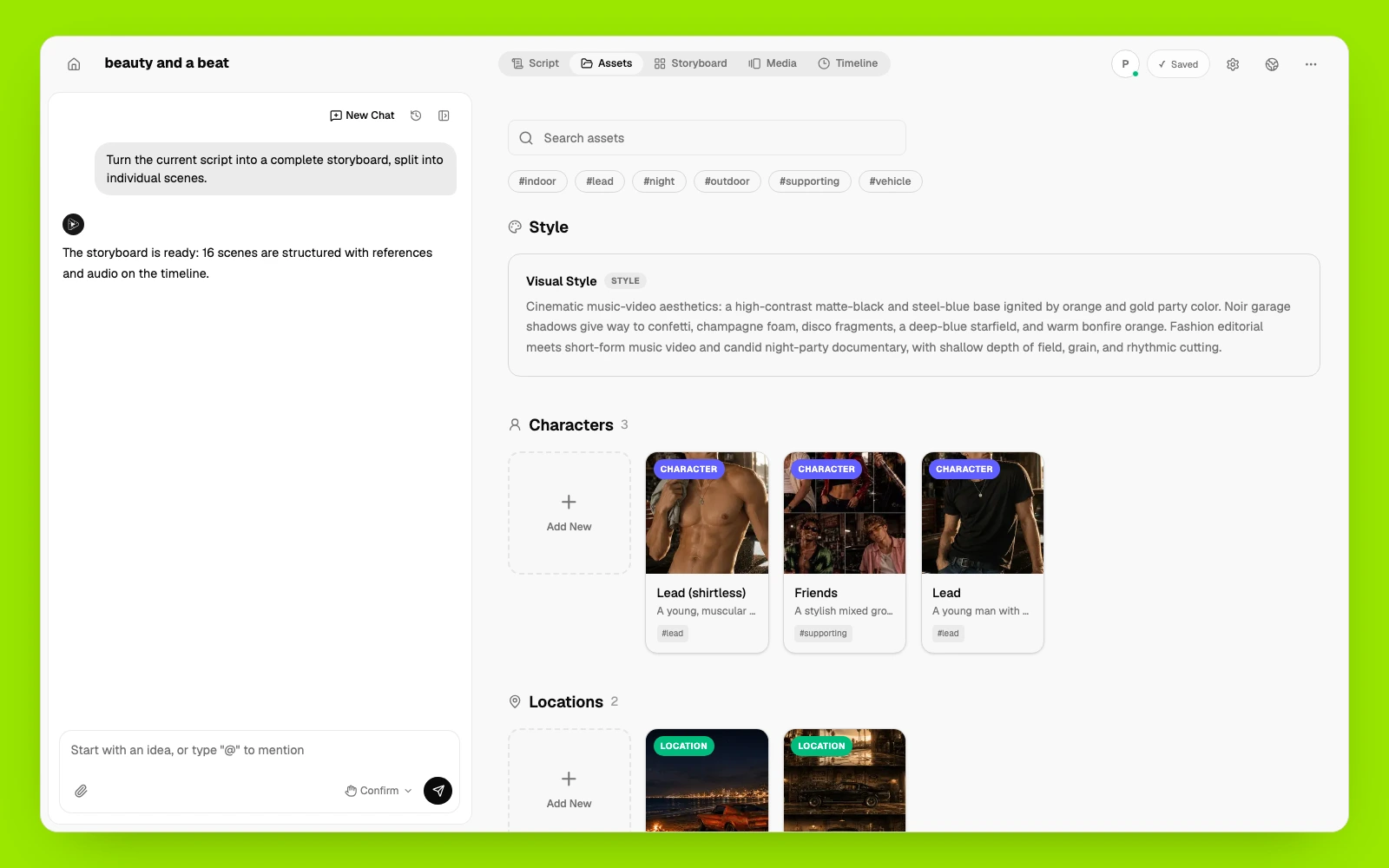
Pixo AI manages and reuses the same characters, products, locations, voices, and visual styles across every scene.
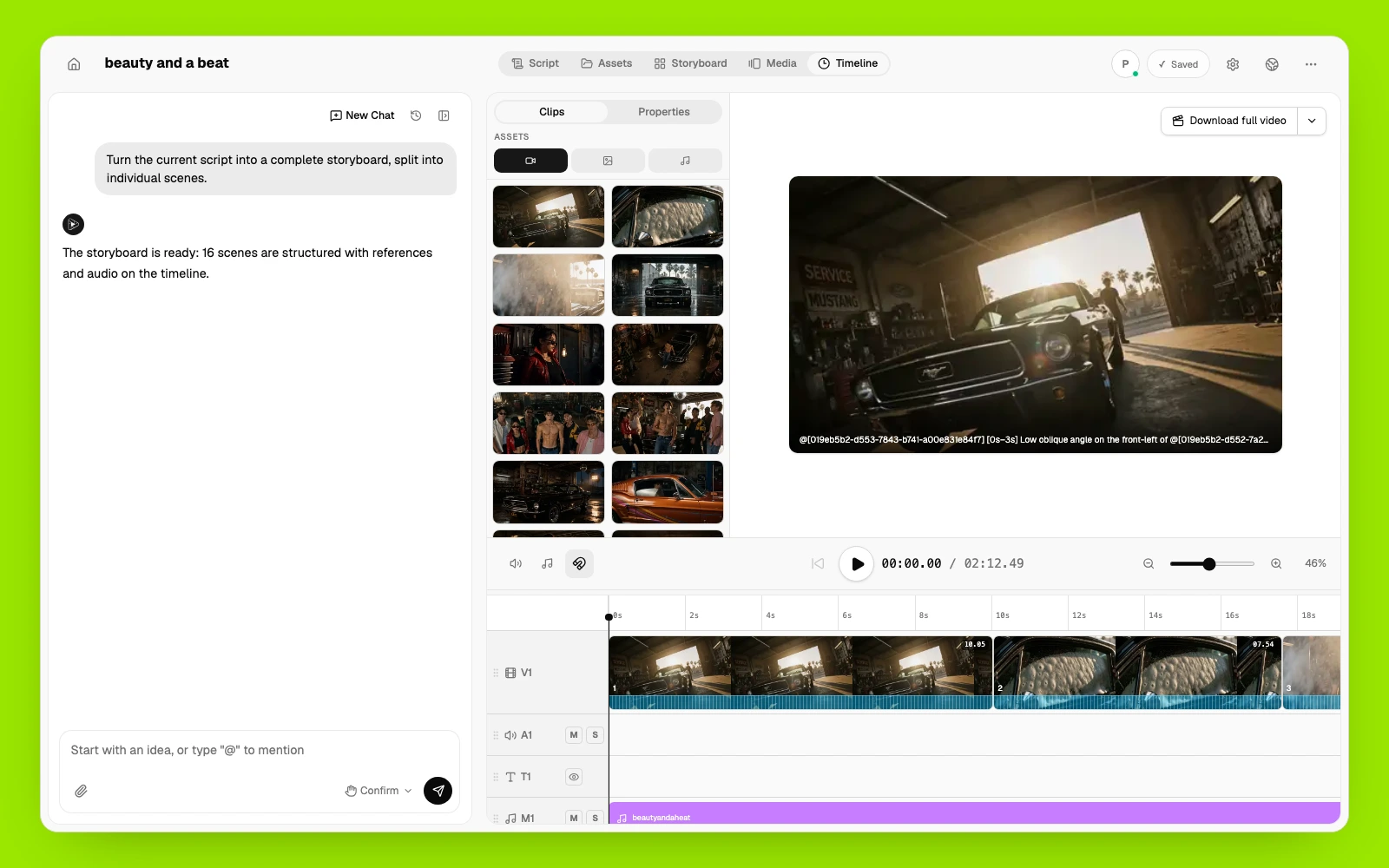
Pixo AI arranges clips, voiceover, music, and sound on one timeline. Regenerate what changed, keep what works, and export the finished video.
If you do need keyframes, compositing or VFX, these are real After Effects alternatives — Pixo is not one of them.
Blackmagic's editor with Fusion, a node-based compositor, built in; a free edition covers most needs.
Best for: editors who want grading, editing and compositing in one application.
Free, open-source 3D suite with a capable compositor and motion-graphics workflow.
Best for: 3D-driven motion design without a subscription.
Apple's motion-graphics app, sold for a one-time price and tightly integrated with Final Cut Pro.
Best for: Mac-based editors producing titles and graphics for Final Cut.
A modern 2D motion-design tool built around procedural, data-driven animation.
Best for: motion designers who want generative and data-driven graphics.
If the deliverable is a composited effect, a title package or a lower third, stay in After Effects. If it is a video that tells a story or sells a product, and the animation was just the means to get there, move to step two.
Tell Pixo what the video is for — audience, tone, length, platform, the product or character it centres on. The agent writes the script and storyboards every shot for you to review before anything renders.
Pixo generates each shot with the best-fit model, edits the sequence with voiceover, sound effects and music, and exports a finished 1080p video. Change what you want changed; the agent regenerates only that.
Common questions from creators comparing After Effects with Pixo.
Adobe Firefly generates commercially-safe images and short video clips inside Creative Cloud. Pixo is a standalone AI agent that scripts, storyboards, and edits a complete 1080p video from a single prompt.
Clipchamp is Microsoft's built-in editor, waiting for footage you have to supply. Pixo's AI agents script, storyboard, and edit complete videos with your choice of top models — Seedance, Kling, Veo, and more.
VEED is a browser editor that finishes footage you already filmed. Pixo's AI agents script, storyboard, and edit complete videos with your choice of top models — Seedance, Kling, Veo, and more.
Runway is a pro creative suite where you operate every tool by hand. Pixo is an AI agent that scripts, storyboards, generates, and edits a finished 1080p video from a single prompt.
Turn a premise, synopsis, book, film concept, or campaign brief into a paced trailer with a hook, escalating beats, title cards, voice, and sound. Pixo's AI agent helps plan the storyboard, generate individual scenes with leading video models, add voice and sound, and refine the complete video in one workspace.
Turn a campaign brief, offer, audience, and brand direction into a complete promotional video with a clear message and channel-ready variants. Pixo's AI agent helps plan the storyboard, generate individual scenes with leading video models, add voice and sound, and refine the complete video in one workspace.
No credit card required • Free 200 credits