Start with a conversation.
Tell Pixo what you’re making—your idea, audience, style, and length. The agent turns your brief into a script and a production-ready plan.
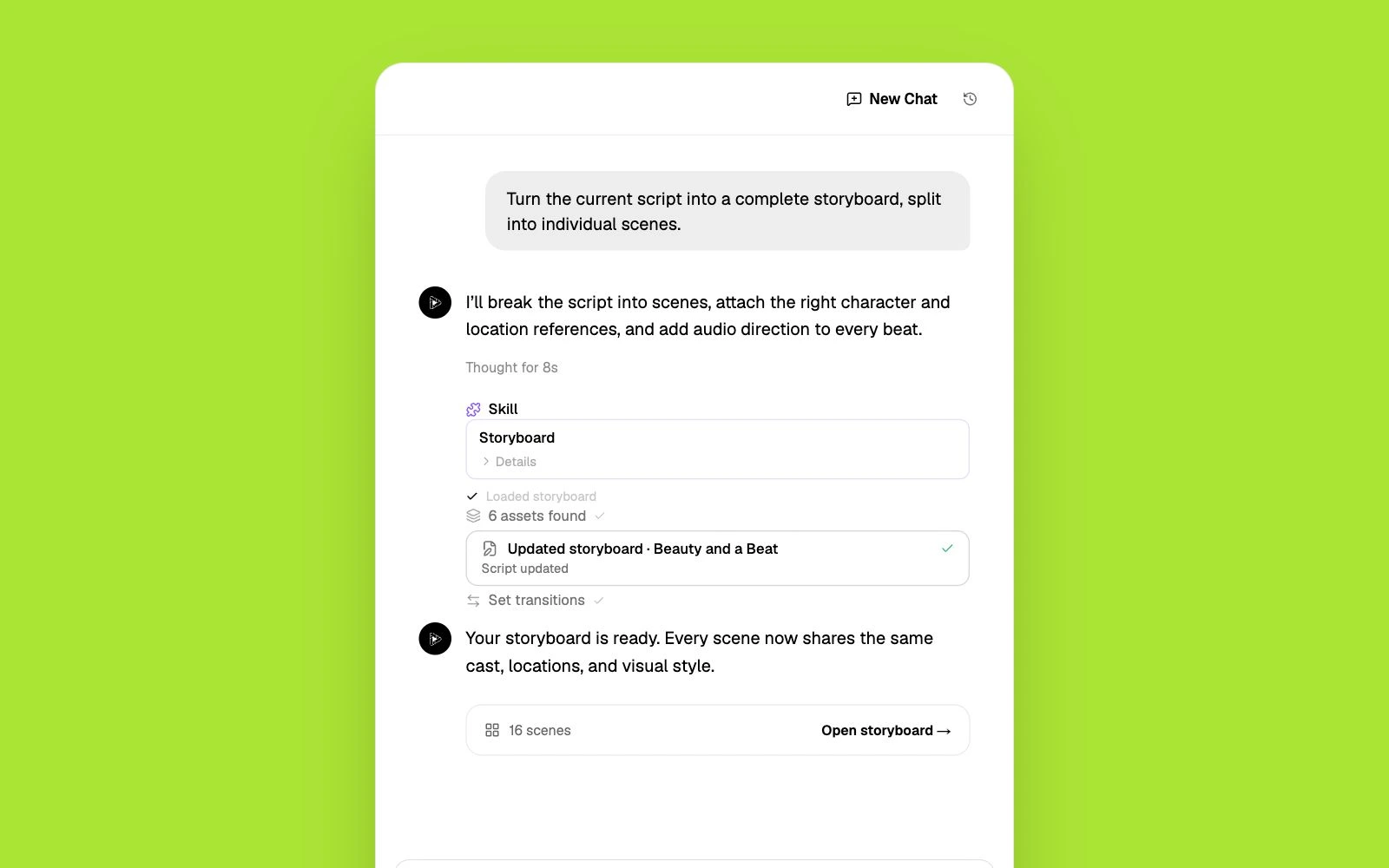
Cartesia is a developer voice-AI API: Sonic text-to-speech, Ink speech-to-text and voice agents. Pixo generates the voiceover inside a finished 1080p video that its AI agent scripts, storyboards and edits — no code.
Cartesia is well-regarded voice infrastructure for developers. Sonic, its text-to-speech model, is built for real-time use with low latency and dozens of languages; Ink handles streaming speech-to-text; and a managed voice-agent product adds telephony on top. Pricing, as of August 2026, runs from a free tier of 20K credits a month licensed for personal, non-commercial use, through Pro at $5 a month with a commercial license, Startup at $49 and Scale at $299, with voice agents billed at $0.06 a minute. All of it is reached through an API, because it is built to be embedded in someone else's product. A narrated video is a different job. Cartesia gives you audio; the script, the visuals, the timing of the voice to the cut, the music and the export are yours to arrange, and a developer key is the front door. Pixo is not a voice API and does not run real-time voice agents. It generates the voiceover as one part of a finished video the agent scripts, storyboards and edits. If you're searching for a Cartesia alternative because you want a voice in a video rather than a voice in your code, you want an agent, not a speech API.
Cartesia returns speech. The footage the voice sits over, the music under it and the edit that lines them up are a separate project in separate tools.
The way in is an API key and a request, metered per call. There is no project, no script and no storyboard — and the free tier is licensed for personal use only.
A speech file has no idea which shot it belongs to. Cutting picture to narration, holding the same voice across a series and re-recording one line when the script changes is manual work.
Cartesia is a speech API for developers. Pixo is an agentic video platform in which the voiceover is one part of a finished, edited video.
| Criterion | Pixo | Cartesia |
|---|---|---|
| Built for | Complete videos of any format — ads, demos, music videos, short films | Developers embedding real-time speech and voice agents in their own products |
| Interface | An AI agent and a storyboard you review in the browser | REST API and SDKs; a playground for testing voices |
| What you get back | A finished 1080p video with voiceover, sound effects and music mixed in | An audio stream or file |
| Script & storyboard | Agent writes the script and shot list, including what the voice says | None — you supply the text |
| Voice use case | Narration and dialogue timed to the shots of a video | Real-time speech, transcription and phone or in-app voice agents |
| Pricing approach | 200 free credits to start; monthly plans with top-ups | Free tier for personal use; Pro from $5/mo, Startup $49/mo, Scale $299/mo; voice agents billed per minute |
Competitor details are based on publicly available information as of each page's last update and may change. Always verify current pricing and features on the vendor's site.
Tell Pixo what you’re making—your idea, audience, style, and length. The agent turns your brief into a script and a production-ready plan.
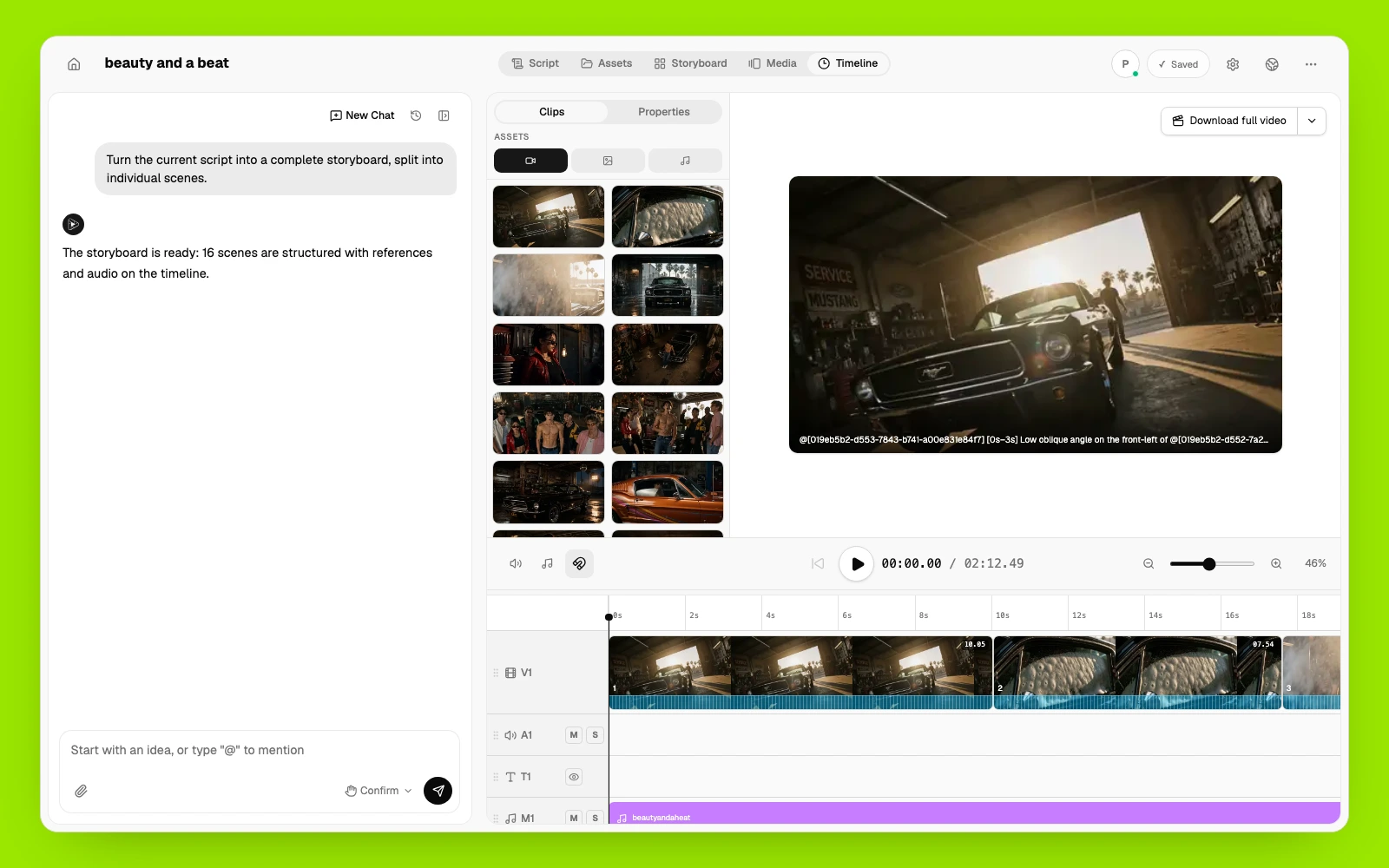
Pixo AI reviews every scene, camera move, reference, and sound cue before generation. Change one shot without starting the whole video over.
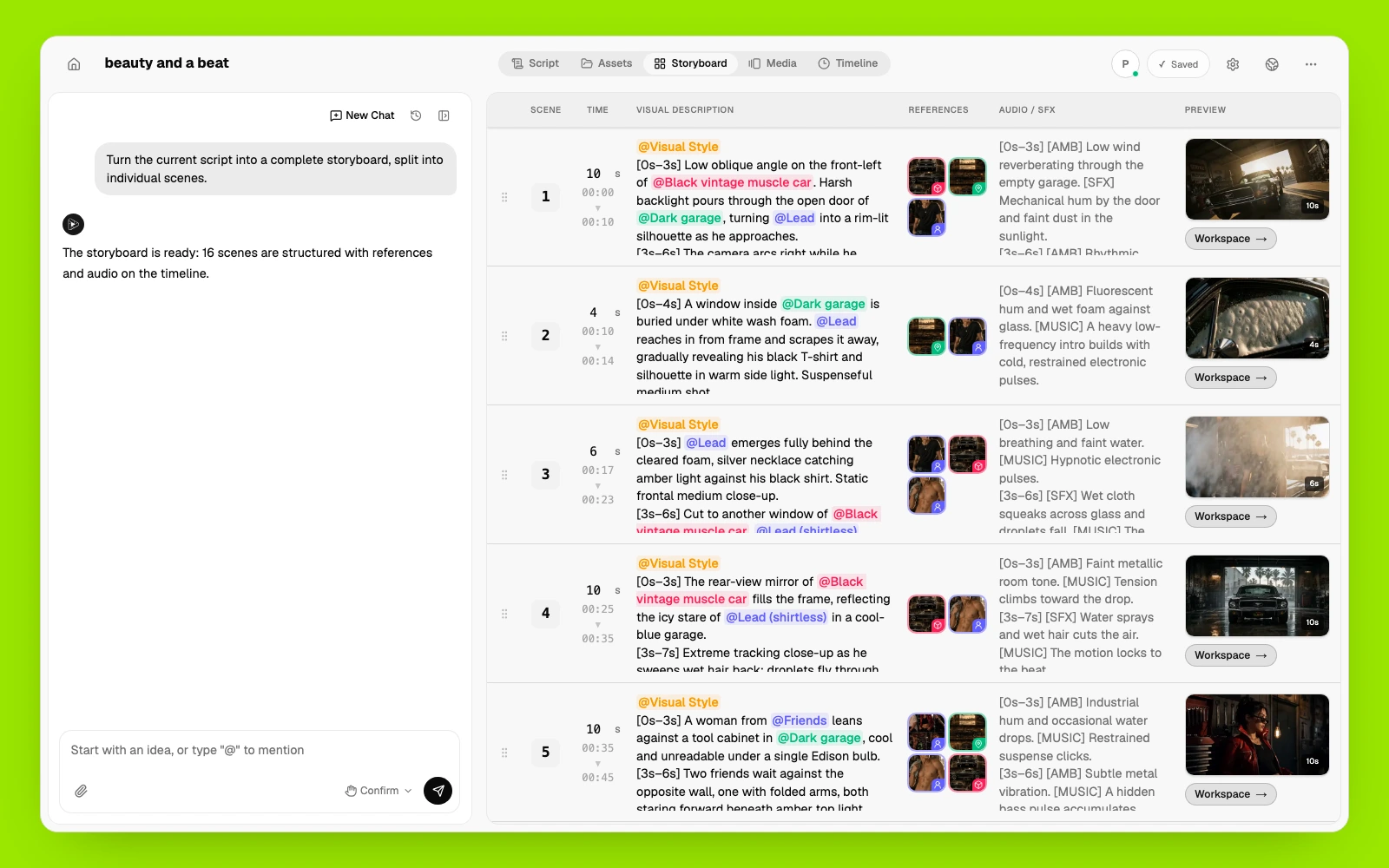
Pixo AI manages and reuses the same characters, products, locations, voices, and visual styles across every scene.
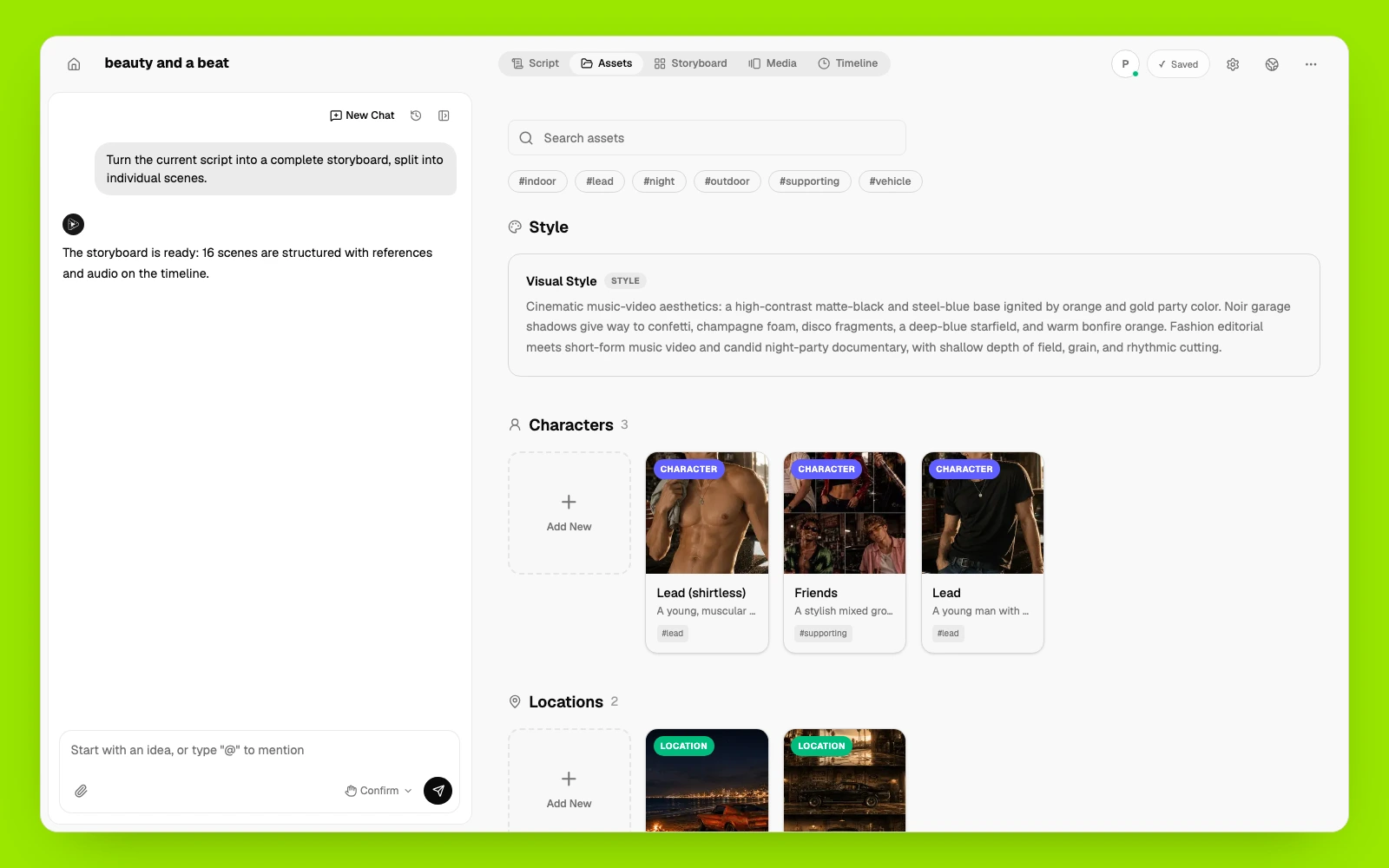
Pixo AI arranges clips, voiceover, music, and sound on one timeline. Regenerate what changed, keep what works, and export the finished video.
If a voice tool is what you actually need, these compete more directly with Cartesia.
The most widely used voice platform, with a large voice library, cloning, dubbing and an API.
Best for: high-quality voices with or without code.
A free browser text-to-speech box that returns an MP3 under a daily character cap.
Best for: a quick voice file with no account.
A text-to-video tool that assembles stock clips under an AI voiceover.
Best for: narrated slideshows from a script.
Transcript-driven editing with overdub and strong audio cleanup.
Best for: editing recorded speech and podcasts.
Bring the text you were sending to the API, or just the brief. The agent turns it into a script and a shot list with narration planned per shot.
Each shot shows what is on screen and what the voice says. Tighten a line or swap a shot before anything is generated.
Pixo generates the shots, the voiceover, sound effects and music, mixes them, and exports a finished 1080p video.
Common questions from creators comparing Cartesia with Pixo.
ElevenLabs is the leading AI voice suite, with video models attached on paid plans. Pixo's AI agent scripts, storyboards, generates and voices a finished 1080p video with Seedance, Kling, Veo, Hailuo and more.
TTSMP3 is a free browser text-to-speech box that returns an MP3 under a daily character cap. Pixo is an AI agent that scripts, storyboards, generates and voices a finished 1080p video with Seedance, Kling, Veo, Hailuo and more.
Fliki assembles stock clips under a voiceover. Pixo generates original footage — AI agents script, storyboard, and edit real generative video in 1080p.
Descript is the best way to edit a recording and no help without one. Pixo's AI agents script, storyboard, and edit complete videos with your choice of top models — Seedance, Kling, Veo, and more.
Turn an episode topic, script, or recorded audio into a full podcast video or visual episode with supporting scenes and channel-ready cuts. Pixo's AI agent helps plan the storyboard, generate individual scenes with leading video models, add voice and sound, and refine the complete video in one workspace.
Turn a concept, product, process, or lesson to explain into a structured explainer video with a visual script, clear scenes, and narration. Pixo's AI agent helps plan the storyboard, generate individual scenes with leading video models, add voice and sound, and refine the complete video in one workspace.
No credit card required • Free 200 credits