Start with a conversation.
Tell Pixo what you’re making—your idea, audience, style, and length. The agent turns your brief into a script and a production-ready plan.
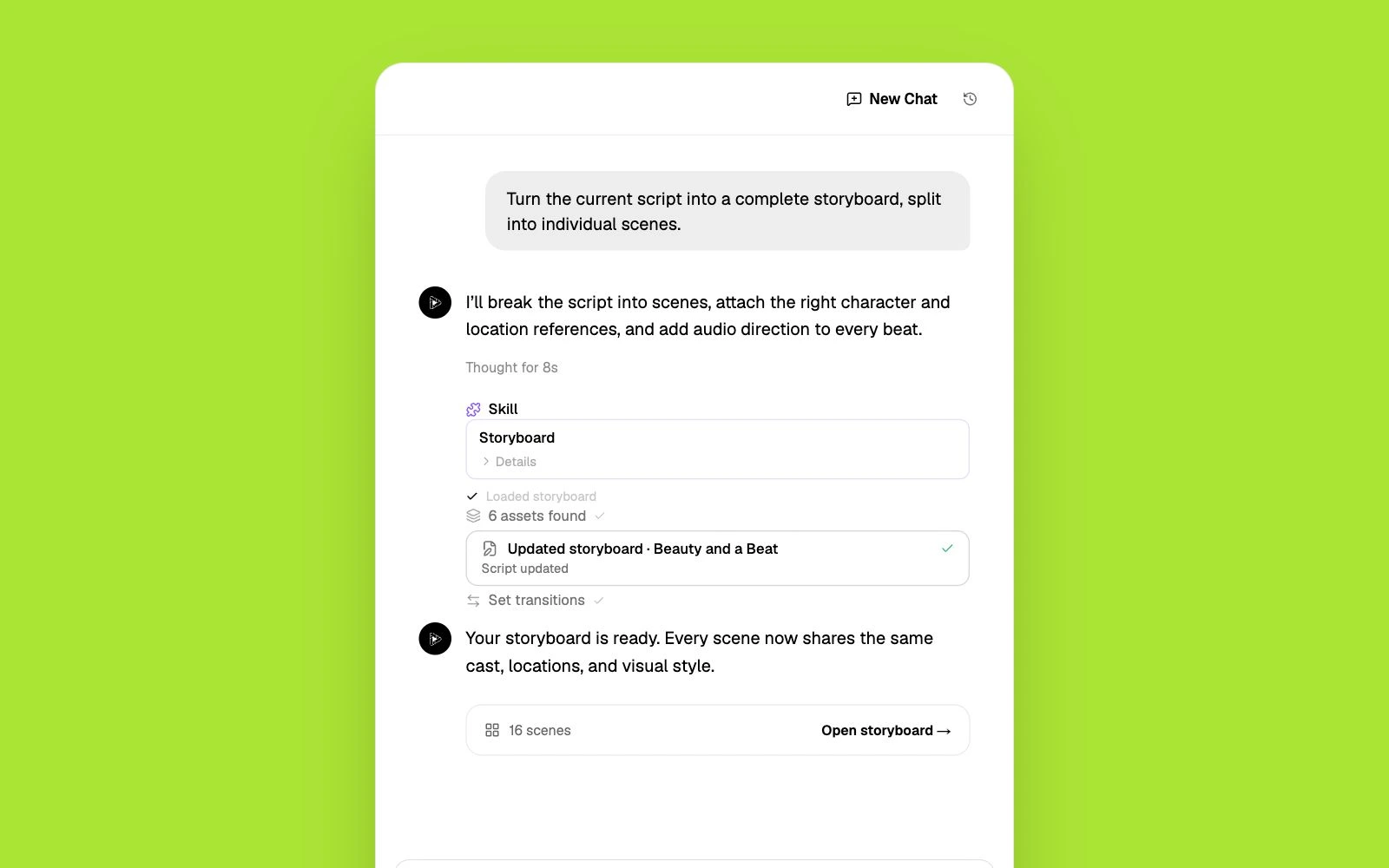
DaVinci Resolve is Blackmagic's professional edit, color, VFX and audio suite for footage you already have. Pixo's AI agent scripts, storyboards, generates every shot and edits a finished 1080p video.
DaVinci Resolve is Blackmagic Design's post-production suite, and one of the best pieces of software in its category. Editing, color, Fusion visual effects and Fairlight audio live in one application; its color tools are the industry reference; and the free edition is complete enough to export Ultra HD at 60 fps. As of August 2026 the current release is DaVinci Resolve 21, and the Studio edition is a one-time US$295 licence with free updates that unlocks the Neural Engine tools such as Magic Mask, Super Scale and Speed Warp. What Resolve does not do is make footage. Its AI assists an editor who already has material: it masks, reframes, retimes, transcribes and cleans up. There is no text-to-video, no script and no storyboard, and the five-page interface expects you to learn cutting, grading and mixing before a finished video exists. Many people searching for an alternative are not editors looking for another NLE; they need an ad, an explainer or a short film and would rather describe it than assemble it. If you're searching for a DaVinci Resolve alternative because you need a finished video and not an editing suite to master, you want an agent, not a non-linear editor.
Resolve edits, grades and mixes what you import. The scenes themselves come from a camera, a render or a stock licence, so the hardest part of the video is finished before Resolve opens.
Cut, Edit, Fusion, Color and Fairlight are each a discipline. Reviewers describe the interface as a lot to take in, and a first-time user can spend a weekend learning the layout before touching the story.
Magic Mask, Super Scale, Speed Warp and object removal are Studio-only, and all of them lean on a capable GPU. The free edition is complete for editing but caps output at Ultra HD 60 fps and leaves most Neural Engine features out.
DaVinci Resolve is a professional editing suite that finishes footage you already have. Pixo is an agentic video platform that writes, generates and cuts the video from a brief.
| Criterion | Pixo | DaVinci Resolve |
|---|---|---|
| Built for | Finished videos — ads, explainers, music videos, short films — produced from a brief by an AI agent | Professional editing, color grading, VFX and audio post on footage you bring |
| Workflow | Describe the video; the agent scripts, storyboards, generates and cuts it — you review and approve | Import media, cut on a timeline, grade, mix and render across five dedicated pages |
| Footage source | Generated per shot with Seedance, Kling, Veo, Hailuo and more | Camera files, renders and stock you bring — no text-to-video |
| AI's role | Directs the whole production — script, shot list, generation, audio and edit | Assists the editor — Magic Mask, Smart Reframe, Super Scale, voice isolation, transcription; most tools Studio-only |
| Color, VFX & audio post | Handled by the agent inside the generated cut — not a manual grading or compositing environment | Industry reference — node-based color, Fusion compositing, Fairlight mixing |
| Pricing approach | 200 free credits to start; monthly plans with top-ups | Free edition up to Ultra HD 60 fps; Studio is a one-time US$295 licence with free updates |
Competitor details are based on publicly available information as of each page's last update and may change. Always verify current pricing and features on the vendor's site.
Tell Pixo what you’re making—your idea, audience, style, and length. The agent turns your brief into a script and a production-ready plan.
Pixo AI reviews every scene, camera move, reference, and sound cue before generation. Change one shot without starting the whole video over.
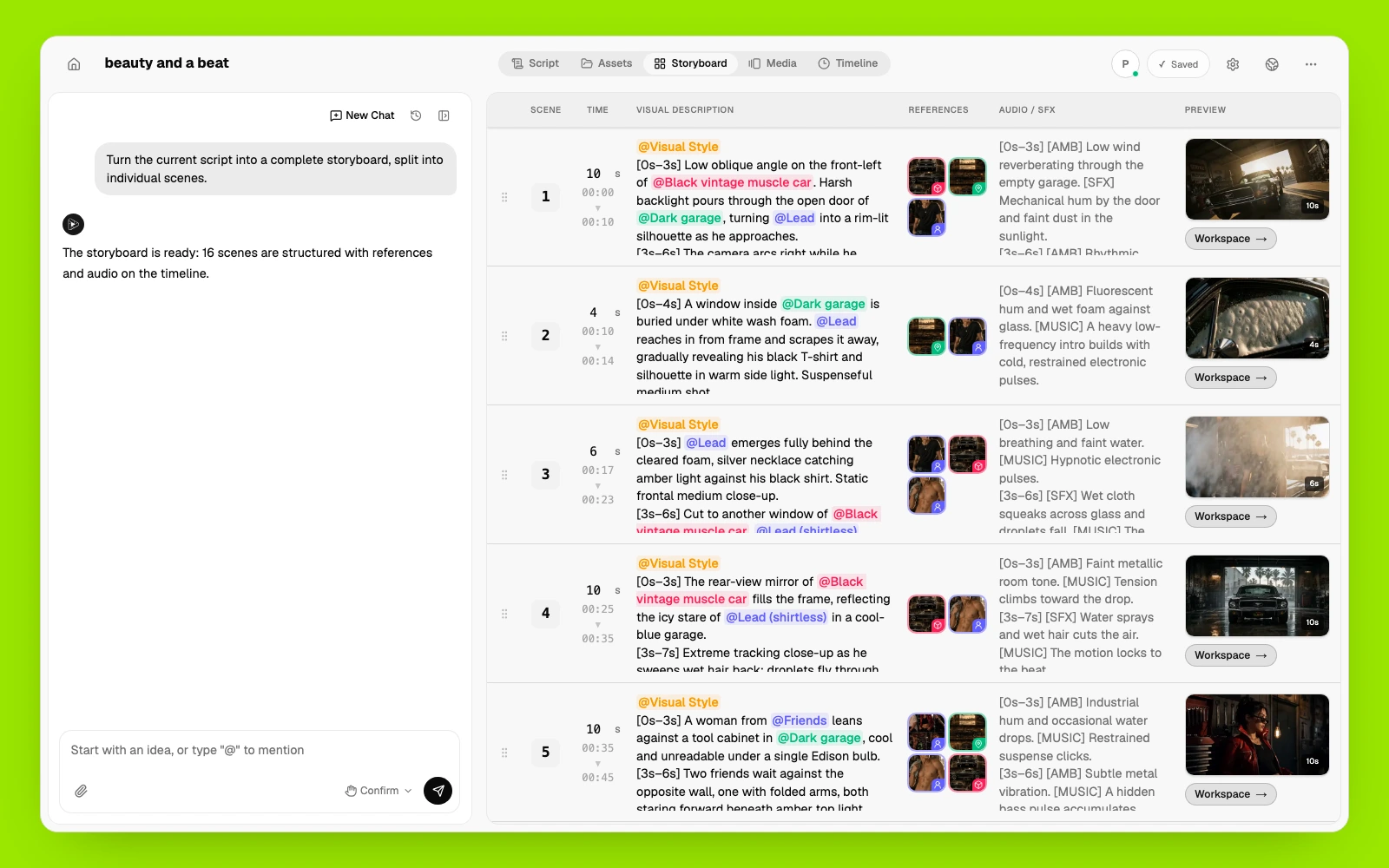
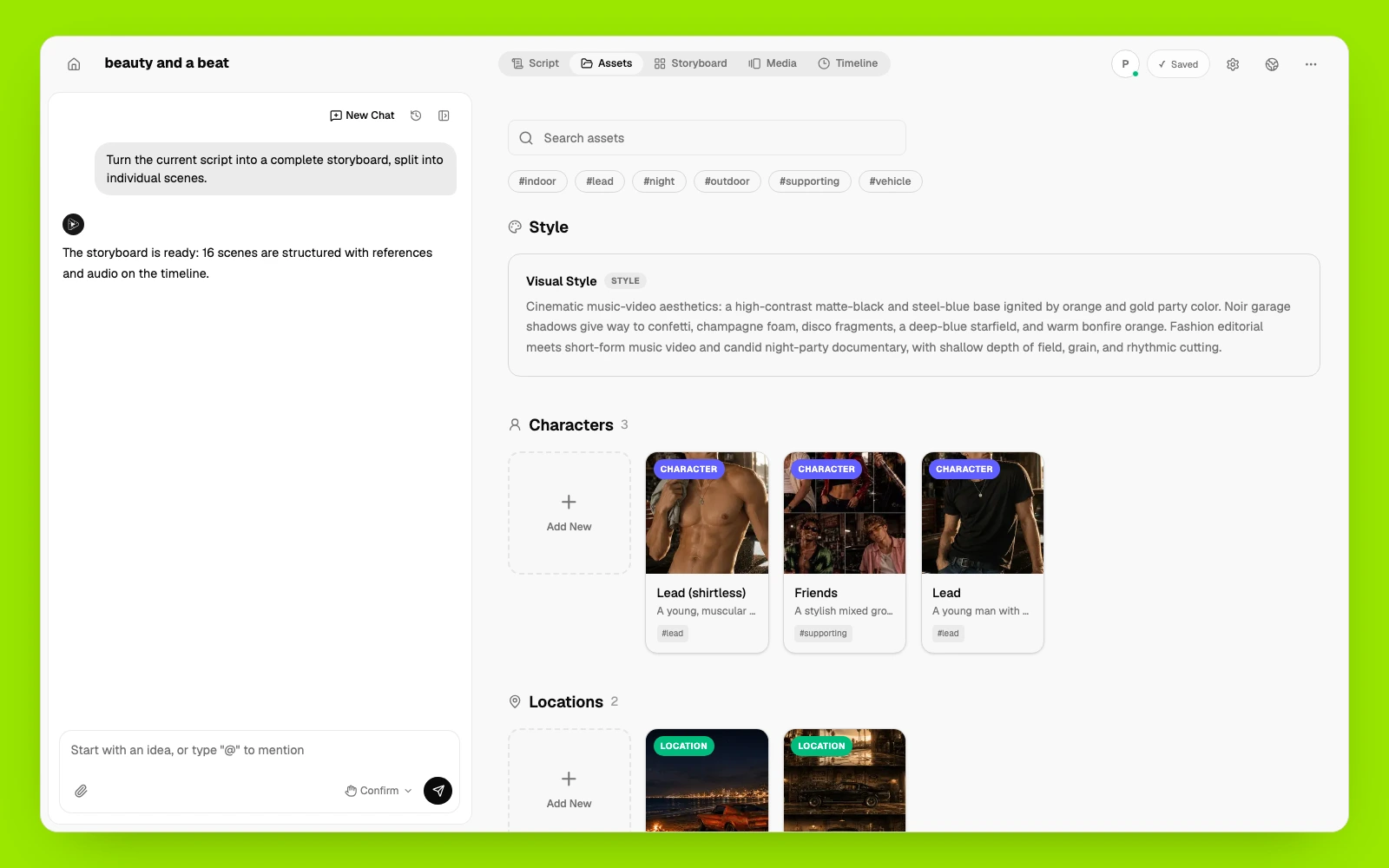
Pixo AI manages and reuses the same characters, products, locations, voices, and visual styles across every scene.
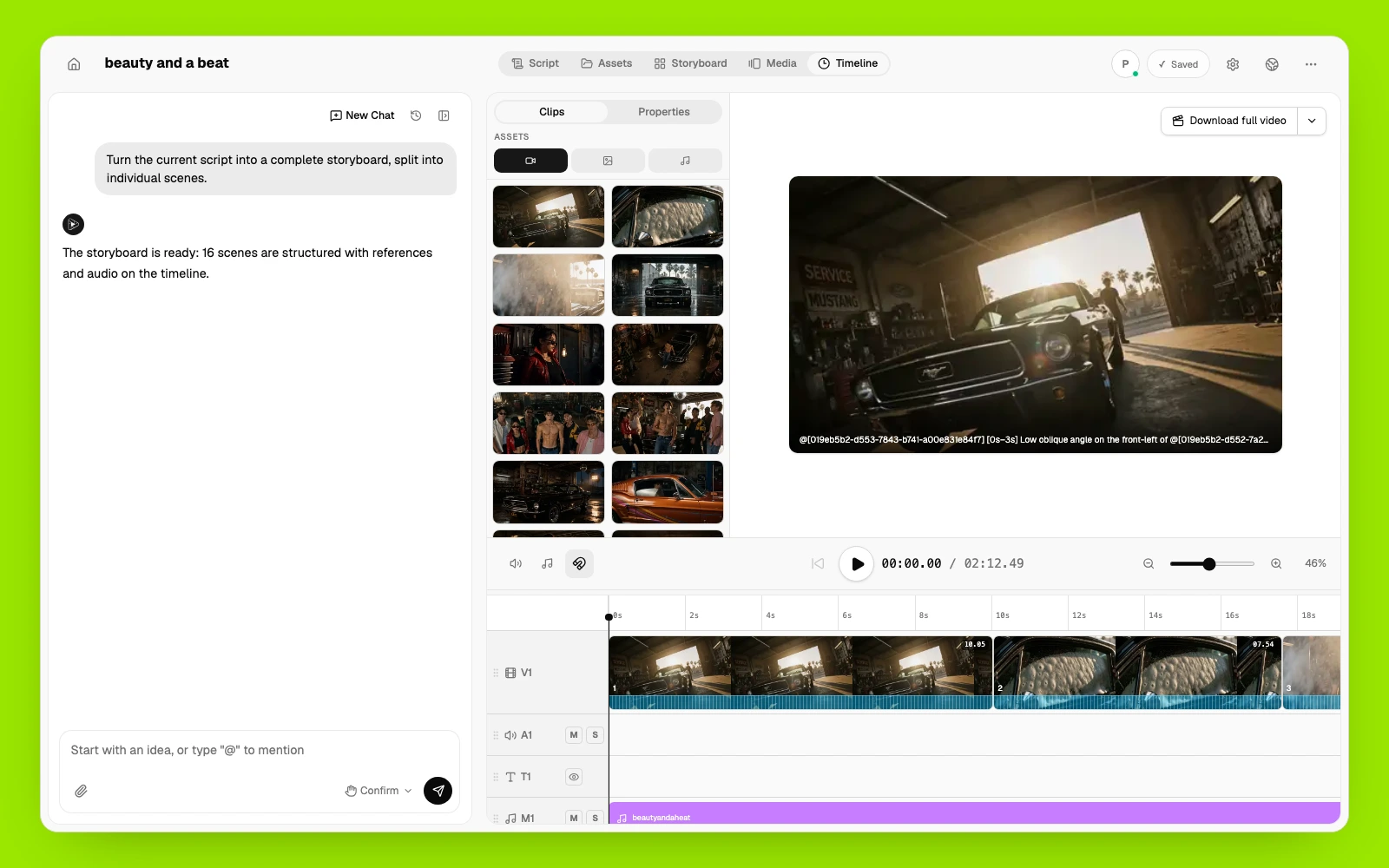
Pixo AI arranges clips, voiceover, music, and sound on one timeline. Regenerate what changed, keep what works, and export the finished video.
If you do need a professional editor, colorist's tools or a manual timeline, these are real DaVinci Resolve alternatives — Pixo is not one of them.
Adobe's subscription NLE, tightly integrated with After Effects, Photoshop and Firefly.
Best for: editors working inside the Adobe ecosystem.
Apple's editor, sold as a one-time purchase and tuned for Apple silicon.
Best for: editors on Apple silicon who want speed and a single upfront price.
A free, full-featured editor on desktop and mobile with a large template and effects library.
Best for: fast social edits without a learning curve.
Microsoft's browser editor, bundled with Windows and Microsoft 365.
Best for: quick edits inside a Microsoft workplace.
If the job is grading, mixing or cutting footage you already shot, stay in Resolve. If the job is a video that exists only as an idea, and the editing was just the way to get there, move to step two.
Tell Pixo what the video is for — audience, tone, length, platform, and the product or character it centres on. The agent writes the script and storyboards every shot for you to review before anything renders.
Pixo generates each shot with the best-fit model, edits the sequence with voiceover, sound effects and music, and exports a finished 1080p video. Change what you want changed; the agent regenerates only that.
Common questions from creators comparing DaVinci Resolve with Pixo.
After Effects is Adobe's motion-graphics and compositing tool, animated keyframe by keyframe. Pixo's AI agent scripts, storyboards, generates the footage, and edits a finished 1080p video.
Adobe Premiere is Adobe's subscription editing suite for footage you already shot. Pixo's AI agent scripts, storyboards, generates every shot with Seedance, Kling, Veo, Hailuo and more, and edits a finished 1080p video.
Clipchamp is Microsoft's built-in editor, waiting for footage you have to supply. Pixo's AI agents script, storyboard, and edit complete videos with your choice of top models — Seedance, Kling, Veo, and more.
Descript is the best way to edit a recording and no help without one. Pixo's AI agents script, storyboard, and edit complete videos with your choice of top models — Seedance, Kling, Veo, and more.
Turn a premise, story outline, or screenplay into a storyboard-led AI movie with consistent characters and connected scenes. Pixo's AI agent helps plan the storyboard, generate individual scenes with leading video models, add voice and sound, and refine the complete video in one workspace.
Turn a story idea, outline, or short-film script into a connected short film with a storyboard, consistent characters, voice, sound, and final edit. Pixo's AI agent helps plan the storyboard, generate individual scenes with leading video models, add voice and sound, and refine the complete video in one workspace.
No credit card required • Free 200 credits