Start with a conversation.
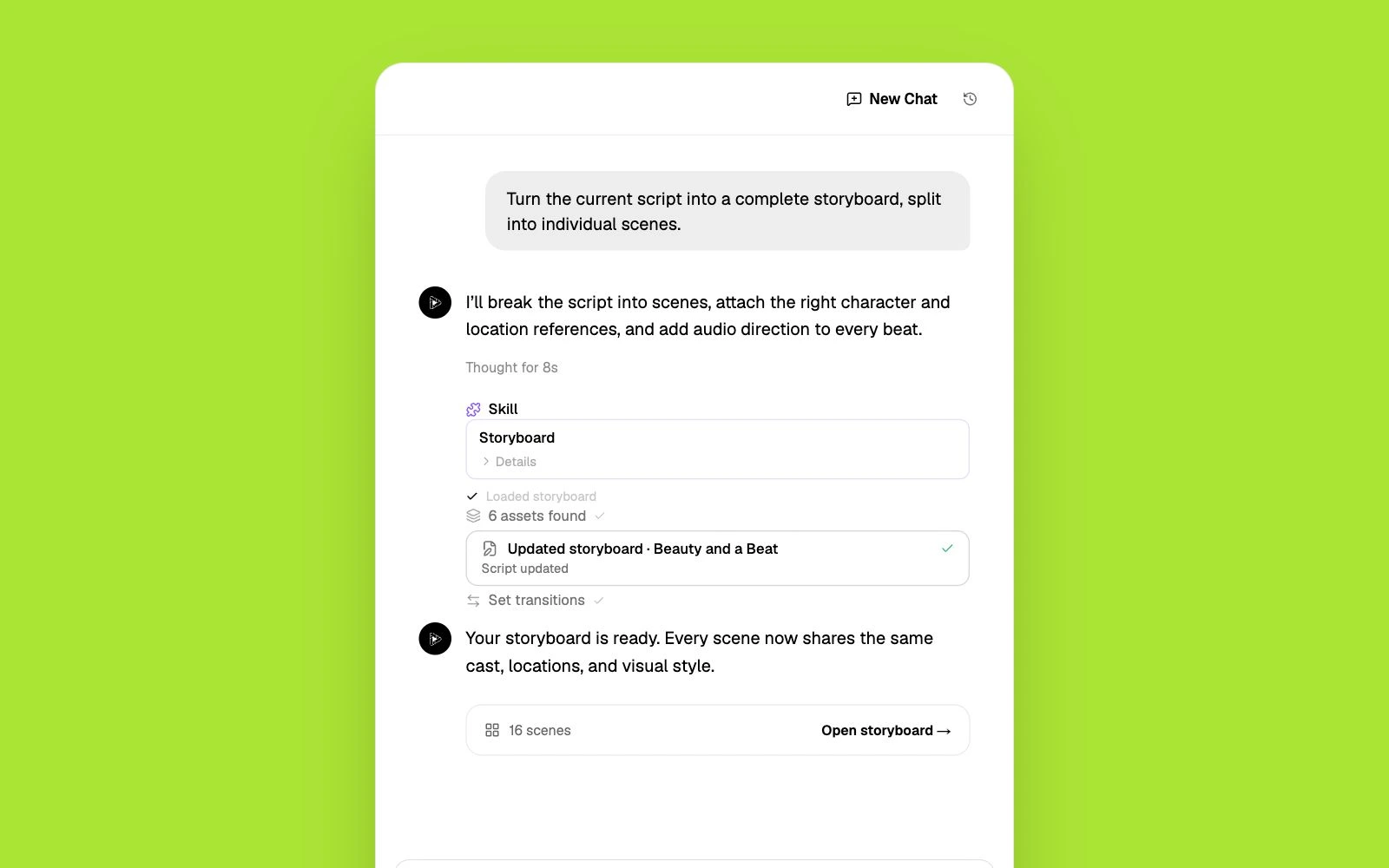
Tell Pixo what you’re making—your idea, audience, style, and length. The agent turns your brief into a script and a production-ready plan.
Footage answers "what are we making today?" and hands back a finished video. Pixo's AI agents do the same — and give you an editable storyboard to direct, with your choice of top models — Seedance, Kling, Veo, and more.
Footage belongs to the newest and most interesting category in AI video. Open it and there is no timeline and no template picker — just a prompt box asking what you are making today, a Library of previous projects, an Assets area for material you bring, and a Skills section listing what the agent can do. It is a well-judged interface that removes the blank-canvas problem, and the conversational refinement loop feels natural. Friction arrives on the second pass. Conversation is a good way to *start* a video and an awkward way to *revise* one: when shot four is wrong there is no board to open and no per-shot prompt to change, so you re-describe and regenerate. Without a visible shot list, a five-minute piece is also hard to reason about, and recurring characters need an asset system rather than a description you keep repeating. If you're searching for a Footage alternative because you want to direct the video rather than re-roll it, you want an agent with a storyboard.
Chat is a great entry point and a poor editing surface. Fixing one shot usually means regenerating more than you wanted to.
Without a board to work against, a long video is hard to plan, review or hand to anyone else for approval.
A recurring character has to be described again each time rather than held by the project, so faces drift across a sequence.
Both are conversational video agents. The difference is what you get to direct after the first draft.
| Criterion | Pixo | Footage |
|---|---|---|
| Built for | Complete videos of any format — ads, demos, music videos, short films | Conversational prompt-to-video generation |
| Revision model | Regenerate a single shot; the rest of the timeline stays as approved | Refine by re-describing; regeneration is broader |
| Script & storyboard | Editable storyboard produced before anything renders | No visible shot list to work against |
| Conversational entry | Describe the video in plain language to start | Excellent — a clean chat-first interface with library and assets |
| Audio | AI voiceover, sound effects, and music generated in the same pipeline | Audio handled within generation; limited separate control |
| Pricing approach | 200 free credits to start; monthly plans with top-ups | Credit-based generation across subscription tiers |
Competitor details are based on publicly available information as of each page's last update and may change. Always verify current pricing and features on the vendor's site.
Tell Pixo what you’re making—your idea, audience, style, and length. The agent turns your brief into a script and a production-ready plan.
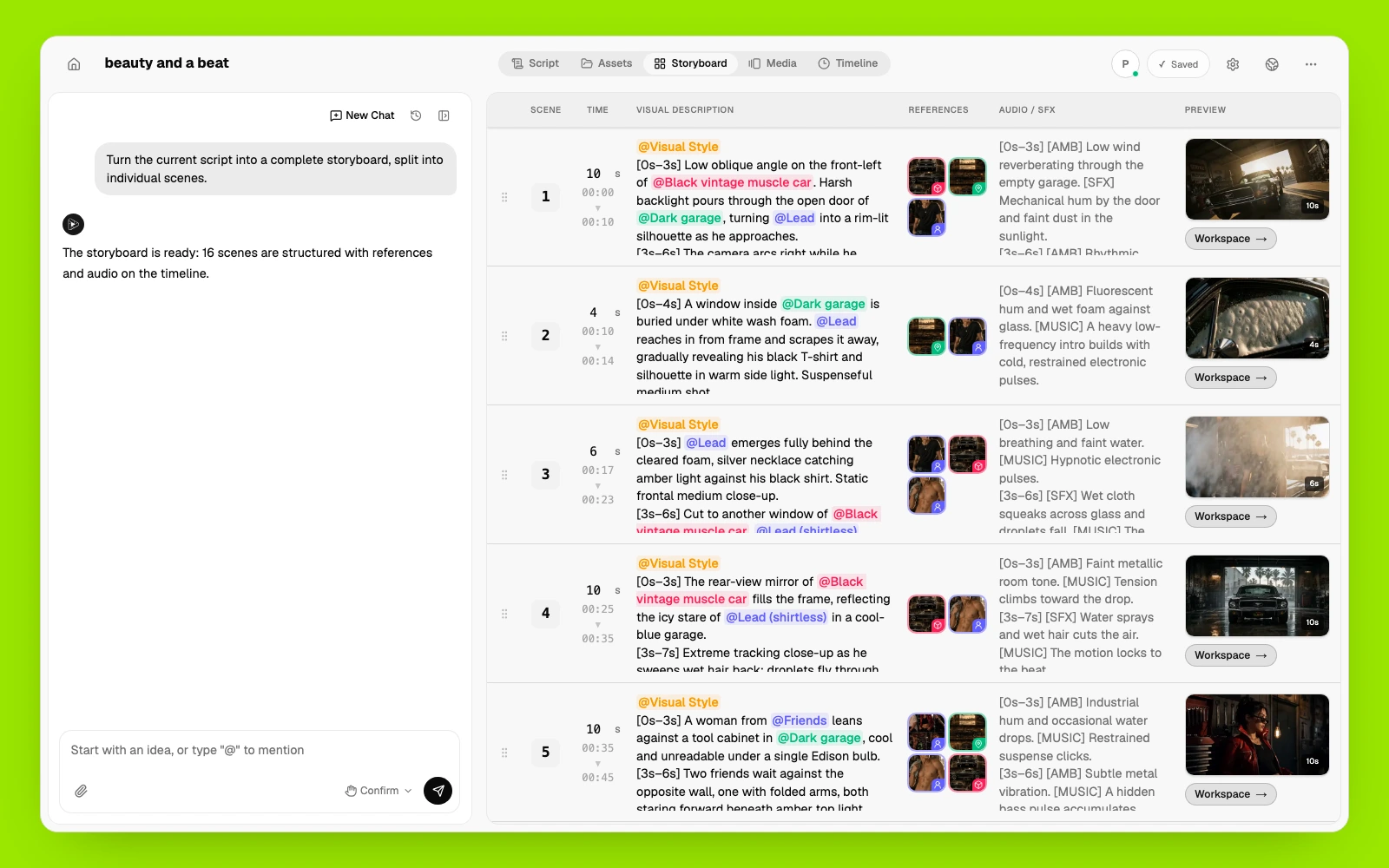
Pixo AI reviews every scene, camera move, reference, and sound cue before generation. Change one shot without starting the whole video over.
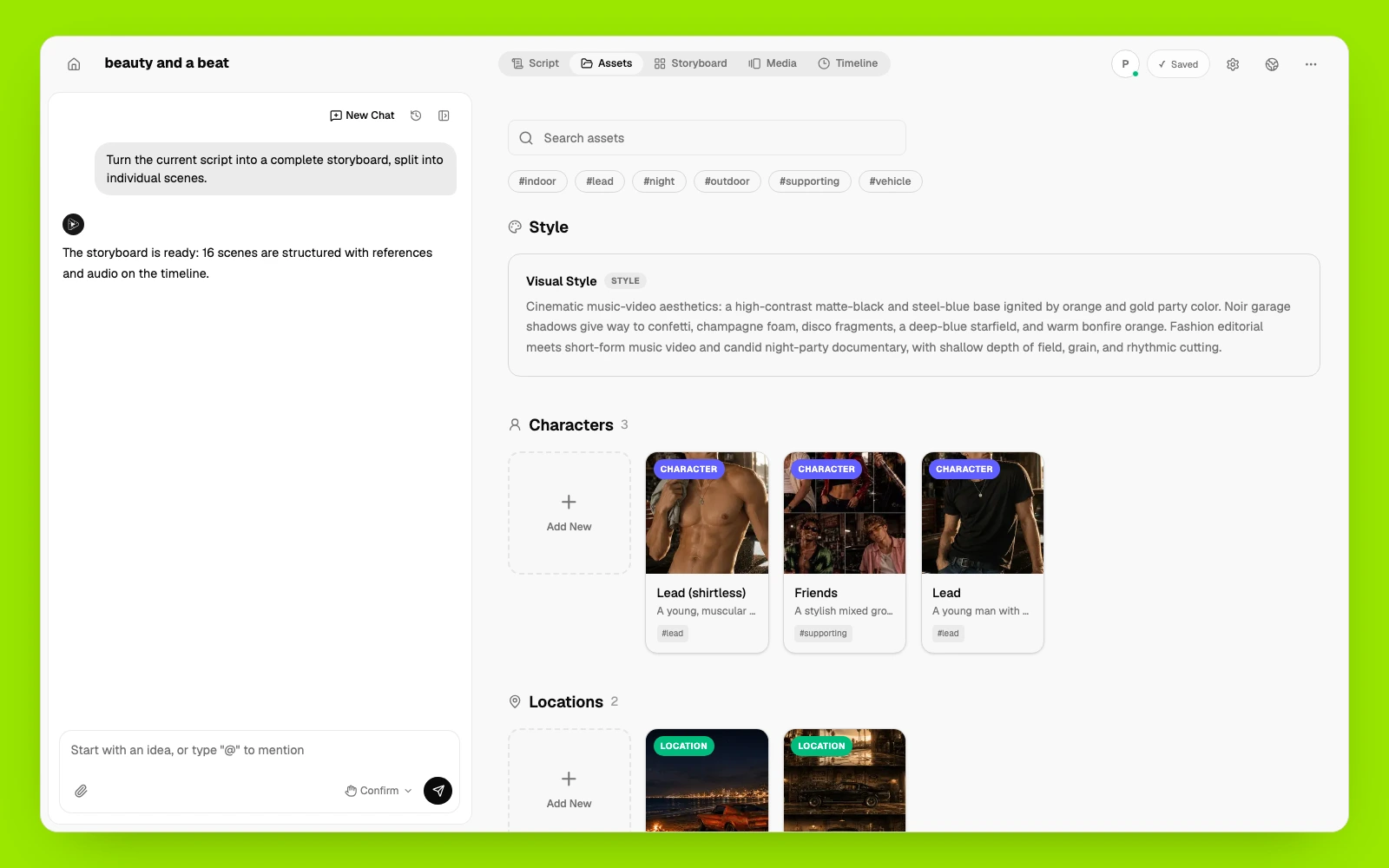
Pixo AI manages and reuses the same characters, products, locations, voices, and visual styles across every scene.
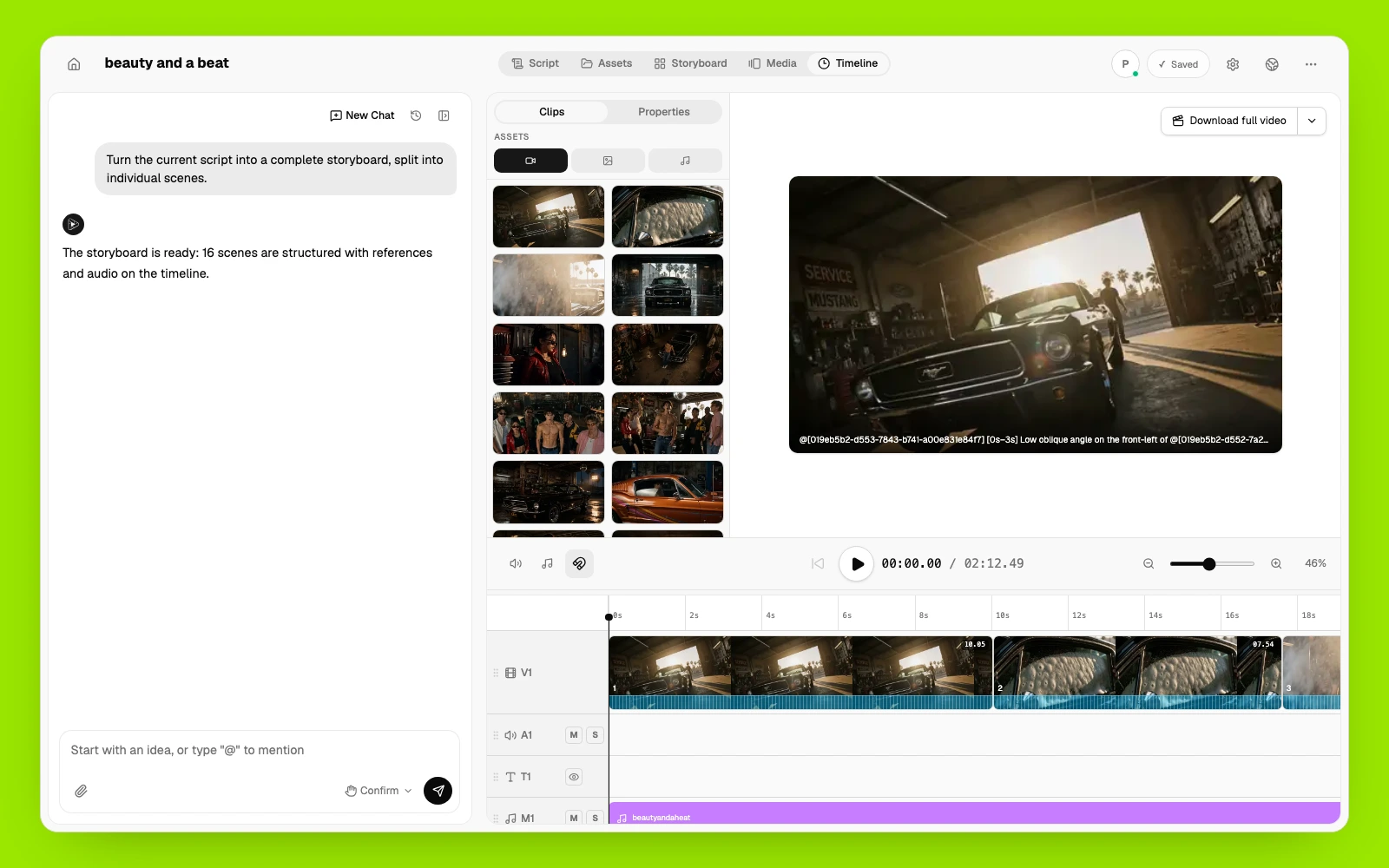
Pixo AI arranges clips, voiceover, music, and sound on one timeline. Regenerate what changed, keep what works, and export the finished video.
If a conversational first draft is specifically what you want, these compete directly with Footage.
A minimal one-prompt agent: a sentence in, a video out.
Best for: the fastest possible first draft.
A professional suite with deep manual control over individual shots.
Best for: creators who prefer control over automation.
Fast generation with unusually natural motion.
Best for: realistic image-to-video shots.
Film-like camera motion and long, coherent shots.
Best for: cinematic movement.
Describe the video in plain language — the entry point you are used to does not change.
The agent returns an editable storyboard. Approve it, or change the shots that are wrong before anything renders.
Pixo generates with the best-fit model per shot, regenerates only what you change, and exports a finished 1080p video with audio.
Common questions from creators comparing Footage with Pixo.
Medeo is a chat-first video generator that assembles a timeline for you. Pixo is an AI agent that scripts, storyboards, generates, and edits a finished 1080p video — and shows you the plan before anything renders.
Runway is a pro creative suite where you operate every tool by hand. Pixo is an AI agent that scripts, storyboards, generates, and edits a finished 1080p video from a single prompt.
Luma Dream Machine is a shot generator with the most natural motion in the category. Pixo is an AI agent that scripts, storyboards, generates, and edits a finished 1080p video from a single prompt.
Google Flow is Google's AI filmmaking studio built on Veo and Nano Banana. Pixo runs those same models plus Seedance, Kling, Hailuo and more inside an agent that scripts, storyboards and edits the whole video.
Describe the video you want in everyday language. Pixo turns your text into a scene-by-scene storyboard, generates each shot with leading AI video models, and helps assemble a complete video you can refine before export.
Turn a story idea, outline, or short-film script into a connected short film with a storyboard, consistent characters, voice, sound, and final edit. Pixo's AI agent helps plan the storyboard, generate individual scenes with leading video models, add voice and sound, and refine the complete video in one workspace.
No credit card required • Free 200 credits