Start with a conversation.
Tell Pixo what you’re making—your idea, audience, style, and length. The agent turns your brief into a script and a production-ready plan.
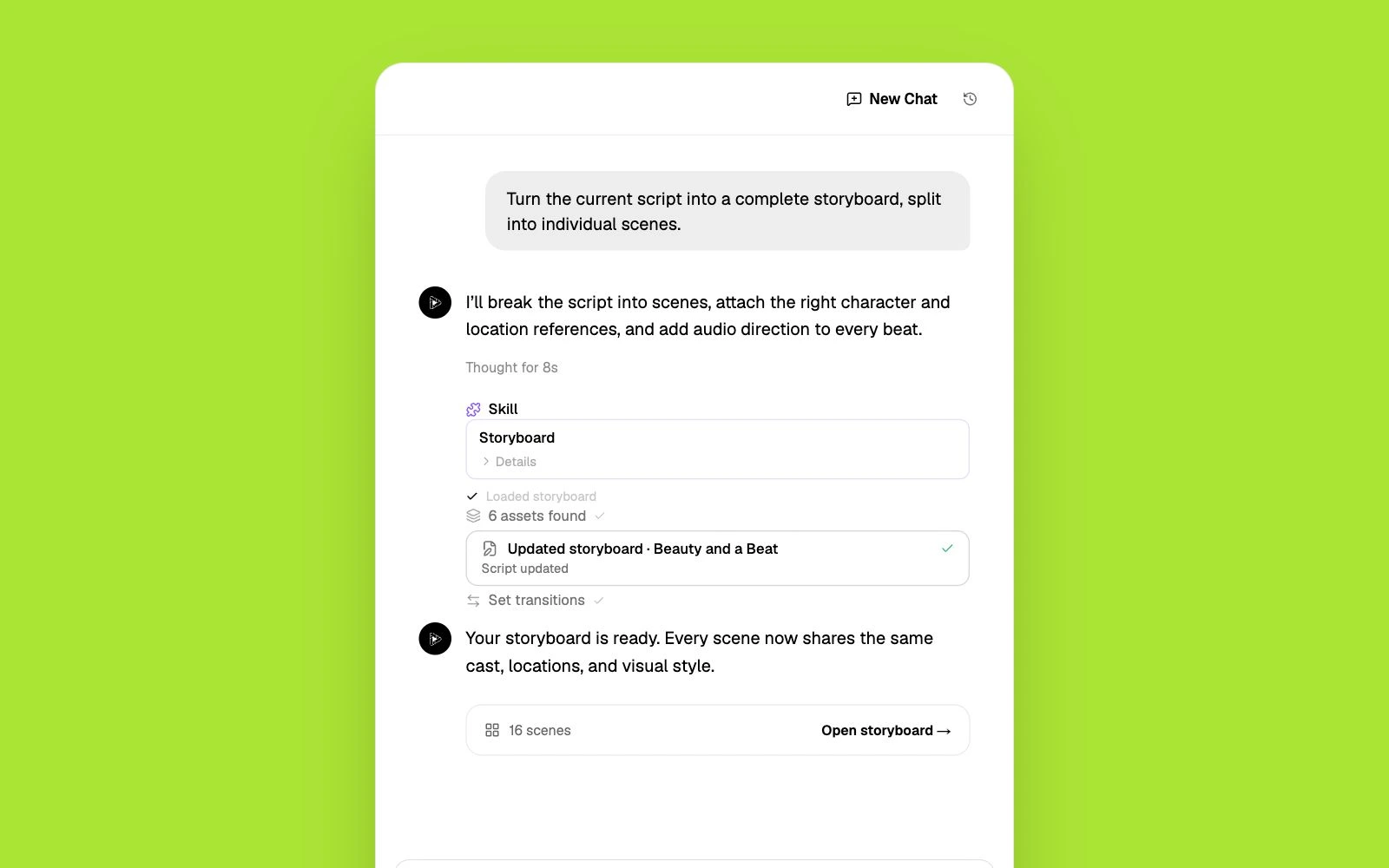
Komiko is an anime and manga creation platform for original characters, comic panels and short animated clips. Pixo's AI agent scripts, storyboards, and edits a finished 1080p video with Seedance, Kling, Veo, Hailuo and more.
Komiko (KomikoAI) is a creation platform built for fandom and original-character artists, and its strengths are real: an OC maker that holds a character's look across comic panels, a comic canvas for laying out pages, line-art colorization, in-betweening and frame interpolation for animators, and image-to-animation that turns a panel into a short clip through third-party video models. As of August 2026, new accounts receive 500 free Zaps, paid plans run from $9.99 a month for 5,000 Zaps to $49.99 for 50,000, with one-time Zap packs on top; plans are quoted as approximate image or video counts rather than a per-action price list, and paid tiers remove the watermark. The limitation is scope. Komiko animates a panel; it does not write the episode. Each clip is a separate generation, sequence and pacing live in your head, and voiceover, music and the final cut happen in other tools. Character consistency is built for the page, not for a scene shot from three angles. If you're searching for a Komiko alternative because your characters deserve a finished film rather than a folder of clips, you want an agent, not a comic studio with an animate button.
Image-to-animation turns one panel into one clip. There is no script, no shot list and no timeline, so an eight-scene story is eight separate generations you sequence yourself.
The OC maker holds a character across comic panels, which is exactly right for manga. Video asks more: the same character in a wide, a close-up and a reverse angle, lit the same way, across every shot.
Plans are quoted as approximate image and video counts, and the per-action Zap cost is not shown on the pricing page, so the price of a finished animation is hard to predict before you spend.
Komiko is a comic and character studio that can animate a panel. Pixo is an agentic video platform that scripts, storyboards, generates per shot and edits the result.
| Criterion | Pixo | Komiko |
|---|---|---|
| Built for | Complete videos of any format — short films, music videos, ads, series episodes | Character sheets, comic pages and short animated clips for fandom and original-character creators |
| Video workflow | Agent writes the script, plans every shot, generates and edits the sequence | Animate a panel or image into a clip; sequencing happens outside the tool |
| Script & storyboard | Script and shot list before anything renders | Comic canvas for page layout; no script-to-shot pipeline for video |
| Character consistency | Shared assets anchor characters, products and places across every shot | OC maker holds a character across comic panels |
| Audio | AI voiceover, sound effects and music generated and mixed into the export | Talking-head animation from an image; voiceover, music and the mix live elsewhere |
| Pricing approach | 200 free credits to start; monthly plans with top-ups | 500 free Zaps on sign-up; plans from $9.99 to $49.99 a month plus one-time Zap packs; paid tiers remove the watermark |
Competitor details are based on publicly available information as of each page's last update and may change. Always verify current pricing and features on the vendor's site.
Tell Pixo what you’re making—your idea, audience, style, and length. The agent turns your brief into a script and a production-ready plan.
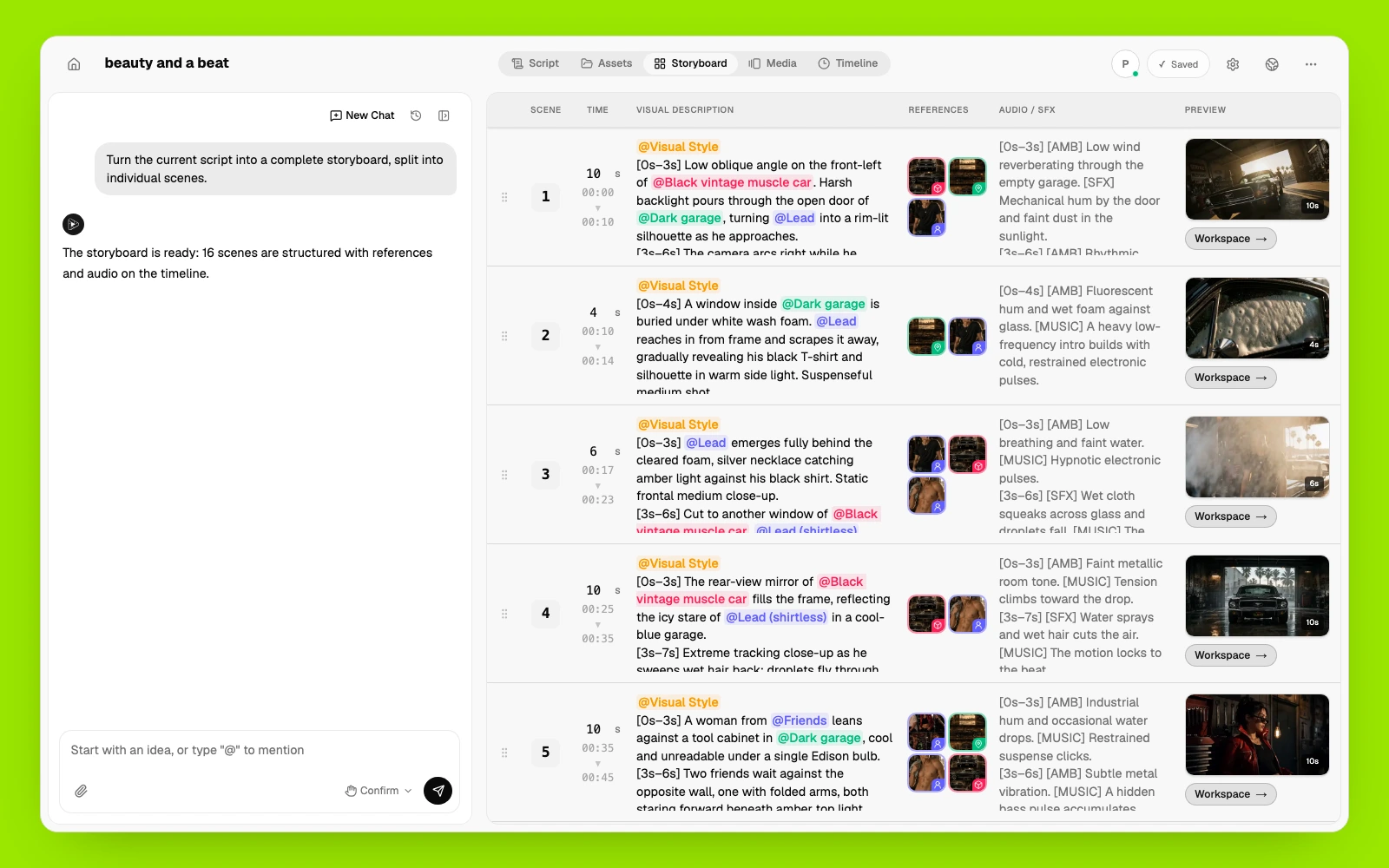
Pixo AI reviews every scene, camera move, reference, and sound cue before generation. Change one shot without starting the whole video over.
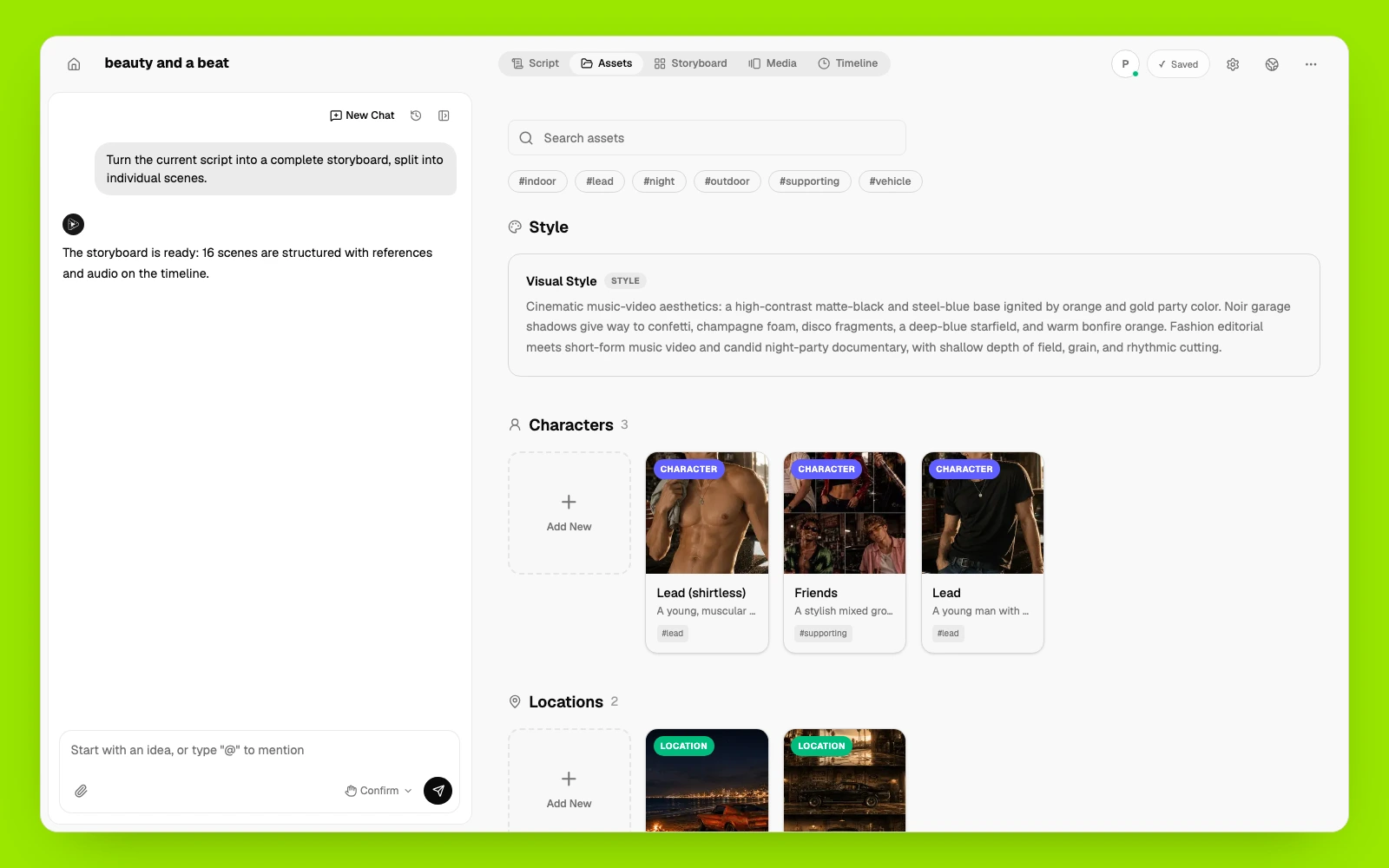
Pixo AI manages and reuses the same characters, products, locations, voices, and visual styles across every scene.
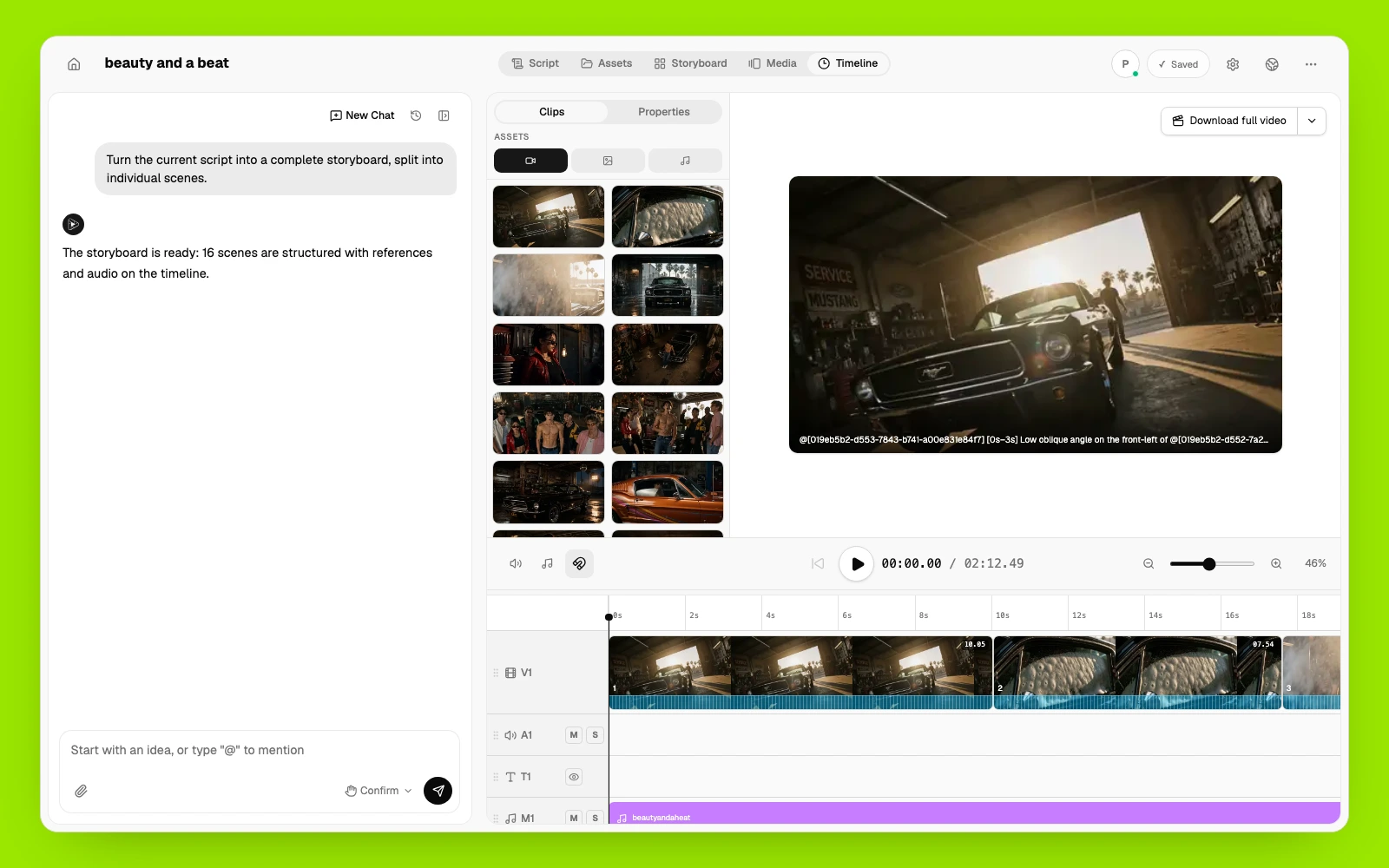
Pixo AI arranges clips, voiceover, music, and sound on one timeline. Regenerate what changed, keep what works, and export the finished video.
If character art and comics are the core need, these compete directly with Komiko.
An anime-focused image generator with a large library of community-trained styles and character tools.
Best for: anime illustration with community styles.
A story-writing platform with an anime image generator built alongside the prose tools.
Best for: writers who want illustrations next to their text.
A community platform for image and short-video generation with thousands of shared models.
Best for: browsing and remixing community looks.
Video-to-video restyling that turns existing footage into anime and other illustrated looks.
Best for: restyling footage you already shot.
Upload the character sheets and reference art you built in Komiko. In Pixo they become shared assets that anchor every shot of the video.
Give the agent the story, the length and the style. It returns a script and storyboard for you to approve before anything renders.
Pixo generates each shot with the best-fit model, adds voiceover, sound effects and music, and exports a finished 1080p video.
Common questions from creators comparing Komiko with Pixo.
PixAI is an anime-focused art platform where video sits alongside image generation. Pixo is an AI agent that scripts, storyboards, generates, and edits a finished 1080p video from a single prompt.
NovelAI writes stories and paints anime stills. Pixo's AI agent scripts, storyboards, generates and edits a finished 1080p video with a consistent cast.
SeaArt is a credit-metered art community for images and short clips. Pixo's AI agent scripts, storyboards and edits complete videos with Seedance, Kling, Veo and more.
DomoAI restyles a clip you already filmed. Pixo's AI agents script, storyboard, and edit complete videos with your choice of top models — Seedance, Kling, Veo, and more.
Turn a story idea, outline, or short-film script into a connected short film with a storyboard, consistent characters, voice, sound, and final edit. Pixo's AI agent helps plan the storyboard, generate individual scenes with leading video models, add voice and sound, and refine the complete video in one workspace.
Morph any character on screen — a werewolf turn, a lifetime of aging, a body swap, a statue coming to life. Pixo storyboards the change shot by shot and keeps the same character recognizable through every stage of the morph.
No credit card required • Free 200 credits