Start with a conversation.
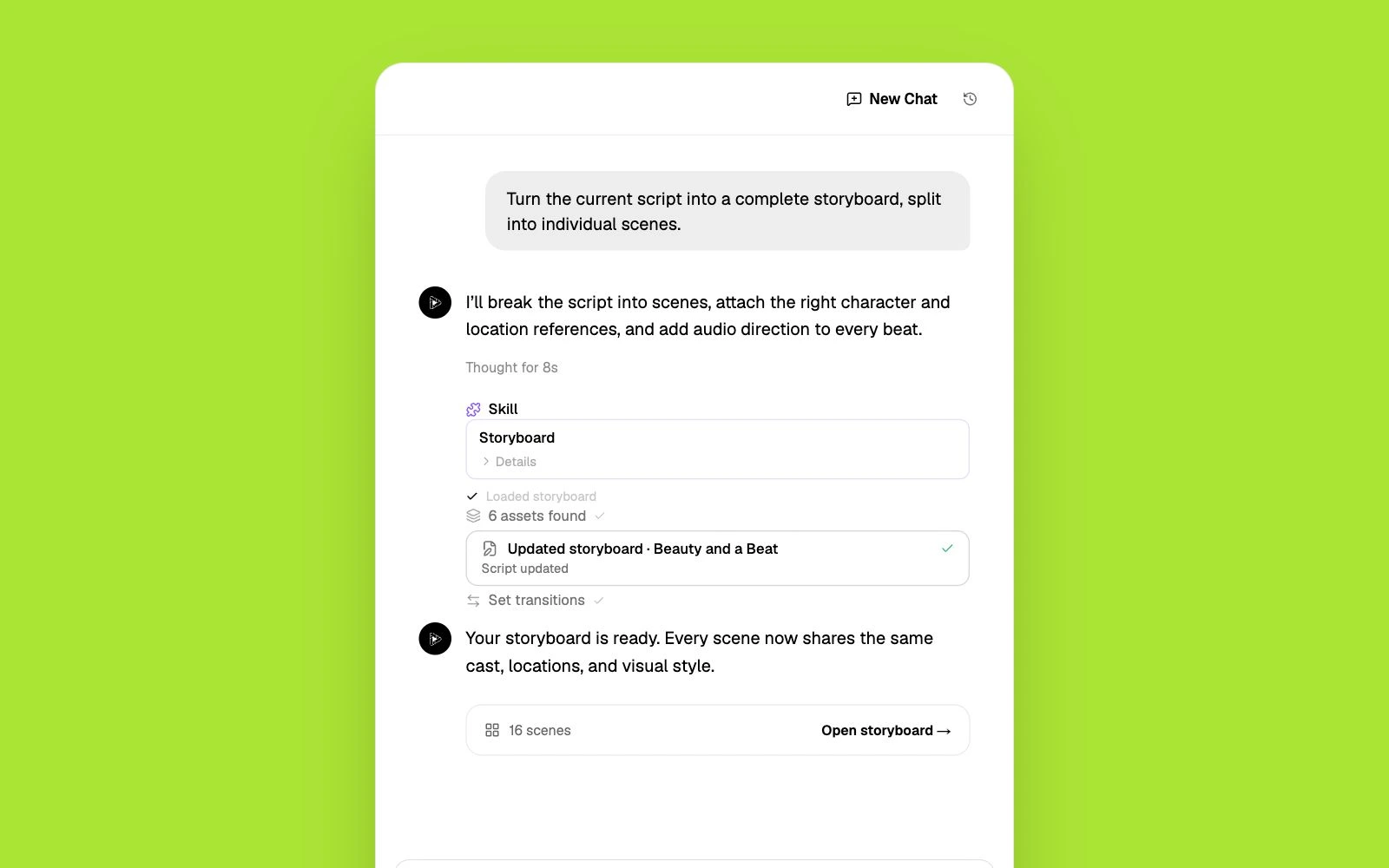
Tell Pixo what you’re making—your idea, audience, style, and length. The agent turns your brief into a script and a production-ready plan.
Lovart is an AI design agent that orchestrates image and video models on an infinite canvas for brand and ad work. Pixo is an AI agent built for the video itself — script, storyboard, every shot, and the finished 1080p edit.
Lovart is an AI design agent, and among agentic creative tools it is the one that took the idea furthest for designers. You describe a brief in chat and it plans the work, routes each step to one of many image and video models, and lays the results out on an infinite canvas — logos, posters, packaging, brand kits, storyboards and short commercial videos. For marketers and freelancers who need a campaign's worth of assets in an afternoon, that is a real advantage over prompting model by model. Pricing is credit-based on monthly plans; the official site did not load for verification and third-party figures disagree, so check lovart.ai directly. The limitation is the canvas. Lovart treats video as one more artboard on a design surface, so a spot is a clip among assets rather than a sequence with a script, a cast held across shots, a voiceover and a cut. Users also report that complex projects consume credits quickly and that credits reset each month without rollover. If you're searching for a Lovart alternative because the video needs to be the deliverable rather than one artboard, you want an agent, not a design canvas.
Lovart is at its best producing static brand assets in volume. A video sits on the same canvas as the poster, without a shot list, timeline or edit built around it.
Users report a single complex brand project consuming hundreds of credits, and unused credits resetting monthly. A multi-scene video multiplies that spend across every retry.
The chat-plus-canvas paradigm assumes design vocabulary and patience for layout. Someone who just needs a finished 60-second video has a lot of surface to learn first.
Lovart is an agent for design deliverables. Pixo is an agent for video deliverables — the same idea, pointed at a different job.
| Criterion | Pixo | Lovart |
|---|---|---|
| Built for | Complete videos of any format — ads, demos, music videos, short films | Brand and ad design across many models, with short video as one output |
| Working surface | A storyboard with a prompt, model and assets per shot | An infinite canvas driven by chat |
| Script & storyboard | Agent writes the script and shot list before anything renders | Storyboard frames as images; no script-to-cut pipeline |
| Consistency | Shared assets anchor characters, products and places across every shot | Brand kits keep style consistent across assets |
| Audio and edit | AI voiceover, sound effects and music generated and mixed into a finished 1080p export | Clips generated by third-party models; voiceover, music and the edit handled elsewhere |
| Pricing approach | 200 free credits to start; monthly plans with top-ups | Credit-based monthly plans; users report credits resetting monthly without rollover |
Competitor details are based on publicly available information as of each page's last update and may change. Always verify current pricing and features on the vendor's site.
Tell Pixo what you’re making—your idea, audience, style, and length. The agent turns your brief into a script and a production-ready plan.
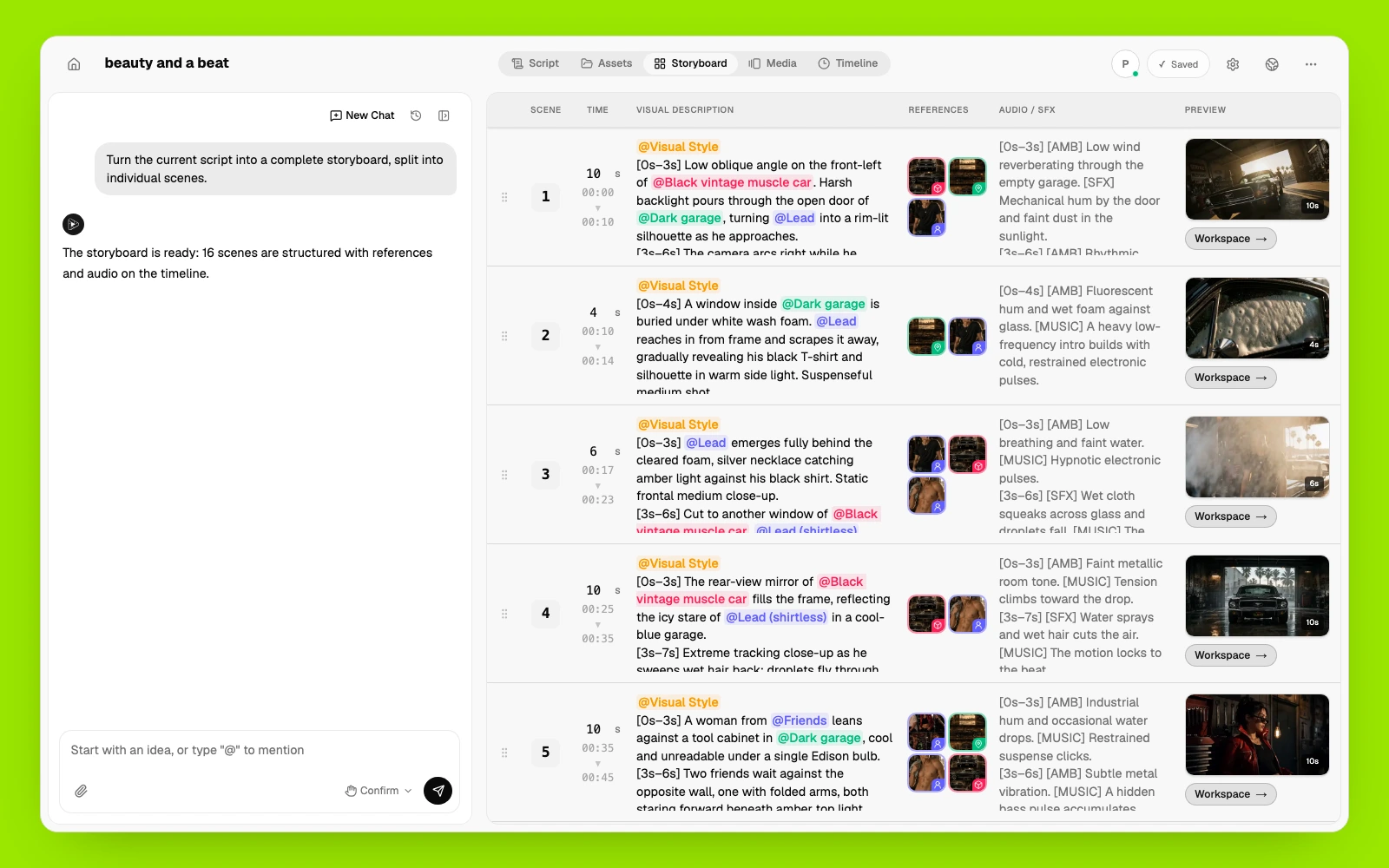
Pixo AI reviews every scene, camera move, reference, and sound cue before generation. Change one shot without starting the whole video over.
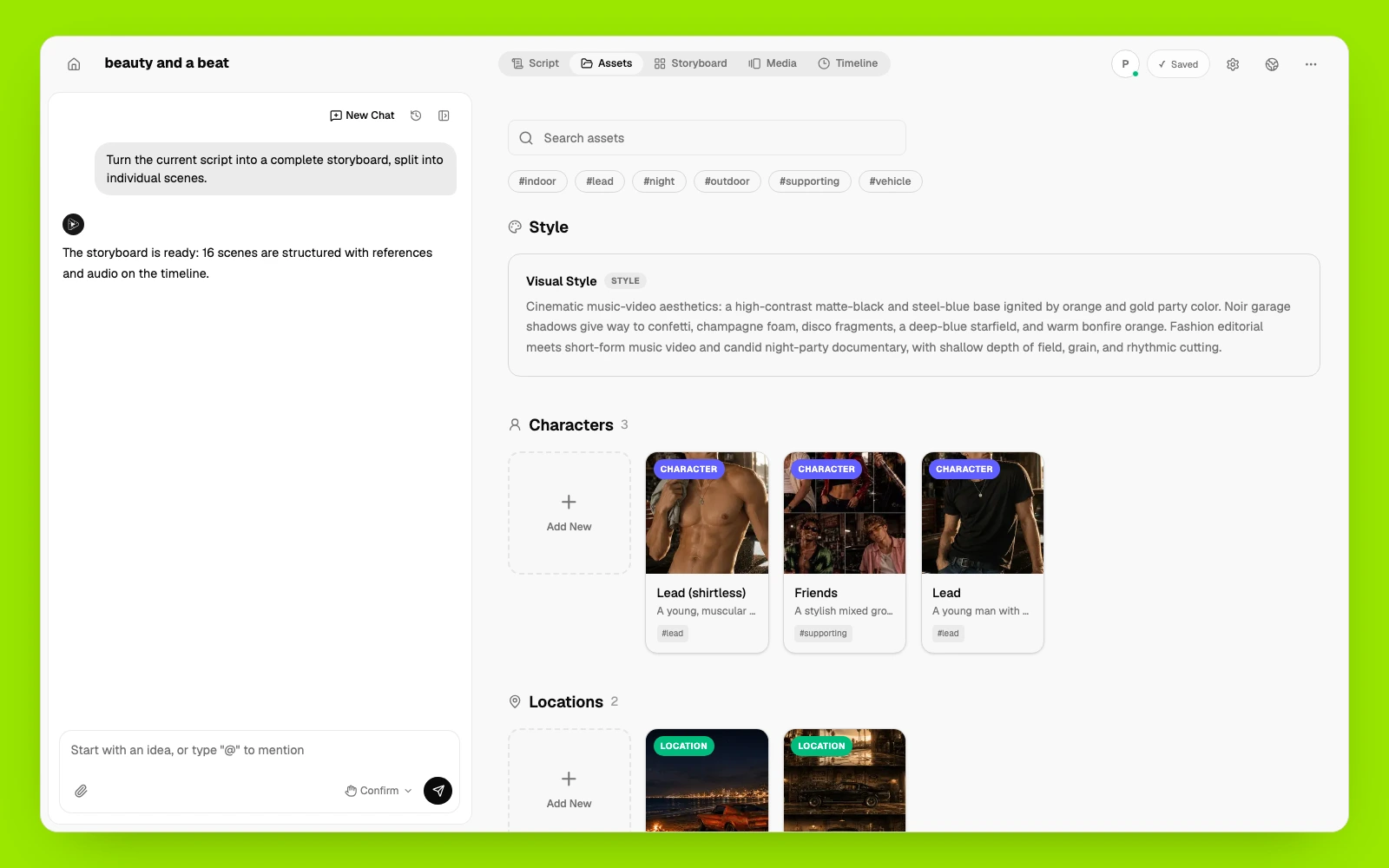
Pixo AI manages and reuses the same characters, products, locations, voices, and visual styles across every scene.
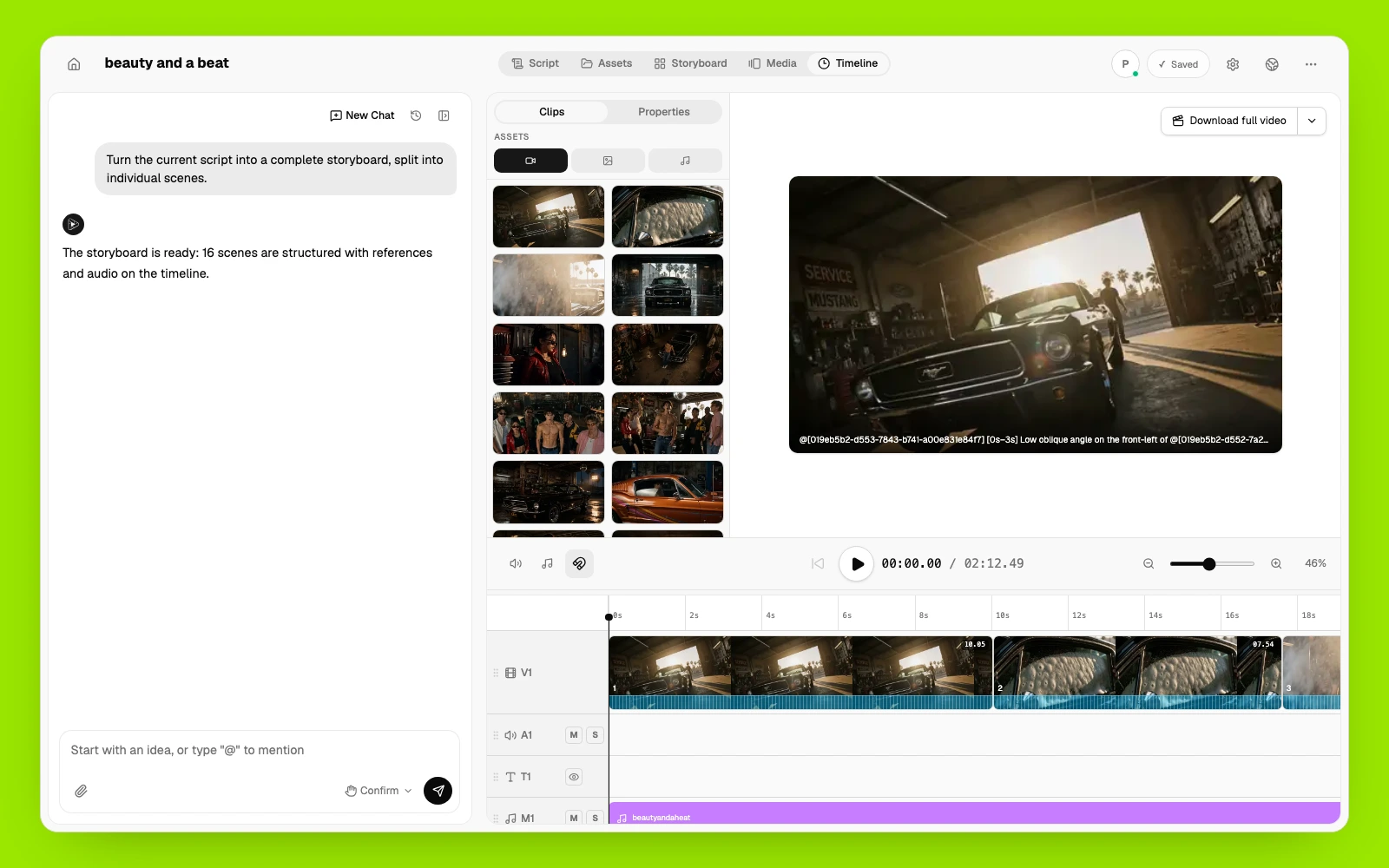
Pixo AI arranges clips, voiceover, music, and sound on one timeline. Regenerate what changed, keep what works, and export the finished video.
If design output is the main job, these compete directly with Lovart.
A vector-native image model with strong brand-style control.
Best for: logos, icons and on-brand illustration.
Generates and scores static and video ad creatives at volume.
Best for: performance-marketing teams testing many variants.
Turns product URLs into avatar-led video ads.
Best for: e-commerce UGC-style ads.
The all-purpose design suite with AI features throughout.
Best for: teams that need templates and collaboration.
Upload the product, character and style references you built in Lovart. They become shared assets that anchor every shot.
Describe the spot — audience, length, message — and the agent returns a script and a storyboard you approve before anything renders.
Pixo generates each shot with the best-fit model, adds voiceover, sound effects and music, and exports a finished 1080p video.
Common questions from creators comparing Lovart with Pixo.
Recraft is a design platform for vectors, custom styles and brand-consistent images. Pixo's AI agent scripts, storyboards, and edits a finished 1080p video with Seedance, Kling, Veo, Hailuo and more.
AdCreative generates ad variants and predicts which might work. Pixo's AI agents script, storyboard, and edit complete videos with your choice of top models — Seedance, Kling, Veo, and more.
Creatify produces UGC testimonial variants from a product link. Pixo's AI agents script, storyboard, and edit complete videos with your choice of top models — Seedance, Kling, Veo, and more.
Canva is a design suite where video is one tab among many, built on templates and stock. Pixo is an AI agent that scripts, storyboards, generates, and edits a finished 1080p video from a single prompt.
Turn a brand story, audience, campaign goal, and approved visual assets into a complete brand video with consistent visual direction and commercial-ready scenes. Pixo's AI agent helps plan the storyboard, generate individual scenes with leading video models, add voice and sound, and refine the complete video in one workspace.
Turn an offer, audience, proof point, and call to action into a structured video ad plus creative variations for testing. Pixo's AI agent helps plan the storyboard, generate individual scenes with leading video models, add voice and sound, and refine the complete video in one workspace.
No credit card required • Free 200 credits