Start with a conversation.
Tell Pixo what you’re making—your idea, audience, style, and length. The agent turns your brief into a script and a production-ready plan.
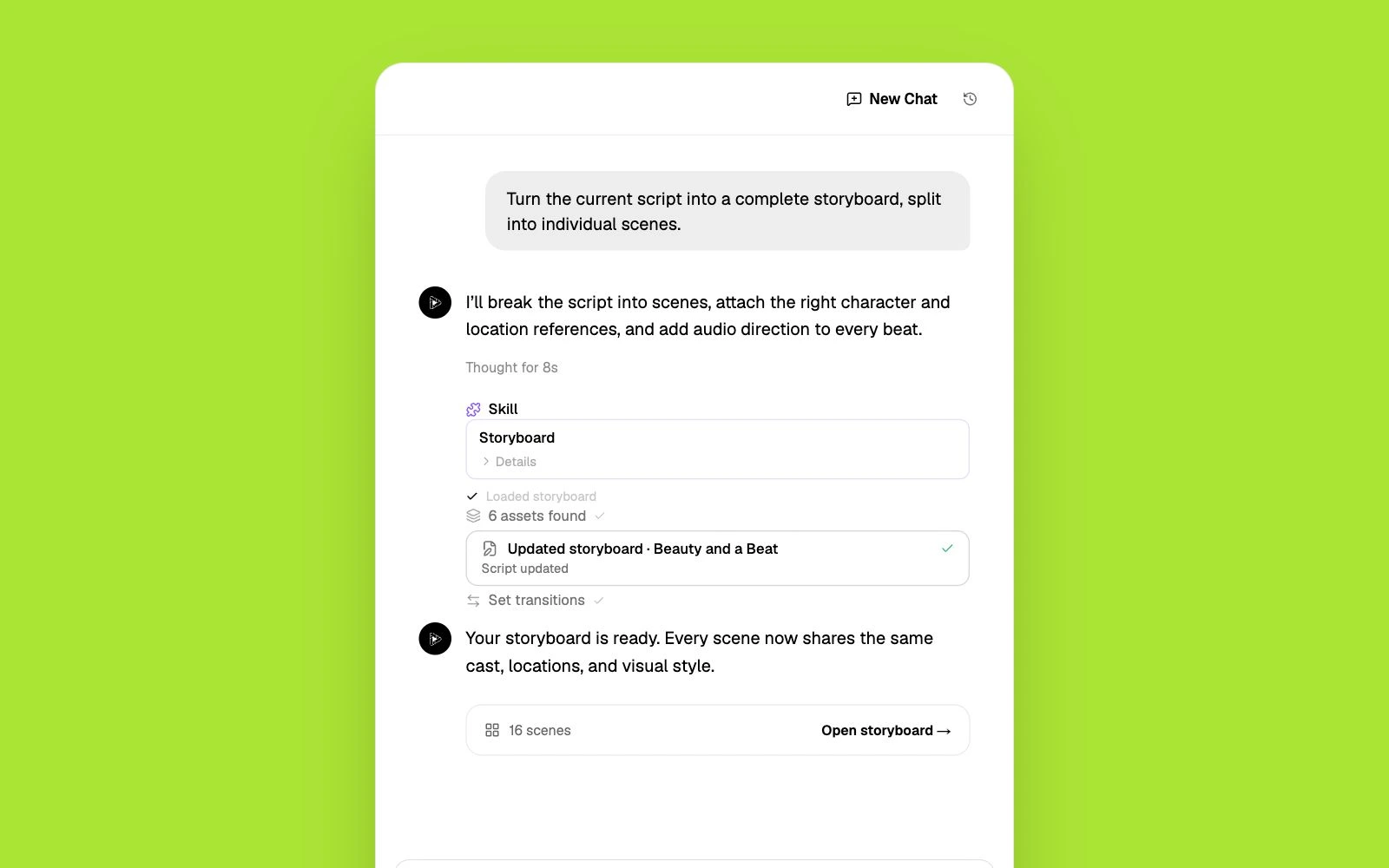
Vrew is a desktop editor where you cut video by editing its transcript. Pixo's AI agent scripts, storyboards, generates every shot with Seedance, Kling, Veo, Hailuo and more, and edits a finished 1080p video.
Vrew is VoyagerX's desktop video editor for Windows, Mac and Linux, and its core idea is good: it transcribes your footage and you edit the video by editing the text — cut a sentence and the clip is cut, with silence removal and auto-captions built in. Around that sit a Speech Editor that regenerates audio in the original voice after a text fix, a large AI voice library with cloning, an AI scriptwriter, AI image generation, dubbing, and a create-videos-from-text mode that assembles stock footage or AI stills under a voiceover. For talking-head and lecture content it is fast and pleasant. The limits appear when the video is not already recorded. Vrew's text-to-video builds slideshows from stock and stills rather than generating moving footage, reviewers call those visuals generic, and there is no storyboard, shot list or cast to direct. Subtitle accuracy drops with accents, jargon or noise, so the real workflow is auto-generate then hand-correct. The free plan, as of August 2026, is watermarked and credit-limited; paid plans are billed annually. If you're searching for a Vrew alternative because the footage you need does not exist yet, you want an agent, not a transcript editor.
Transcript editing needs a transcript. If the video has no recorded speech and no footage, Vrew's strongest feature has nothing to work on.
Create-videos-from-text pairs a voiceover with stock clips or AI images. It reads as a narrated slideshow, and reviewers describe the visuals as generic.
Subtitle accuracy falls with accents, jargon or background noise, so the time saved on the first pass is often spent proofreading the second.
Vrew is a transcript-first editor with generative extras. Pixo is an agentic video platform that writes, generates and edits the video from nothing.
| Criterion | Pixo | Vrew |
|---|---|---|
| Built for | Complete videos of any format — ads, demos, music videos, short films | Editing recorded talking-head, lecture and narration video by its transcript |
| Source footage | Generated per shot by the agent; nothing needs to be filmed | Your recordings, plus stock clips and AI stills for text-to-video |
| Script & storyboard | Agent writes the script and shot list before anything renders | AI scriptwriter for narration; no shot-level storyboard |
| Editing model | Direct the storyboard; the agent regenerates only what changed | Edit the transcript; the timeline follows the text |
| Voice & audio | AI voiceover, sound effects and music generated and mixed in the same pipeline | Large AI voice library, cloning and a Speech Editor for recorded audio |
| Pricing approach | 200 free credits to start; monthly plans with top-ups | Free plan with monthly credits and watermarked exports; Light, Standard and Business plans billed annually |
Competitor details are based on publicly available information as of each page's last update and may change. Always verify current pricing and features on the vendor's site.
Tell Pixo what you’re making—your idea, audience, style, and length. The agent turns your brief into a script and a production-ready plan.
Pixo AI reviews every scene, camera move, reference, and sound cue before generation. Change one shot without starting the whole video over.
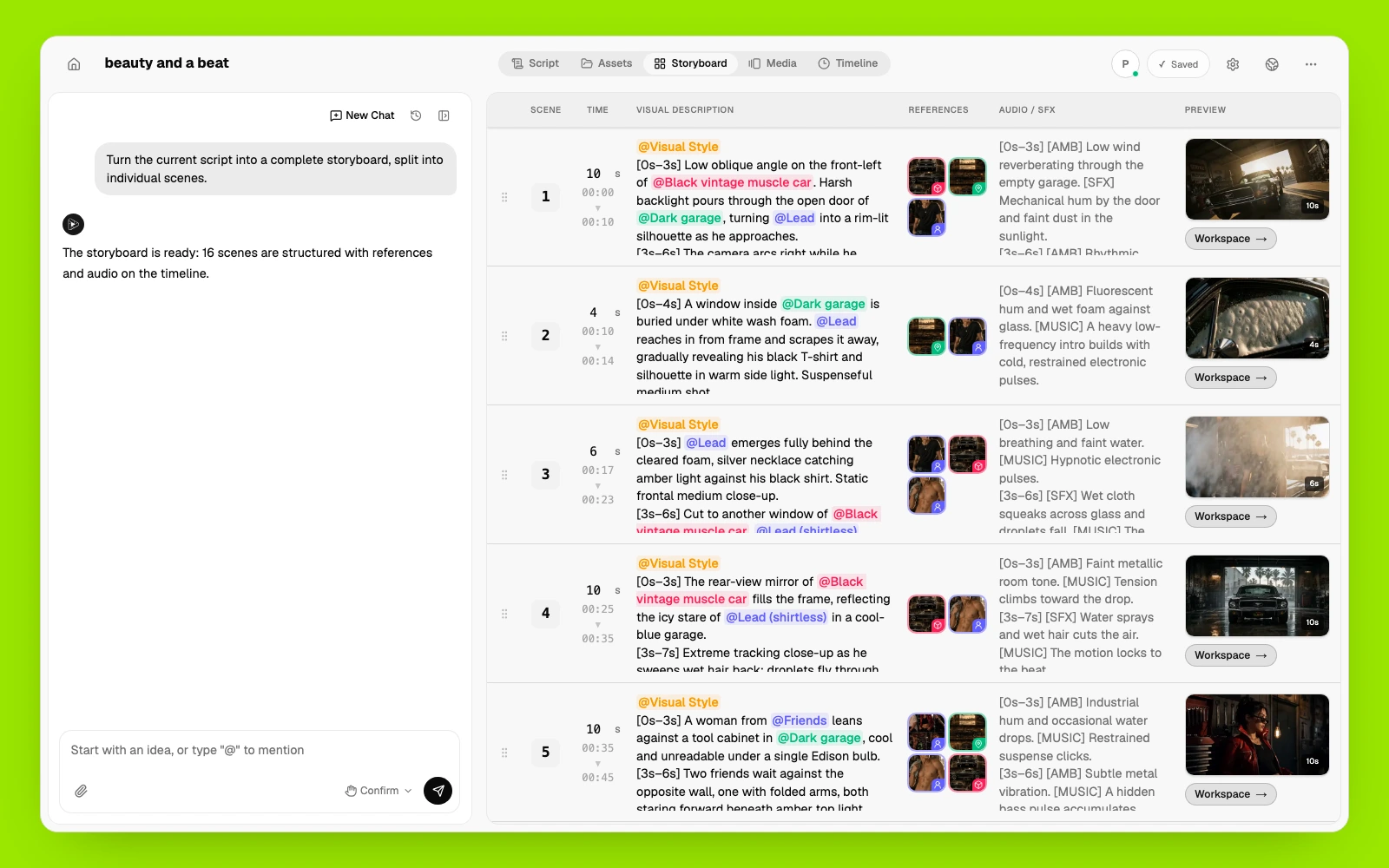
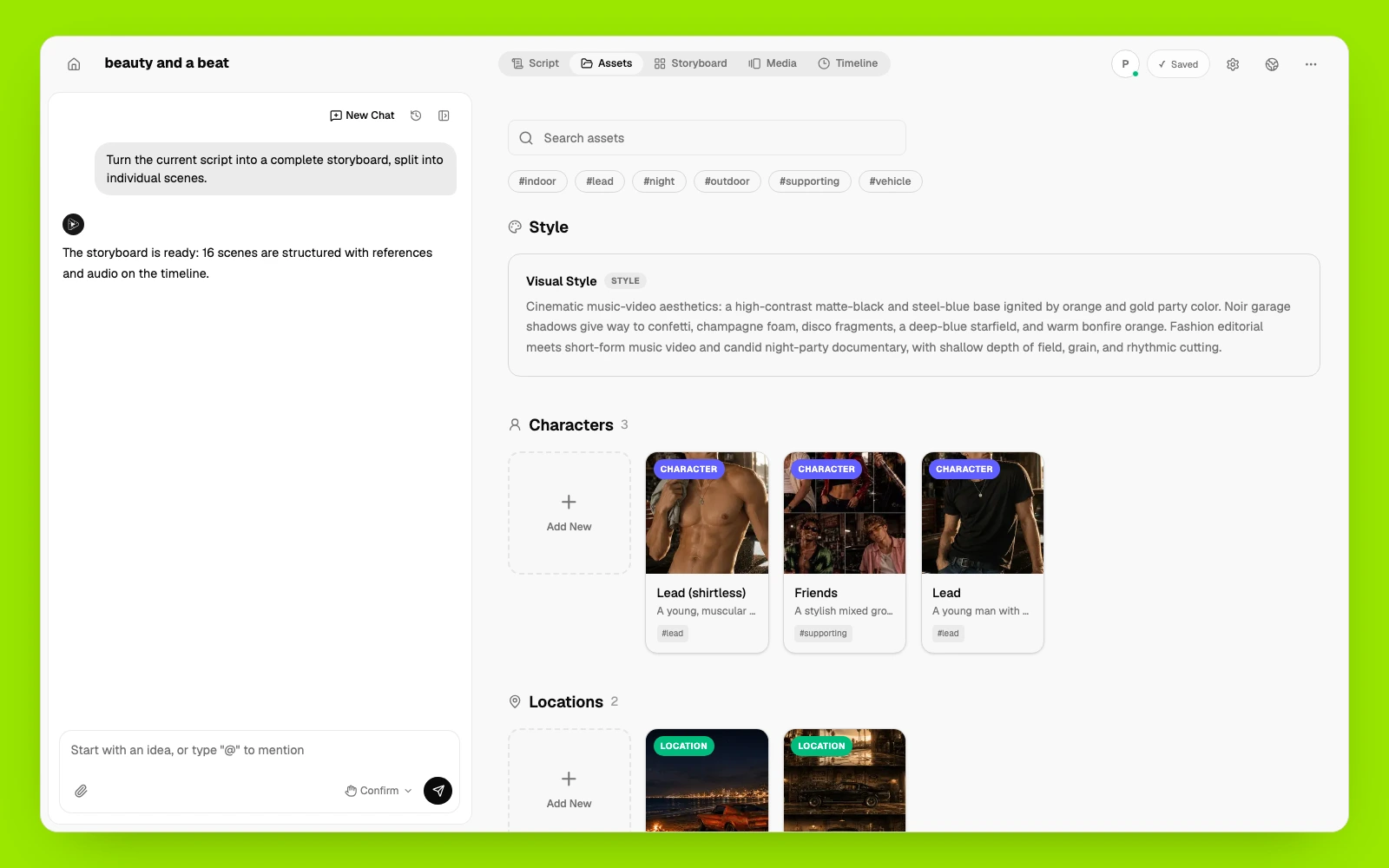
Pixo AI manages and reuses the same characters, products, locations, voices, and visual styles across every scene.
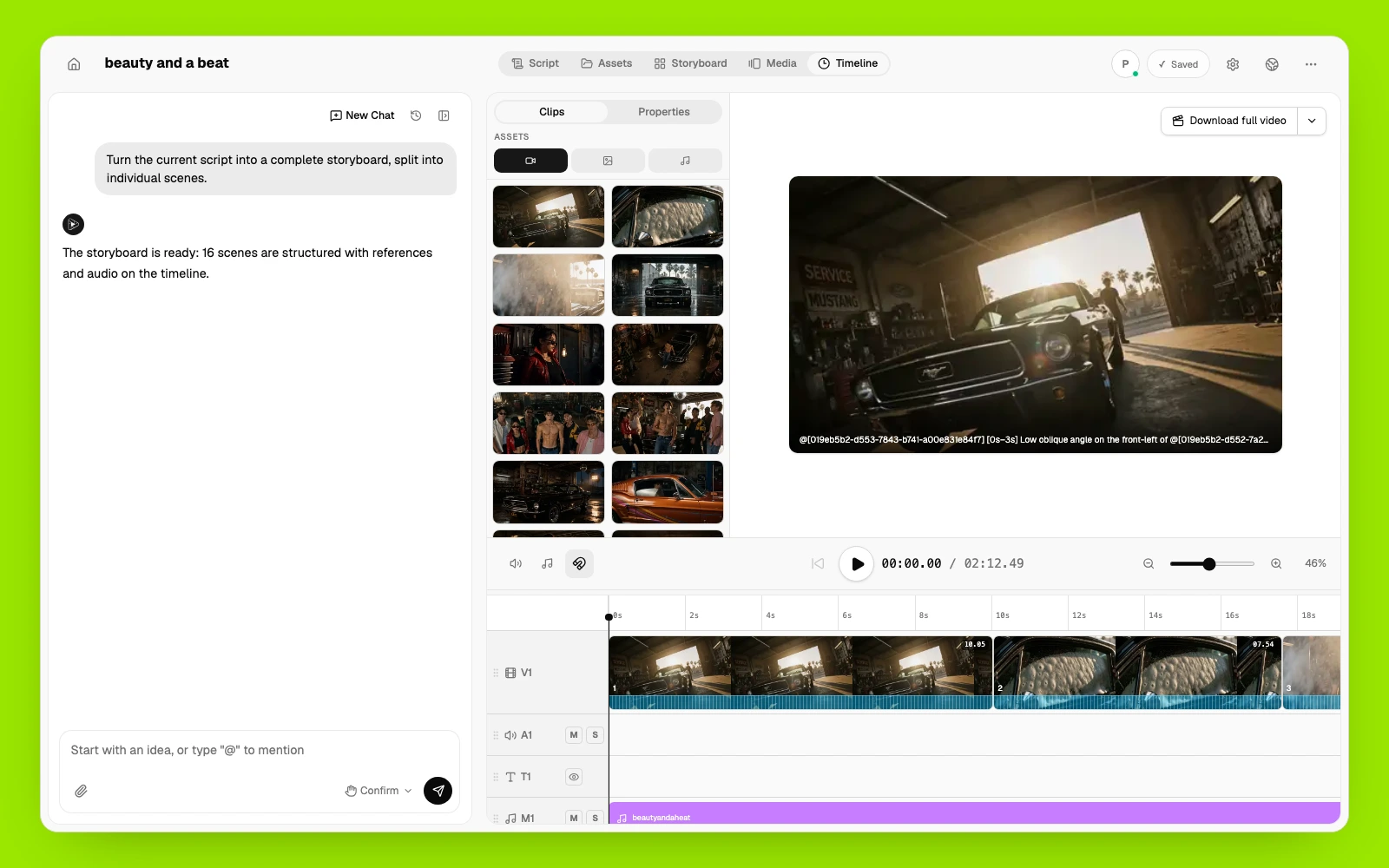
Pixo AI arranges clips, voiceover, music, and sound on one timeline. Regenerate what changed, keep what works, and export the finished video.
If transcript-based editing of recorded video is the core need, these compete directly with Vrew.
The transcript-editing pioneer, with strong audio cleanup, overdub and screen recording.
Best for: podcasts and interview-led video.
Mobile-first captioning and talking-head tools with AI edits and dubbing.
Best for: creators shooting on a phone.
Fast animated captions, b-roll and zooms for short-form clips.
Best for: polishing shorts from existing footage.
Script-to-video with AI voices over stock footage and images.
Best for: narrated stock-footage explainers.
Paste the script you would have narrated, or simply describe the video. The agent turns it into a shot list you can read before anything is made.
Where Vrew reaches for a stock clip or a still, Pixo's storyboard holds a prompt, model and assets per shot. Swap what misses and approve the rest.
Pixo generates each shot, records the voiceover, adds sound effects and music, and exports a finished 1080p video.
Common questions from creators comparing Vrew with Pixo.
Descript is the best way to edit a recording and no help without one. Pixo's AI agents script, storyboard, and edit complete videos with your choice of top models — Seedance, Kling, Veo, and more.
Captions removes every chore from one take to camera. Pixo's AI agents script, storyboard, and edit complete videos with your choice of top models — Seedance, Kling, Veo, and more.
Submagic makes your talking-head clip look good in two minutes. Pixo's AI agents script, storyboard, and edit complete videos with your choice of top models — Seedance, Kling, Veo, and more.
Fliki assembles stock clips under a voiceover. Pixo generates original footage — AI agents script, storyboard, and edit real generative video in 1080p.
Turn a topic, outline, or script into a structured YouTube video with a hook, connected scenes, voice, sound, and a final cut. Pixo's AI agent helps plan the storyboard, generate individual scenes with leading video models, add voice and sound, and refine the complete video in one workspace.
Turn a process, ordered steps, audience, and expected outcome into a step-by-step instructional video with clear scenes and narration. Pixo's AI agent helps plan the storyboard, generate individual scenes with leading video models, add voice and sound, and refine the complete video in one workspace.
No credit card required • Free 200 credits