Create a Warm 1970s Film Look
Build an intimate original scene from warm window light, earthy interiors, tactile fabric, and relaxed composition, then move through it with a gentle breathing camera.
Best for: fashion stories · intimate drama · hospitality and lifestyle scenes
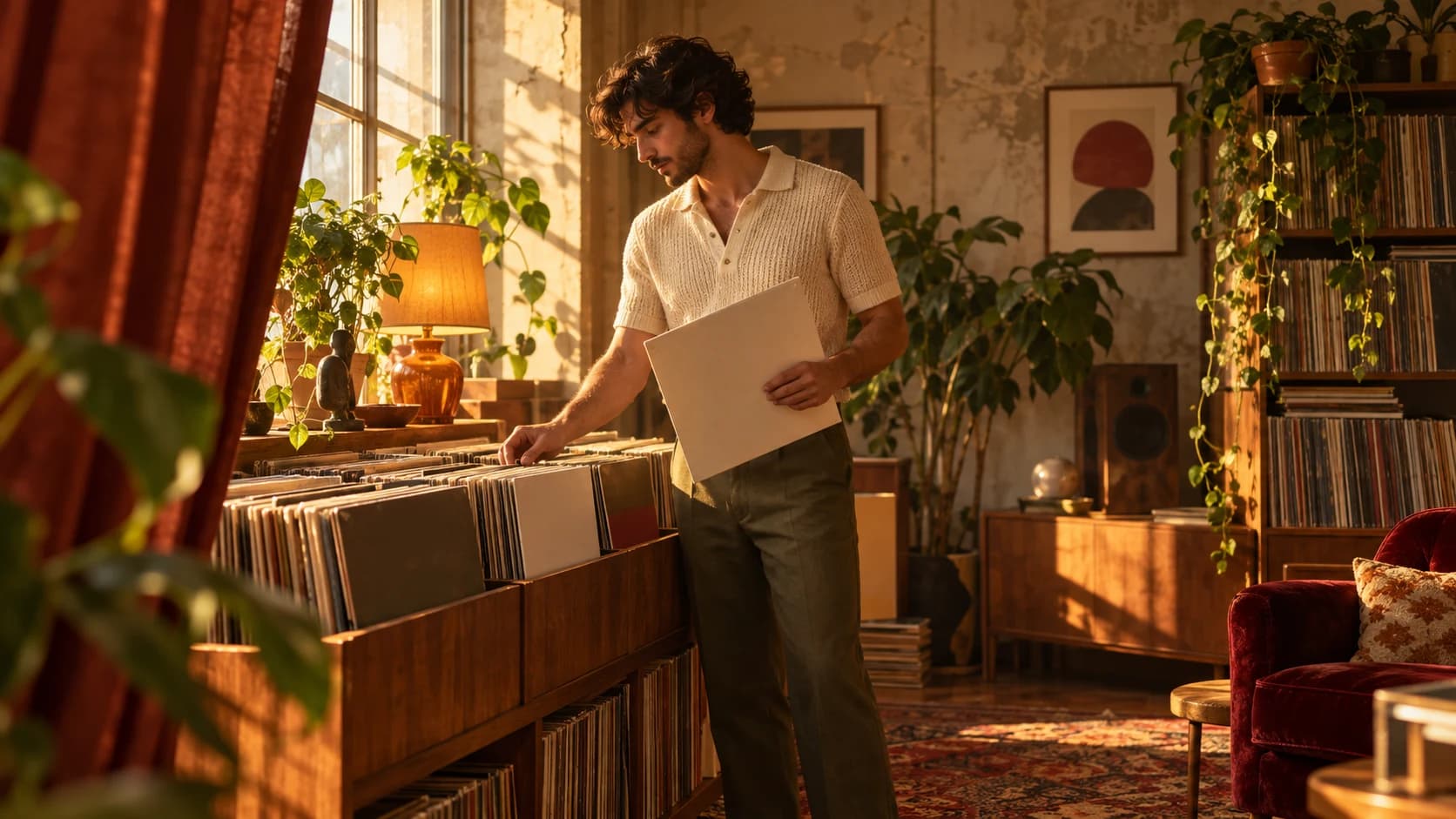
What defines the look
Composition
Use an intimate medium frame with foreground fabric or furniture and a lived-in background rather than perfect symmetry.
Color
Combine amber, tobacco brown, muted olive, cream, and a restrained deep red accent.
Light
Let broad natural side light spill through curtains, with warm practical lamps deeper in the room.
Material
Use wood veneer, linen, velvet, paper sleeves, worn plaster, and soft analog grain.
Motion
Choose a slow lateral track that follows one everyday action and retains the relaxed pace.
Build the key image
An original warm 1970s-inspired cinematic scene of a record-shop owner arranging album sleeves in a small apartment-like shop during late afternoon. The owner wears a cream knit shirt and muted olive trousers and holds one blank, unbranded record sleeve beside a low walnut display. Intimate medium-wide 16:9 composition with a soft rust-colored curtain in the foreground, lived-in shelves, one amber table lamp, a worn plaster wall, and leafy plants in the background. Broad golden side light enters through a large window and falls across the face, hands, wood veneer, linen, paper, and velvet. Amber, tobacco brown, muted olive, cream, and one deep red accent. Gentle optical softness, subtle analog grain, rich but natural skin tone, romantic and relaxed without glamour posing. No readable album art, logos, text, cigarettes, or recognizable people.Bring it into motion
Use the supplied record-shop image as the exact visual reference and first frame. The camera performs one slow, silky lateral track of less than one meter, following the owner's hands. The owner slides the single blank record sleeve into the walnut display, rests one hand on the shelf, and looks briefly toward the window. The rust curtain moves slightly in a soft indoor draft. Preserve the face, clothing, hands, record sleeve, shelves, plants, lamp, room layout, warm window direction, amber-olive palette, optical softness, and analog grain. No cuts, camera orbit, new people, readable cover art, object duplication, rapid movement, or lighting change.Use this look for
A hospitality story
Follow one host preparing a table in a warm, textured room with restrained movement and real material detail.
A fashion portrait
Use relaxed posture, side light, and tactile fabrics; let the camera drift slightly rather than staging a runway move.
Adjust the result
- The image becomes uniformly yellow: Retain cream highlights, olive midtones, and deeper neutral shadows.
- The room looks like a costume set: Add an ordinary activity and a few worn, functional objects instead of decorative clichés.
- The track causes face drift: Shorten the move and keep the subject's head angle nearly unchanged.
Generation details
- Image model
- OpenAI ImageGen
- Video model
- Seedance 2.0 via Huitang
- Image reference used
- The key image shown above
- Aspect ratio
- 16:9
- Video duration
- 6.04 seconds
- Generation date
- 2026-10-19
- Selected output notes
- The analog interior, earthy palette, and window light remain consistent while the subject moves.
FAQ
Does the prompt simulate a real film stock?
It describes visual qualities such as softness, grain, and warm color; it does not claim a specific physical film process.
Can the scene be outdoors?
Yes. Use low warm sun, earthy clothing, foliage, and gentle camera movement while avoiding modern visual clutter.
How is this different from a generic vintage filter?
The look comes from light direction, materials, interior color, framing, and behavior—not grain alone.
Can I use this for product content?
Yes. Place the product naturally in a tactile environment and keep its color, shape, and labeling accurate.
Create your own 1970s-inspired scene
Adapt the image and motion prompts to your subject, then continue the scene in Pixo.