Start with a conversation.
Tell Pixo what you’re making—your idea, audience, style, and length. The agent turns your brief into a script and a production-ready plan.
Show a body changing over time — weight loss, weight gain for a role, training progress — as one continuous timelapse with the same person recognizable throughout.
Transformation timelines you can build in Pixo — every character AI-generated.
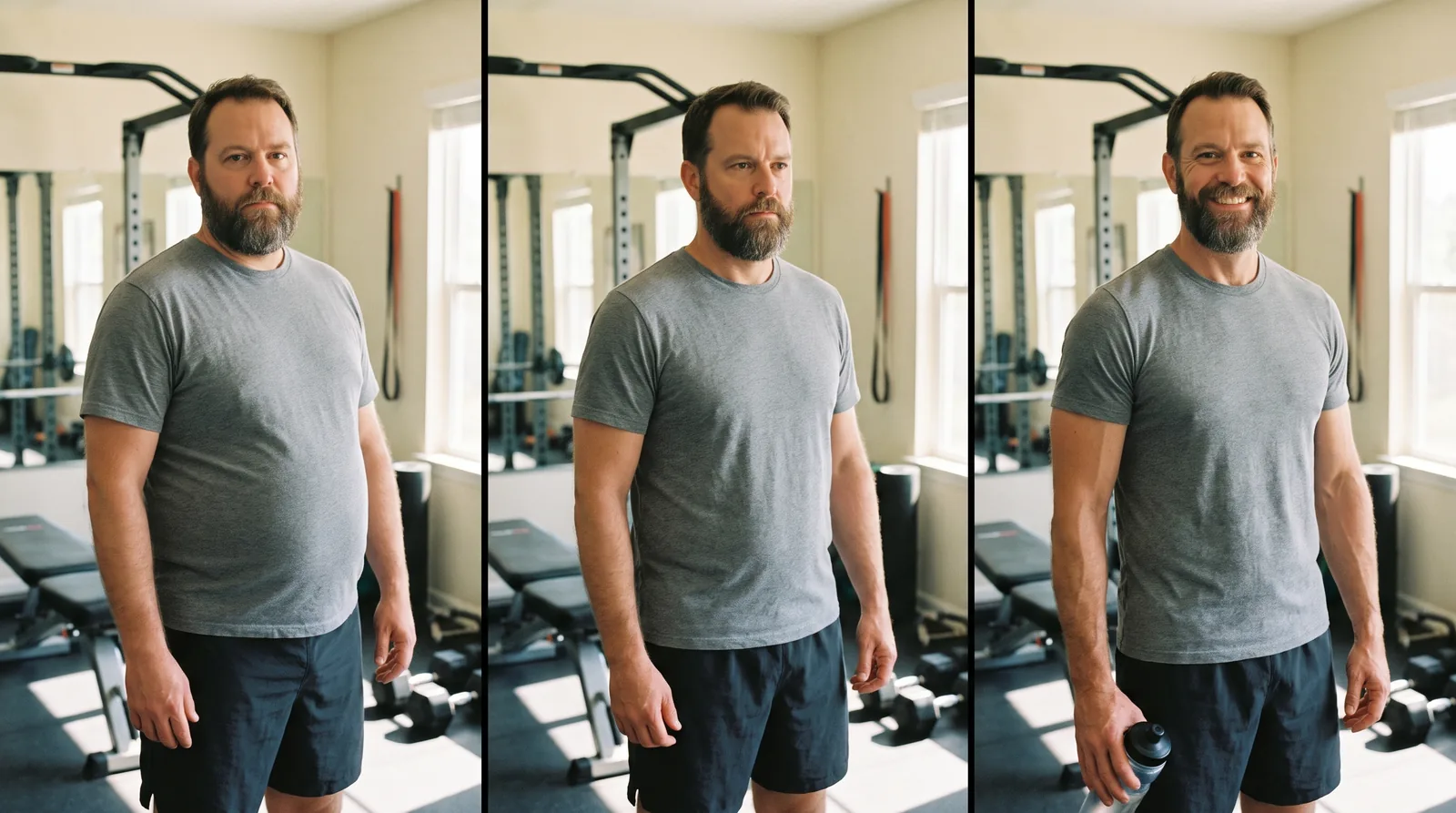
Two photos tell you nothing about the middle — and the middle is the story. A timelapse shows the change happening, which is what audiences respond to.
Generic tools make the heavier and lighter versions look like two different people. Keeping one recognizable person through the change is the hard part.
Documenting an actual transformation means months of consistent photos. Fiction, ads, and previz can't wait — and shouldn't have to.
Tell Pixo what you’re making—your idea, audience, style, and length. The agent turns your brief into a script and a production-ready plan.
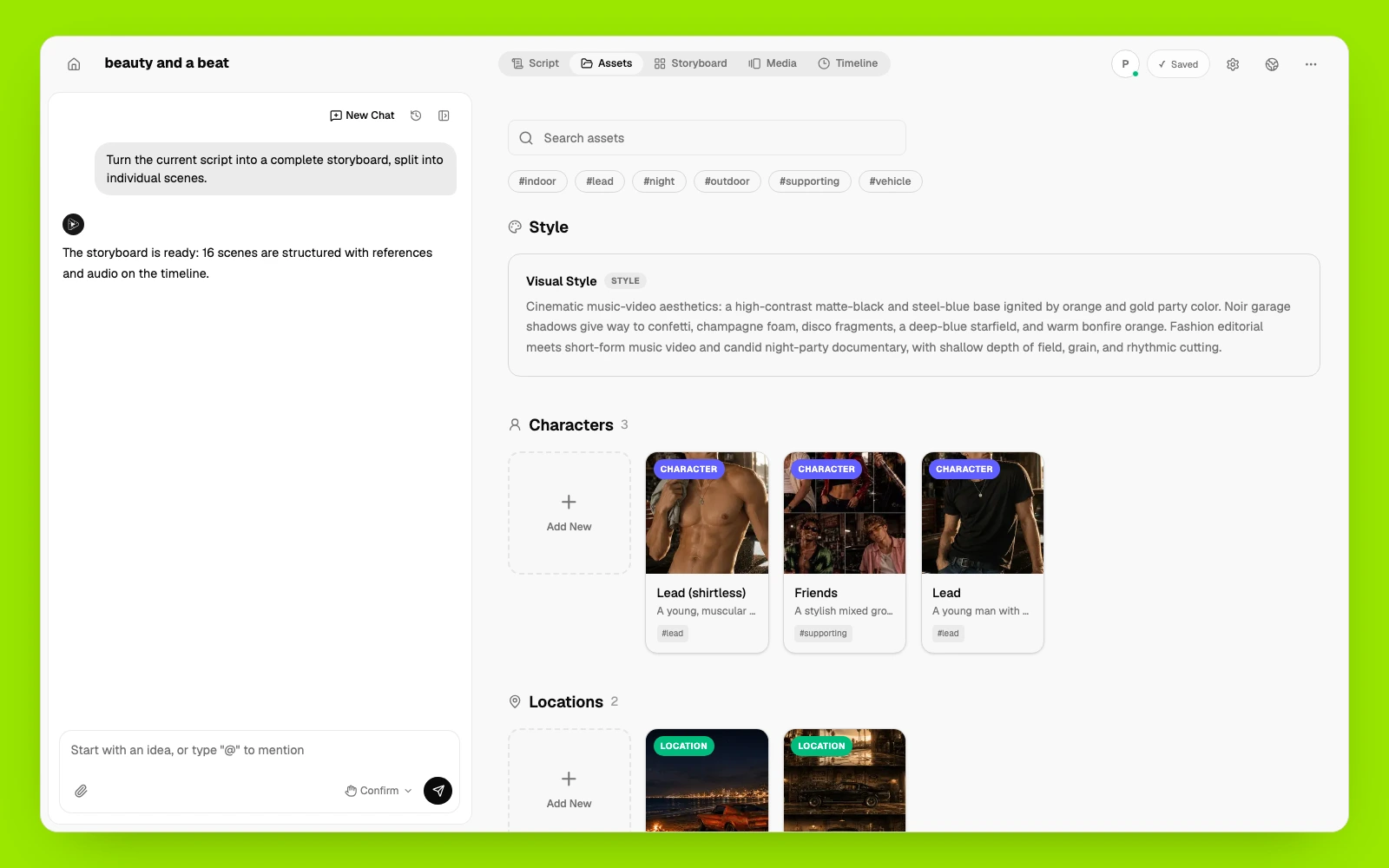
Pixo AI reviews every scene, camera move, reference, and sound cue before generation. Change one shot without starting the whole video over.
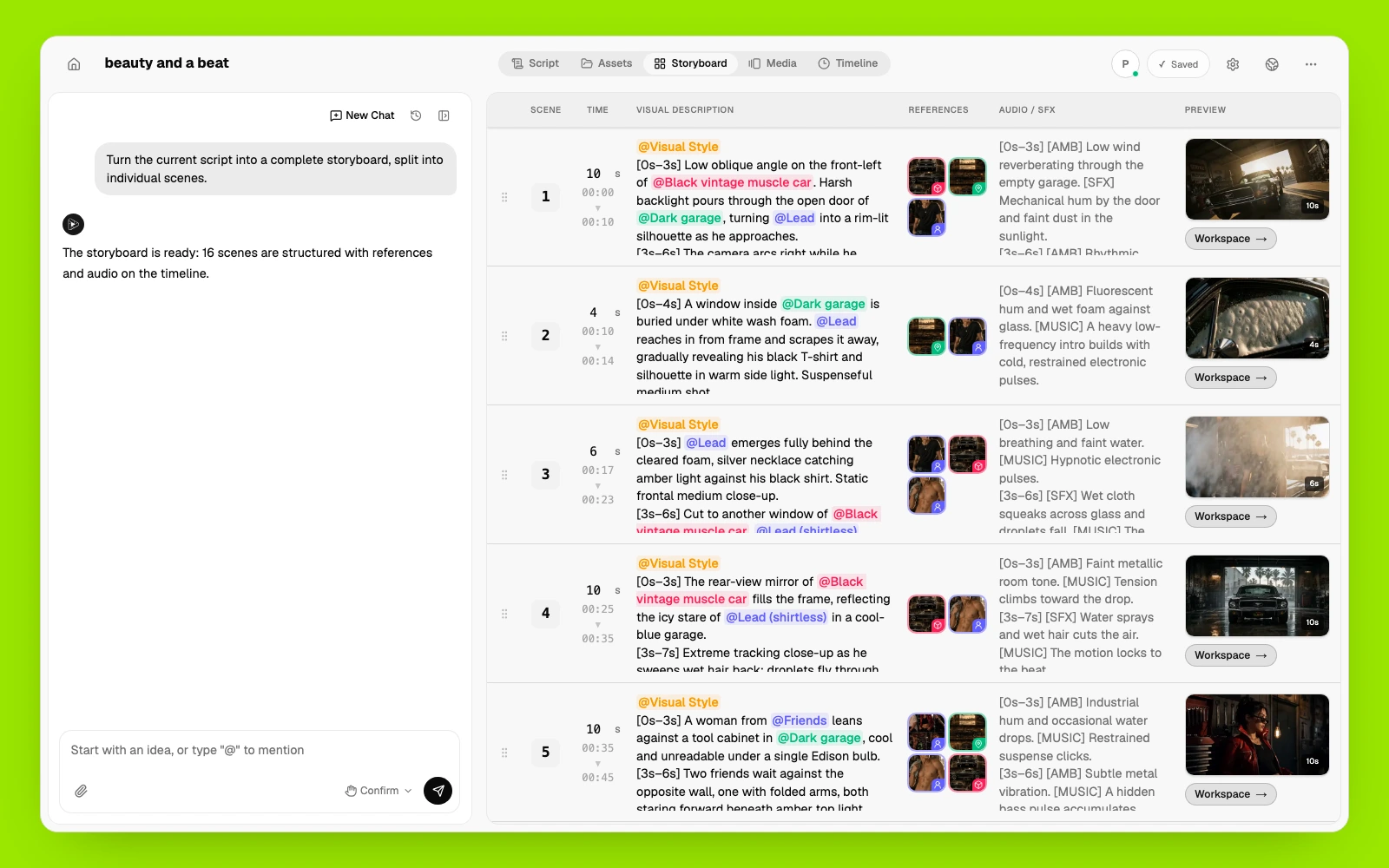
Pixo AI manages and reuses the same characters, products, locations, voices, and visual styles across every scene.
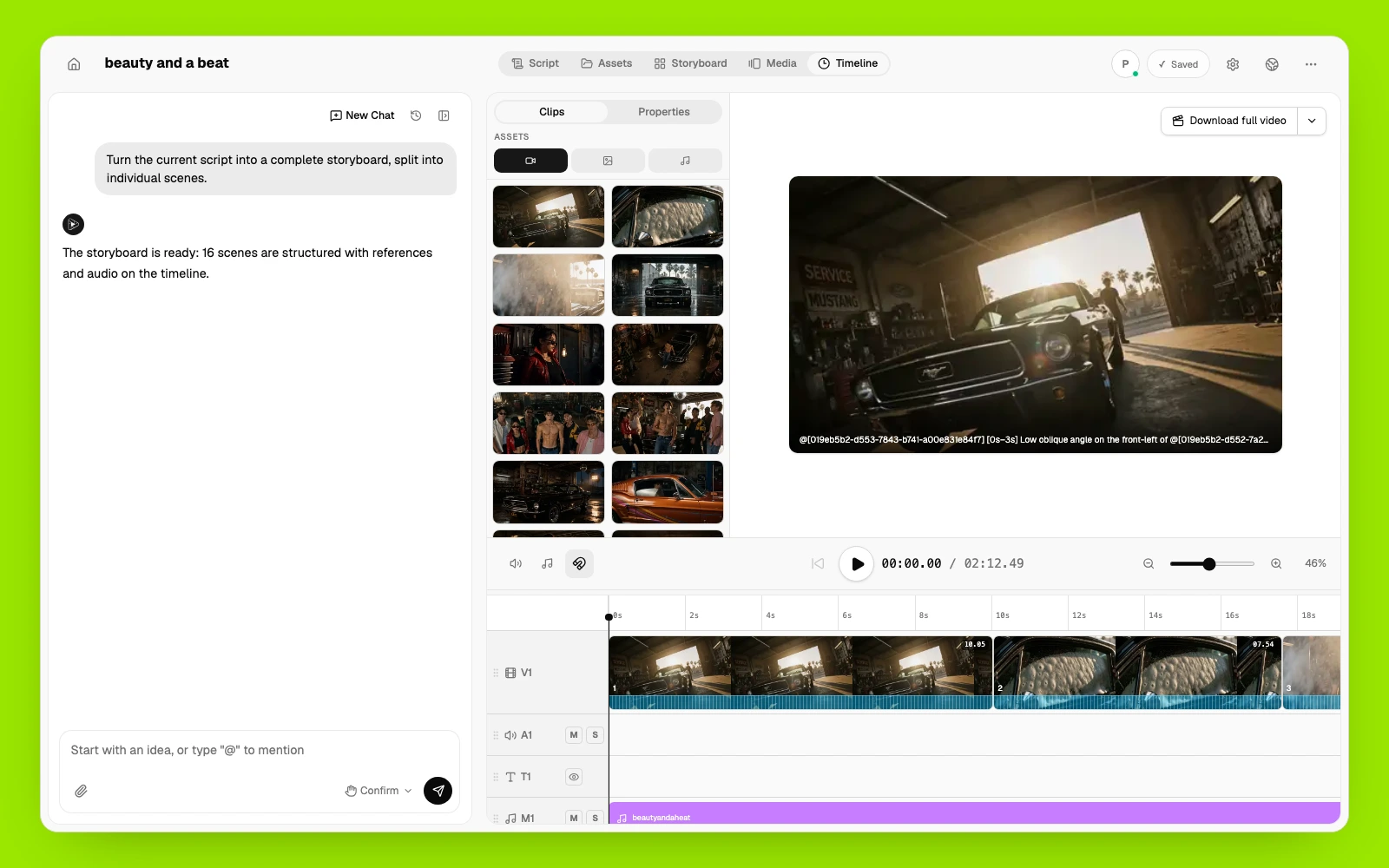
Pixo AI arranges clips, voiceover, music, and sound on one timeline. Regenerate what changed, keep what works, and export the finished video.
Starting build, end build, and direction — a slim-down, a bulk-up for a role, or a round trip. Reference images anchor the constant identity.
Face, beard, eyes, wardrobe — the saved asset carries what stays the same, so every stage reads as one person.
One continuous morph or discrete dated stages — the agent renders the progression with consistent framing and lighting.
Add milestones, captions, and music; intercut with scenes. The timelapse becomes a beat inside a larger story.
Weight loss journeys, or weight gain for character arcs — an actor's role transformation, a 'what happened to him' flash-forward — staged as fiction.
Identity anchoring keeps the same face, beard, and bearing at every stage, so the timeline never turns into a lineup of strangers.
Same camera, same room, same light across stages — the visual grammar that makes a timelapse read as time passing.
Flash-forwards, role-transformation previz, documentary-style fiction — anywhere a body needs to change more than a shoot allows.
These are fictional, AI-generated timelines — label them as such. Not for fake testimonials, health claims, or real-person depictions.
Continue with a model, free tool, or comparison matched to this workflow.
From bedroom studios to agency pipelines — hear it from the people making videos every day.
1,000,000+
videos generated
100,000+
creators worldwide
190+
countries
Hago videos para clientes de tres países y Pixo me resuelve la producción completa. Storyboard en la mañana, revisiones en la tarde, entrega el mismo día.
I run two faceless channels and this is the whole production stack. Script goes in, storyboard comes out, I tweak three panels and hit generate.
歌ってみた動画のMVを自分で作れるようになりました。絵コンテを直すだけで世界観が変わるのが楽しいです。
Clients ask for changes on Friday afternoon. I regenerate one scene instead of rebooking a crew — that alone pays for the subscription.
Every single I released this year has a video now. I storyboard the whole thing in an afternoon, regenerate the scenes that feel off, and export for YouTube and Reels in one go.
我做短剧账号,以前一集要剪两天。现在分镜自动生成,我只改镜头描述,当天就能更新。
Product demos used to take two weeks with a freelancer. Now I draft a script in the morning and the team reviews a finished cut after lunch. The scene-by-scene control is what sold me.
Je réalise des clips pour des artistes indépendants. Pixo me permet de tester trois directions artistiques dans la même journée — impensable avant.
브랜드 협찬 영상을 매주 두 편씩 만드는데, 장면별로 다시 생성할 수 있어서 수정 요청이 와도 무섭지 않아요.
Pixo thinks in shots, not clips. I can hold a location and a character across an entire sequence — that's the part every other AI tool gets wrong.
Common questions about body-change timelapse videos made with AI.
Morph any character on screen — a werewolf turn, a lifetime of aging, a body swap, a statue coming to life. Pixo storyboards the change shot by shot and keeps the same character recognizable through every stage of the morph.
Turn a permitted character reference and the transformation to show into a staged muscle-transformation sequence with the same recognizable character. Pixo's AI agent helps plan the storyboard, generate individual scenes with leading video models, add voice and sound, and refine the complete video in one workspace.
Turn a permitted portrait and the ages or timeline to show into an age-progression sequence that keeps one recognizable identity across life stages. Pixo's AI agent helps plan the storyboard, generate individual scenes with leading video models, add voice and sound, and refine the complete video in one workspace.