Start with a conversation.
Tell Pixo what you’re making—your idea, audience, style, and length. The agent turns your brief into a script and a production-ready plan.
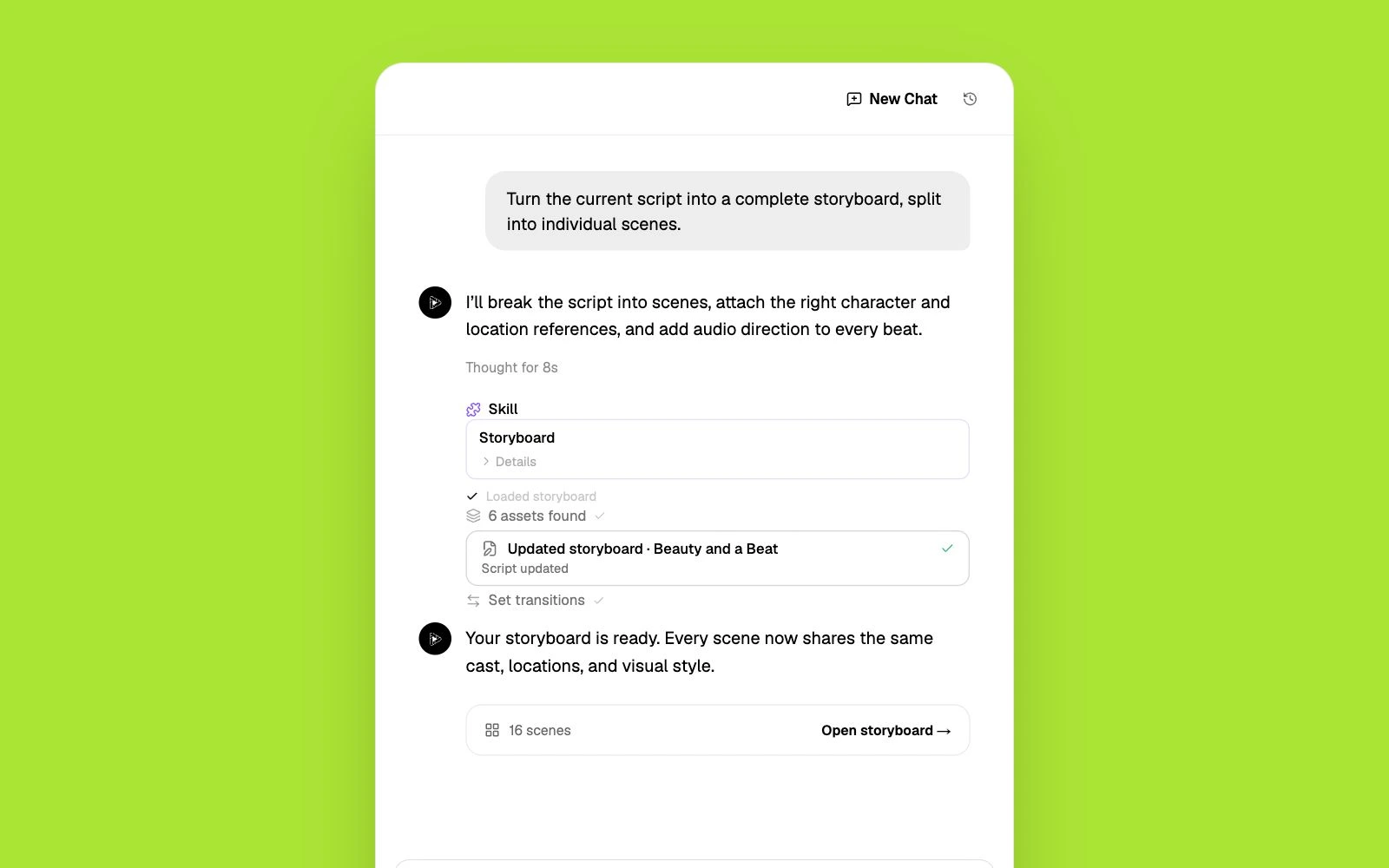
A2E puts an AI presenter on screen and meters it by the second. Pixo's AI agent scripts, storyboards, generates and edits original scenes into a finished 1080p video with native audio.
A2E is an AI avatar toolbox with an API. Pick a community avatar or clone yourself from a short clip, paste a script, and it renders a presenter speaking it with lip-sync in dozens of languages; around that core sit talking photo, face and head swap, voice cloning, image-to-video and a handful of utilities such as upscaling and subtitle removal. It is cheap and developer-friendly — the free plan hands out a small daily credit allowance, avatar video is metered at one credit per second, and every paid tier includes API access — which is exactly why indie apps and e-commerce sellers use it for spokesperson clips at volume. The boundary is that every tool produces one clip. There is no script that becomes a shot list, no storyboard, no timeline where an establishing shot, a product close-up and the presenter sit in order, and no cast that carries from one clip to the next. Each output stands alone and the assembly is your problem. If you're searching for an A2E alternative because the video you owe has scenes in it, you want an agent, not a presenter-in-a-box.
Avatar, talking photo and image-to-video each render a standalone file. Stitching them into a sixty-second ad with an arc happens in another app, by hand, every time.
A2E can make the spokesperson, but the kitchen the product sits in, the customer using it and the slow push-in on the box are not a script it can act on. The world around the presenter comes from somewhere else.
Metering by the second is transparent, and it also means longer, richer videos are the ones that cost most — while subscription credits reset each billing cycle whether you used them or not.
A2E is a toolbox of single-clip avatar and swap utilities with an API. Pixo is an agentic video platform with a full script-to-edit pipeline.
| Criterion | Pixo | A2E AI |
|---|---|---|
| Built for | Complete videos of any format — ads, demos, explainers, music videos, short films | Avatar and lip-sync clips, talking photos and face swaps, one at a time or via API |
| What appears on screen | Generated scenes — locations, action, product shots, characters — with a presenter only where the script calls for one | A presenter delivering a script, or a single swapped or animated clip |
| Script & storyboard | Agent writes the script and storyboards every shot before anything renders | You bring the script; no shot planning or timeline |
| Character continuity | Shared assets anchor characters, products and places across every shot and project | One avatar per clip; nothing ties separate outputs together |
| Models | Best-fit model per shot — Seedance, Kling, Veo, Hailuo and more | Its own avatar and lip-sync engines, plus third-party models exposed as separate tools |
| Pricing approach | 200 free credits to start; monthly plans with top-ups | Free tier (720p, watermarked, small daily credit allowance); Pro $14.9 and Ultra $59.9 per month, avatar video metered at 1 credit per second |
Competitor details are based on publicly available information as of each page's last update and may change. Always verify current pricing and features on the vendor's site.
Tell Pixo what you’re making—your idea, audience, style, and length. The agent turns your brief into a script and a production-ready plan.
Pixo AI reviews every scene, camera move, reference, and sound cue before generation. Change one shot without starting the whole video over.
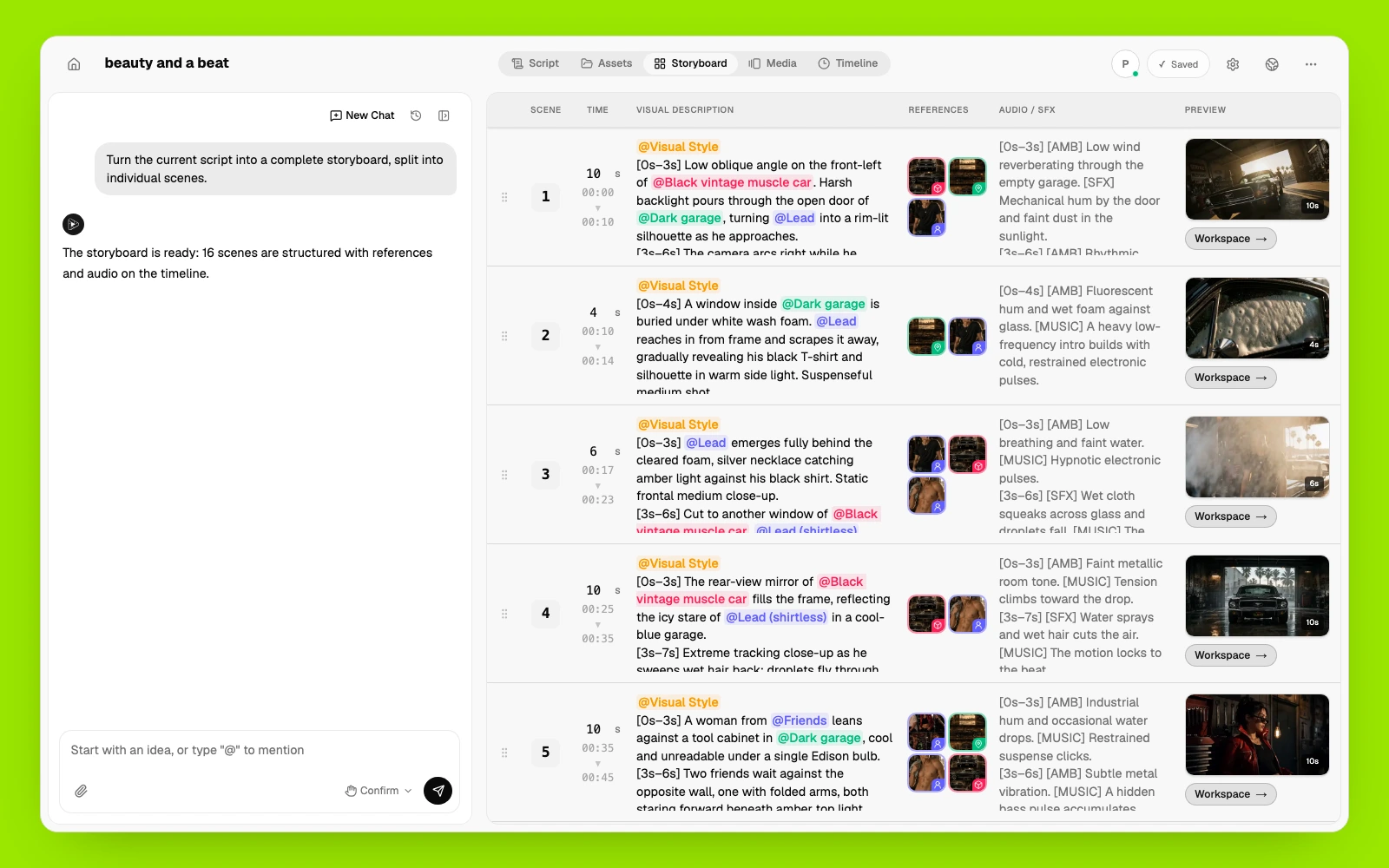
Pixo AI manages and reuses the same characters, products, locations, voices, and visual styles across every scene.
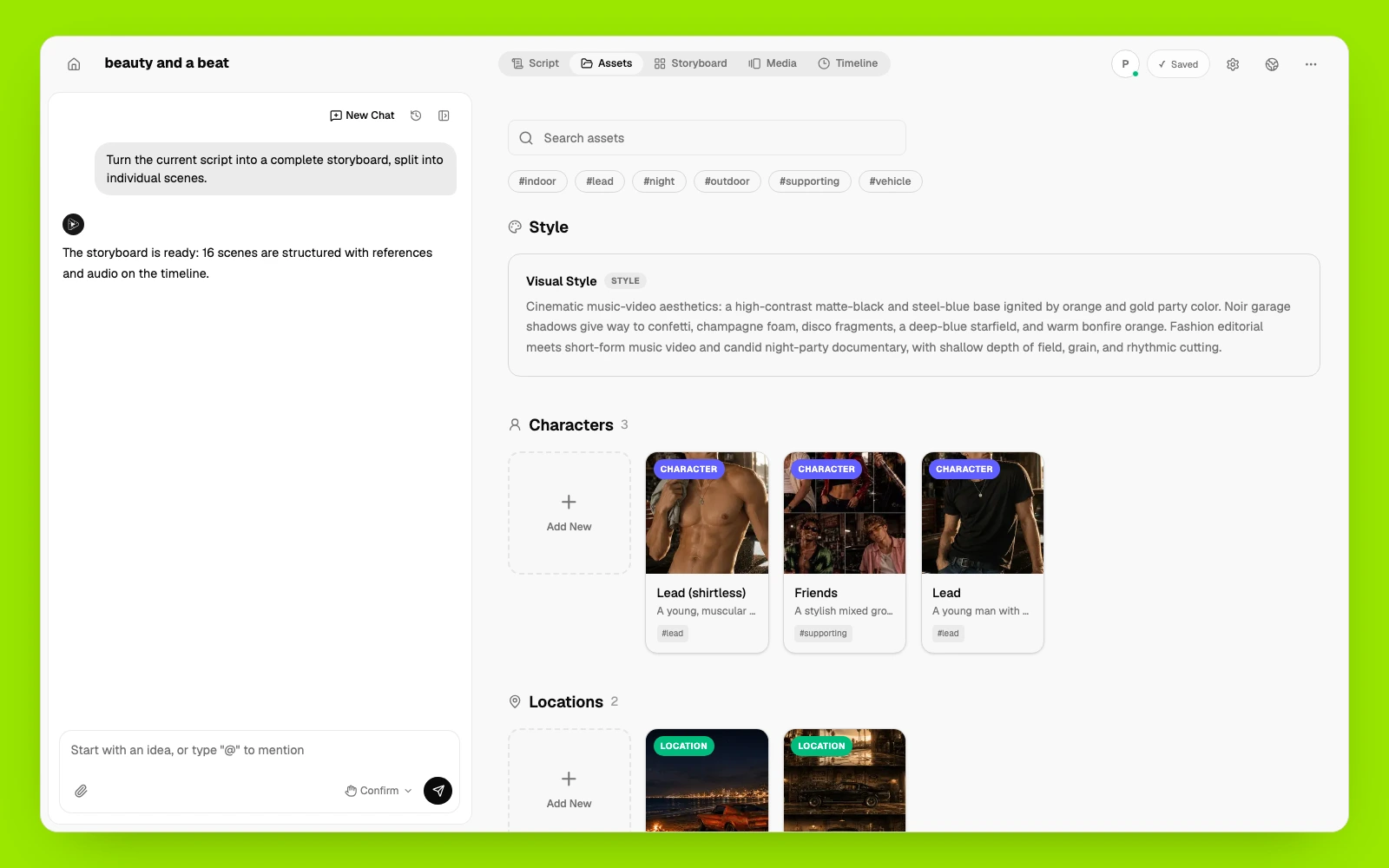
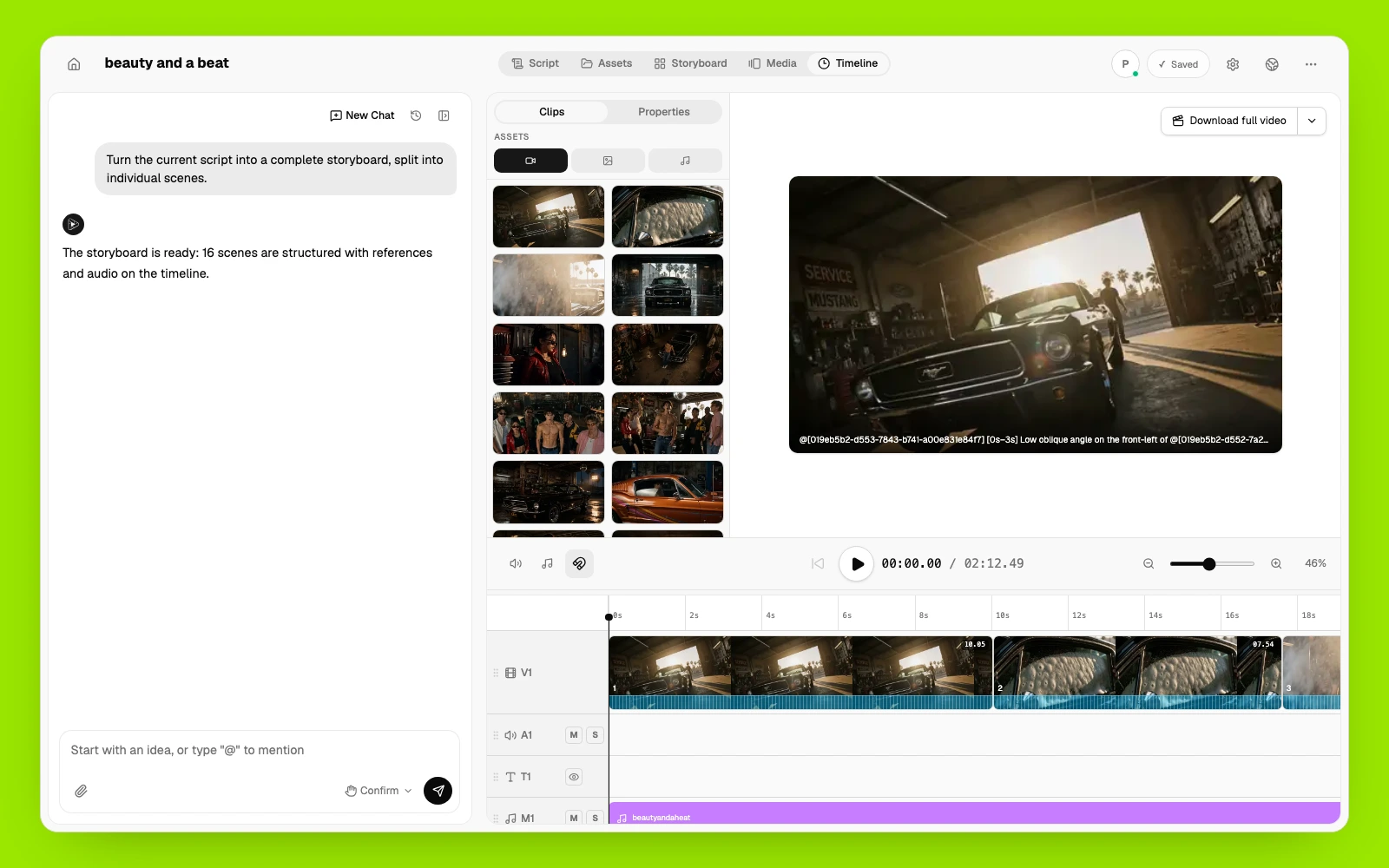
Pixo AI arranges clips, voiceover, music, and sound on one timeline. Regenerate what changed, keep what works, and export the finished video.
If a presenter reading a script is genuinely the job, these compete directly with A2E.
The most polished avatar platform, with a large presenter library and strong lip-synced translation.
Best for: spokesperson video and dubbing at scale.
Enterprise avatar video with brand controls, approvals and a catalogue built for training content.
Best for: training and internal communications teams.
Photo-to-presenter animation and real-time streaming avatars with a developer API.
Best for: embedding a live talking presence into an app.
Conversational video agents that respond to a viewer in real time, built API-first.
Best for: interactive, personalised video experiences.
Tell the agent what the video is for, who it's for and how long it runs. It writes the script and turns it into a shot list rather than a single presenter take.
Review the storyboard — the establishing shot, the product beats and the presenter moment — and approve or adjust before any credits are spent.
Pixo generates each shot with the best-fit model, mixes voiceover, effects and music, and exports a finished 1080p video. Change a shot later and only that shot re-renders.
Common questions from creators comparing A2E with Pixo.
HeyGen makes an AI avatar read your script to camera. Pixo generates the actual video — an AI agent scripts, storyboards, and edits original scenes into a finished 1080p film with native audio.
Akool replicates one message across faces and languages. Pixo's AI agents script, storyboard, and edit complete videos with your choice of top models — Seedance, Kling, Veo, and more.
Vidnoz competes on price for talking-head clips. Pixo's AI agents script, storyboard, and edit complete videos with your choice of top models — Seedance, Kling, Veo, and more.
D-ID makes a photograph speak and stops there. Pixo's AI agents script, storyboard, and edit complete videos with your choice of top models — Seedance, Kling, Veo, and more.
Turn a message, script, audience, and permitted spokesperson reference into a multi-scene presenter video rather than one generic talking-head clip. Pixo's AI agent helps plan the storyboard, generate individual scenes with leading video models, add voice and sound, and refine the complete video in one workspace.
Turn a permitted portrait plus dialogue or an audio reference into a talking-photo video with facial motion, lip sync, framing, and native audio. Generate the shot with MiniMax H3 in Pixo’s Playground, review the result, and use the approved clip in a complete video project.
No credit card required • Free 200 credits