Start with a conversation.
Tell Pixo what you’re making—your idea, audience, style, and length. The agent turns your brief into a script and a production-ready plan.
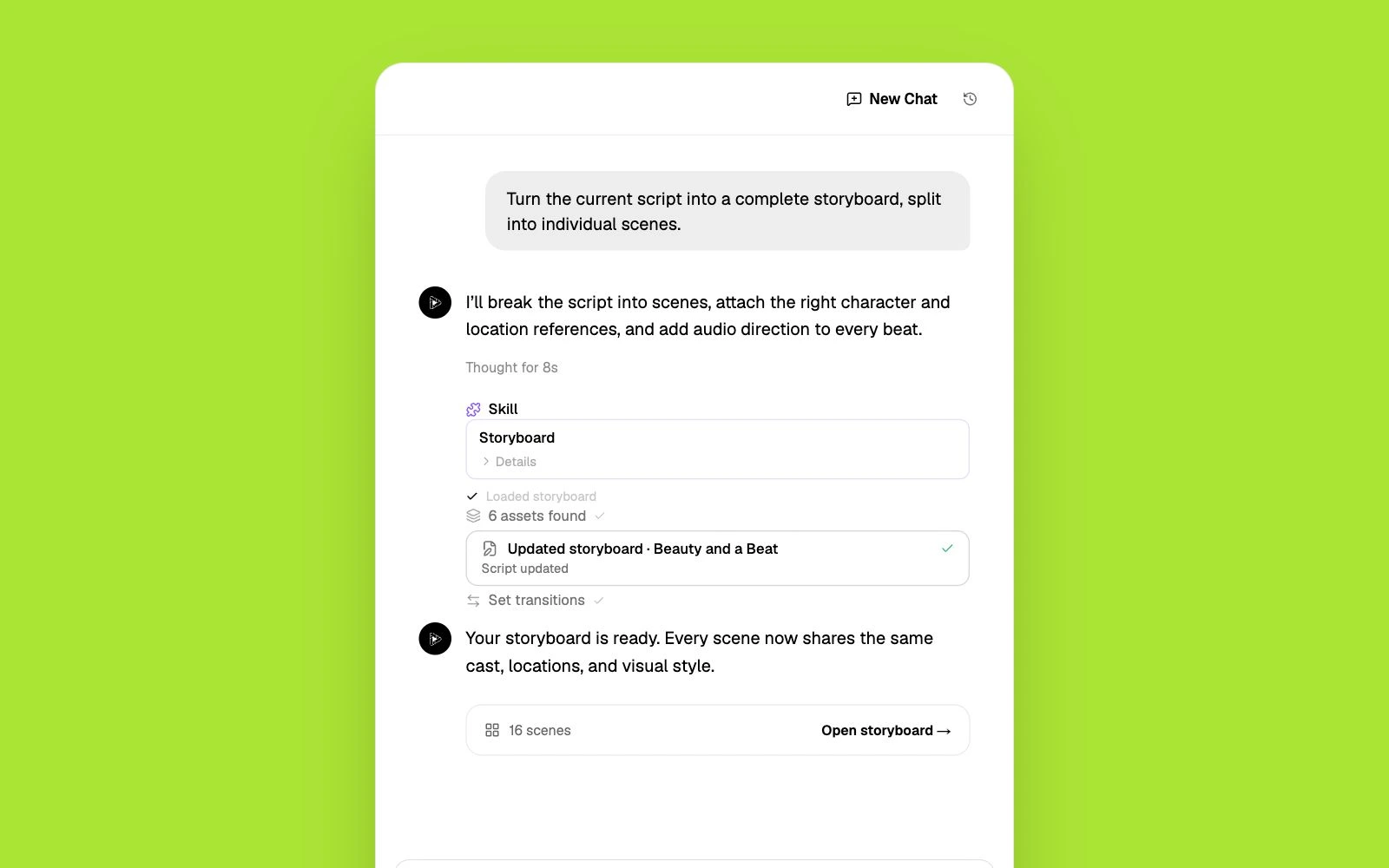
DreamFace is a mobile-first app that makes a photo sing, talk or act as an AI avatar. Pixo's AI agent scripts, storyboards, generates and edits the whole 1080p video that face belongs in.
DreamFace is a mobile-first AI avatar app, on iOS and Android with a web version, built around one thing it does well: give it a photo and a song or a line of text, and the face sings or speaks with the mouth matched to the audio. Around that sit talking avatars with AI voices, text-to-video, image-to-video, face swap, video translation and a developer API. It is quick, it runs on a phone, and the singing-photo and pet lip-sync formats travel well on social. As of August 2026 the website has no pricing page; access is sold as in-app subscriptions, mainly on weekly and annual terms, with a credit meter behind them. Because the name is popular, the App Store also carries look-alike listings from other developers, so check the seller before you pay. The limit is what the output is: one face animated inside one frame. There is no script, no scene behind the face, no second shot and no edit — the video around the talking head is left to you. If you're searching for a DreamFace alternative because you need the scene, not just the mouth moving, you want an agent, not a lip-sync app.
The output is a talking or singing head. There is no wide shot, no second character and no location — the moment the story needs to cut away, the app has nothing to cut to.
Access is sold on a weekly meter; one App Store reviewer describes a weekly plan whose credits covered about two five-second animations. A multi-clip project outruns the allowance quickly.
Look-alike listings with the same name and a different seller collect the complaints, and users cannot always tell which app they installed. Check the developer before subscribing.
DreamFace is a phone-first lip-sync and avatar app. Pixo is an agentic video platform that writes, generates and edits the scene the character lives in.
| Criterion | Pixo | DreamFace |
|---|---|---|
| Built for | Complete videos of any format — ads, music videos, short films, explainers | Making a photo sing or talk, and short avatar clips, on a phone |
| Output | A multi-shot 1080p video with native audio, edited to a finished cut | A single clip of one face talking or singing |
| Script & storyboard | Agent writes the script and storyboards every shot before anything renders | None — you pick a photo and an audio track; there is no scene to plan |
| Where you work | A browser workspace where you direct an agent, with projects and shared assets | iOS and Android app first, with a web version |
| Voice & audio | AI voiceover, sound effects and music generated and mixed in the same pipeline | Lip-sync to a song or an AI voice; no music or sound design layer |
| Pricing approach | 200 free credits to start; monthly plans with top-ups | In-app subscriptions on weekly and annual terms with a credit meter; no pricing page on the website as of August 2026 |
Competitor details are based on publicly available information as of each page's last update and may change. Always verify current pricing and features on the vendor's site.
Tell Pixo what you’re making—your idea, audience, style, and length. The agent turns your brief into a script and a production-ready plan.
Pixo AI reviews every scene, camera move, reference, and sound cue before generation. Change one shot without starting the whole video over.
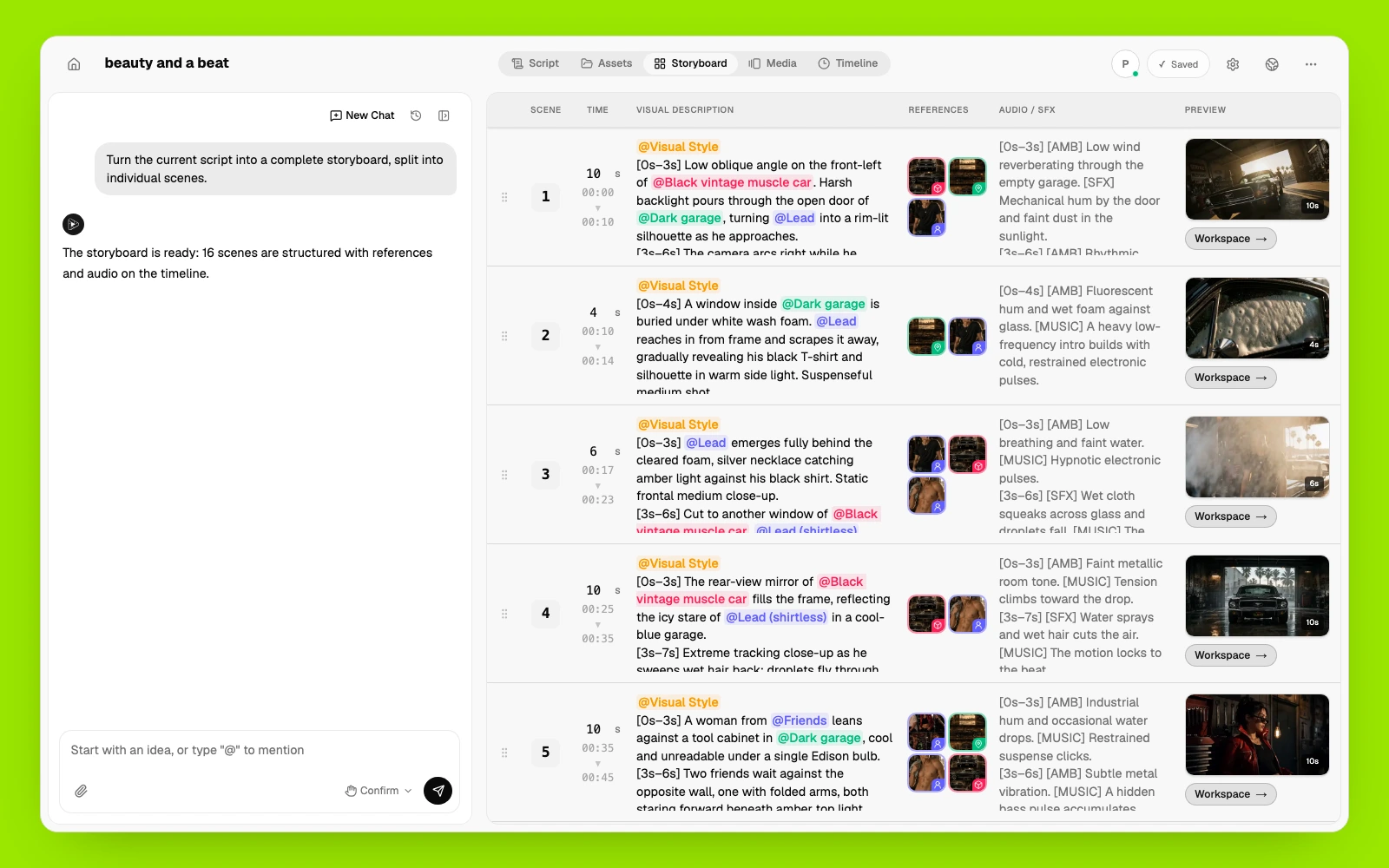
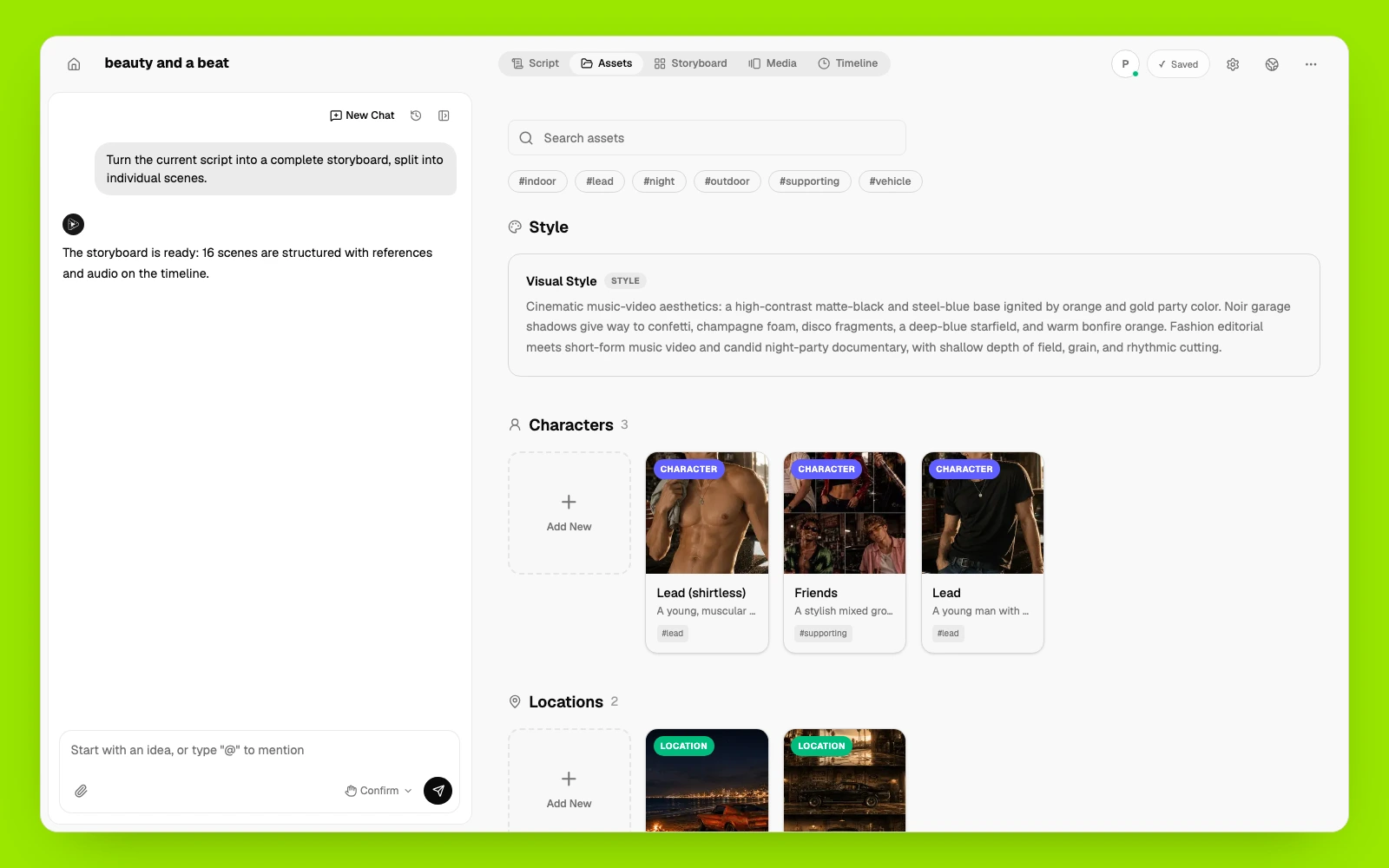
Pixo AI manages and reuses the same characters, products, locations, voices, and visual styles across every scene.
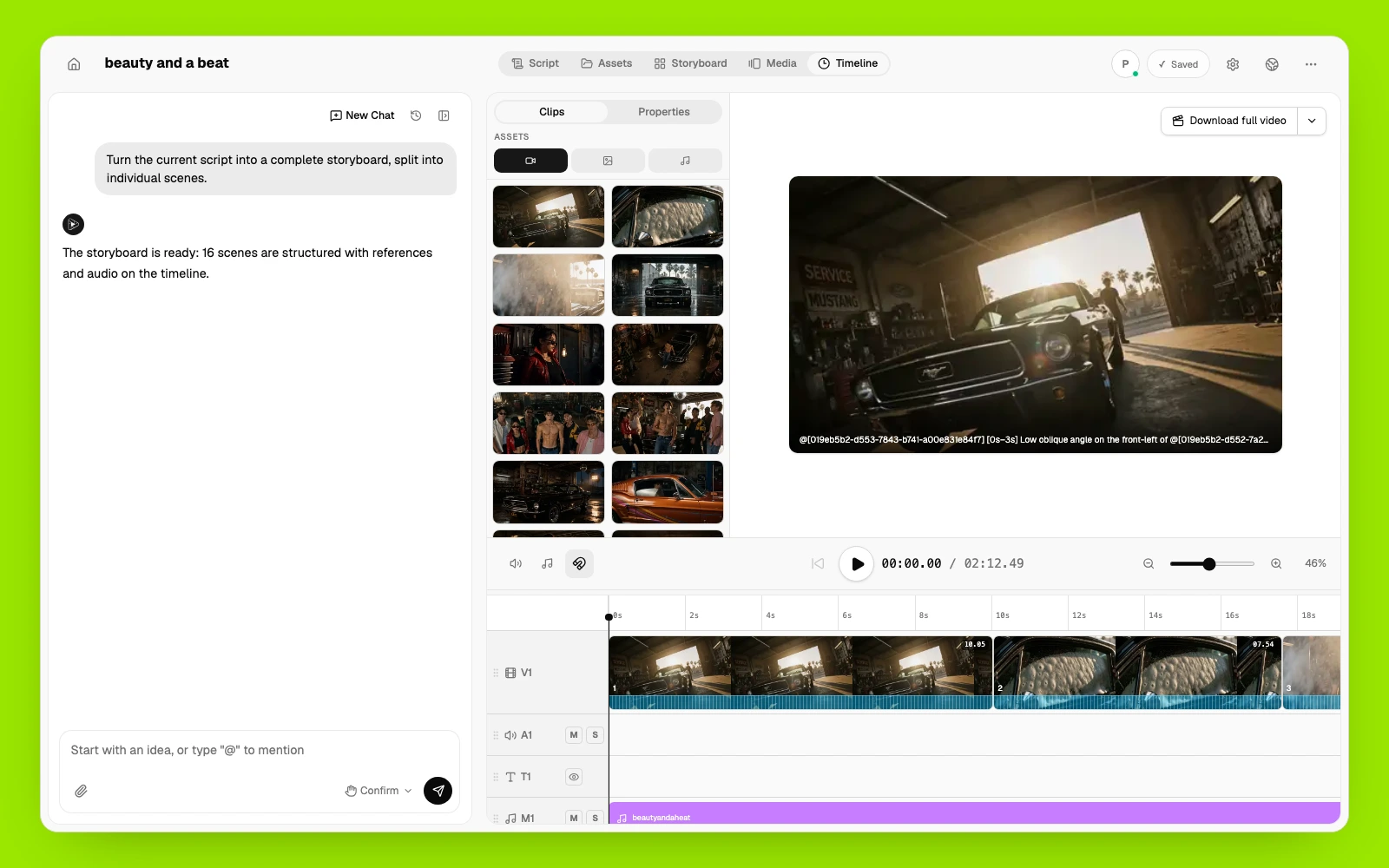
Pixo AI arranges clips, voiceover, music, and sound on one timeline. Regenerate what changed, keep what works, and export the finished video.
If a talking avatar or lip-synced photo is genuinely the job, these compete directly with DreamFace.
Expressive talking characters generated from an image and an audio track, with wide emotional range.
Best for: expressive single-character performances.
A large avatar and template library with text-to-speech in many languages.
Best for: quick presenter videos from a template.
Photoreal talking avatars with an enterprise API and conversational agents.
Best for: business talking-head video and integrations.
An avatar and lip-sync toolkit with voice cloning, aimed at developers and marketers.
Best for: avatar pipelines that need an API.
Upload the face you have been animating. In Pixo it becomes a shared asset with a name, a look and a voice that every shot draws on.
Tell the agent the story — what the character says, where they are, who else is there. It writes the script and storyboards the shots; approve before anything renders.
Pixo generates each shot with the best-fit model, syncs dialogue, adds music and sound, and exports a 1080p video with the talking moments in context.
Common questions from creators comparing DreamFace with Pixo.
Pixo's AI director makes complete multi-scene videos — script, storyboard, consistent characters, voices, and an edited final cut. Free 200 credits, no card needed.
Vidnoz competes on price for talking-head clips. Pixo's AI agents script, storyboard, and edit complete videos with your choice of top models — Seedance, Kling, Veo, and more.
D-ID makes a photograph speak and stops there. Pixo's AI agents script, storyboard, and edit complete videos with your choice of top models — Seedance, Kling, Veo, and more.
A2E puts an AI presenter on screen and meters it by the second. Pixo's AI agent scripts, storyboards, generates and edits original scenes into a finished 1080p video with native audio.
Turn a permitted portrait plus dialogue or an audio reference into a talking-photo video with facial motion, lip sync, framing, and native audio. Generate the shot with MiniMax H3 in Pixo’s Playground, review the result, and use the approved clip in a complete video project.
Turn a message, script, audience, and permitted spokesperson reference into a multi-scene presenter video rather than one generic talking-head clip. Pixo's AI agent helps plan the storyboard, generate individual scenes with leading video models, add voice and sound, and refine the complete video in one workspace.
No credit card required • Free 200 credits