Start with a conversation.
Tell Pixo what you’re making—your idea, audience, style, and length. The agent turns your brief into a script and a production-ready plan.
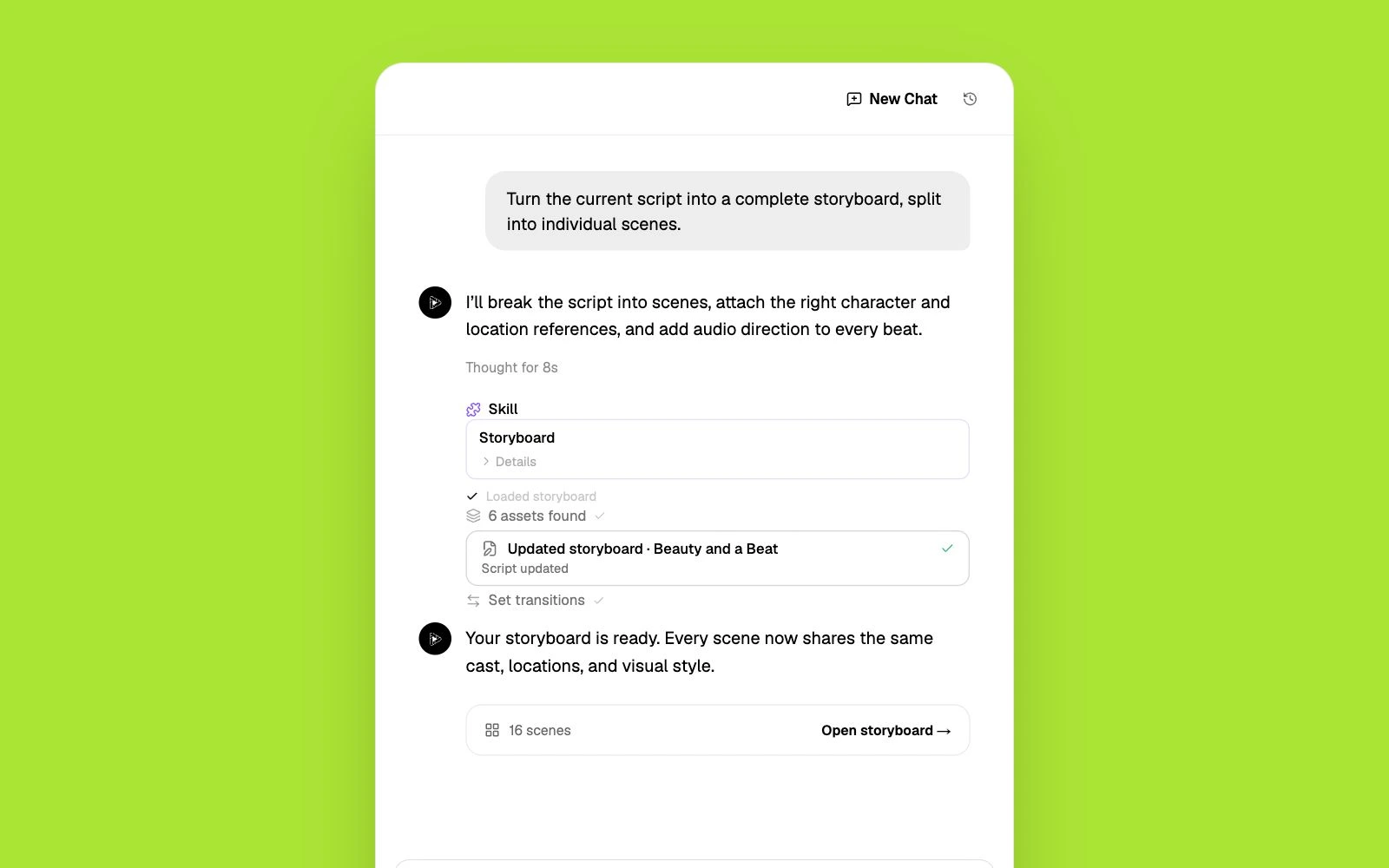
Tensor.Art is a model community — checkpoints, LoRAs, ComfyUI graphs, cheap stills. Pixo is the other half: an agent that scripts, storyboards, and edits those images into a finished video with sound.
Tensor.Art is a community model hub with free cloud generation attached. It hosts an enormous library of community checkpoints and LoRAs across Stable Diffusion, SDXL, SD 3.5, FLUX, Pony, Illustrious and more, lets you train your own LoRA in the browser — on the free tier — and exposes ComfyUI node graphs running on their GPUs. Fifty free credits a day, 4K stills on a $9.90 plan, a leaderboard, posts, remixable templates. For image work, model control, and training, it is excellent value and there is nothing quite like it in the video tools. It is simply not a video product. Video exists as a workflow template — a Wan graph you run — not as a timeline. There is no script, no shot list, no sequence, no character that persists across generations, and no audio of any kind: no voiceover, no music, no sound effects. Rendering ten related shots and assembling them into something watchable is entirely on you, in another application. If you came to Tensor.Art for the model library but the deliverable is a video, the missing piece is direction and assembly, not more models.
Image-to-video runs as a community template on a node graph. There is no shot list, no sequencing, and no edit — you get individual clips out of a workflow and assemble them somewhere else.
Each run is independent. Holding a character's face, wardrobe, and setting steady across ten shots means fighting seeds, LoRAs, and ControlNet by hand for every single one.
There is no audio anywhere in the product — no narration, no dialogue, no music, no sound effects. Every deliverable needs a second tool before it can be published.
These are different jobs, not different qualities. Tensor.Art gives you models and training; Pixo gives you a directed, finished video.
| Criterion | Pixo | Tensor.Art |
|---|---|---|
| Built for | Turning a brief into a finished multi-shot video — ads, product demos, music videos, short films | Hosting and running community image models, with training and node-graph control |
| Model library & training | A curated set of hosted models including Flux, Seedream, Imagen, Ideogram and SD 3.5 Large — no custom training | Far larger — community checkpoints and LoRAs plus in-browser LoRA training, even on the free tier |
| Video workflow | Script, shot list, per-shot model choice, regeneration, and an assembled cut | Image-to-video and text-to-video as ComfyUI workflow templates; no sequencing or editing |
| Character & scene consistency | Shared assets anchor every shot so faces, wardrobe, and locations stay fixed across the video | Achievable per image with LoRAs and ControlNet, but managed manually for each generation |
| Audio | Voiceover, music, and sound effects generated per shot and mixed into the export | None — the product has no audio features |
| Pricing approach | 200 free credits to start, then monthly plans with top-ups when you need more | Free tier with 50 daily credits; Pro around $9.90 per month or $69.90 per year, plus credit packs |
Competitor details are based on publicly available information as of each page's last update and may change. Always verify current pricing and features on the vendor's site.
Tell Pixo what you’re making—your idea, audience, style, and length. The agent turns your brief into a script and a production-ready plan.
Pixo AI reviews every scene, camera move, reference, and sound cue before generation. Change one shot without starting the whole video over.
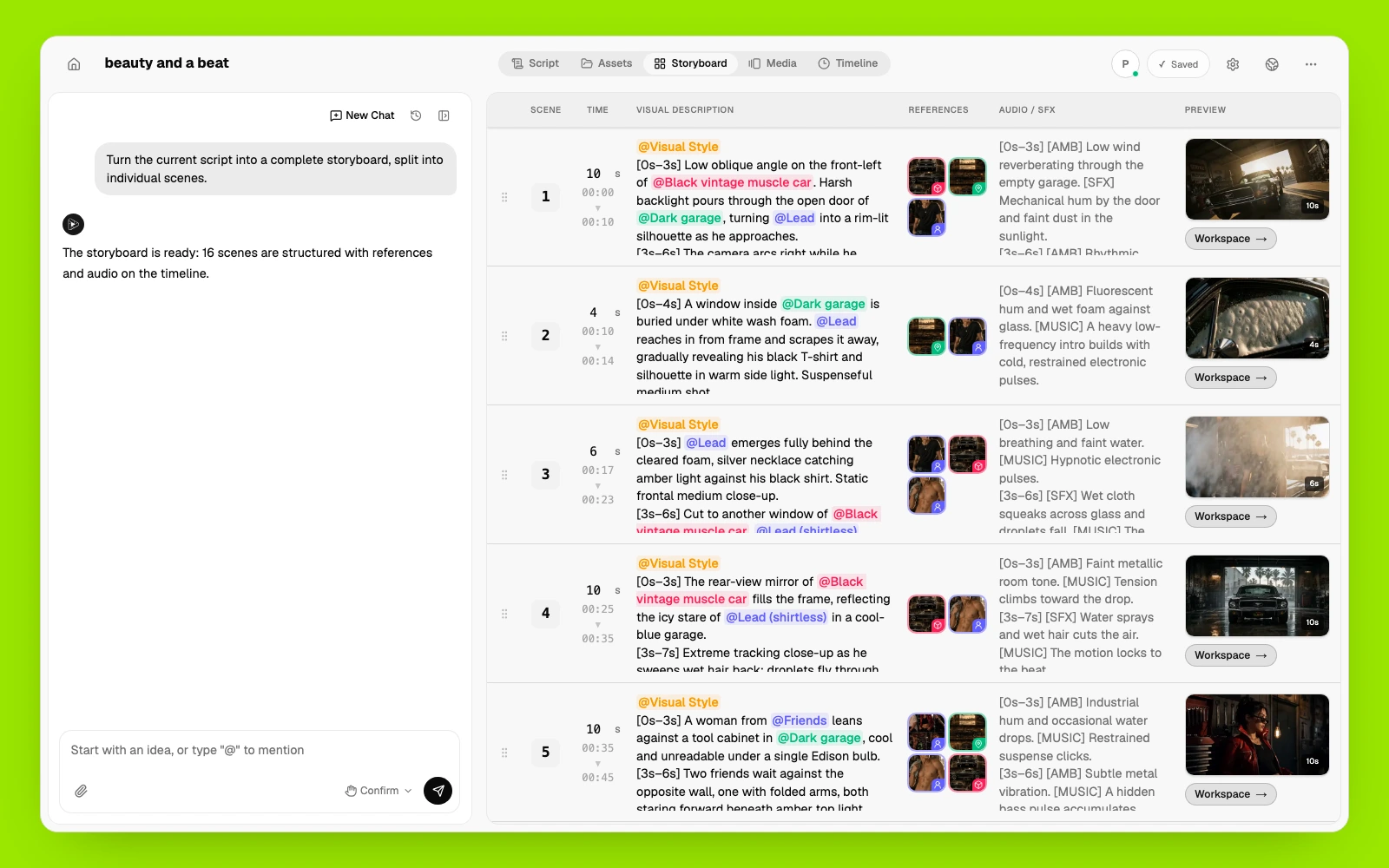
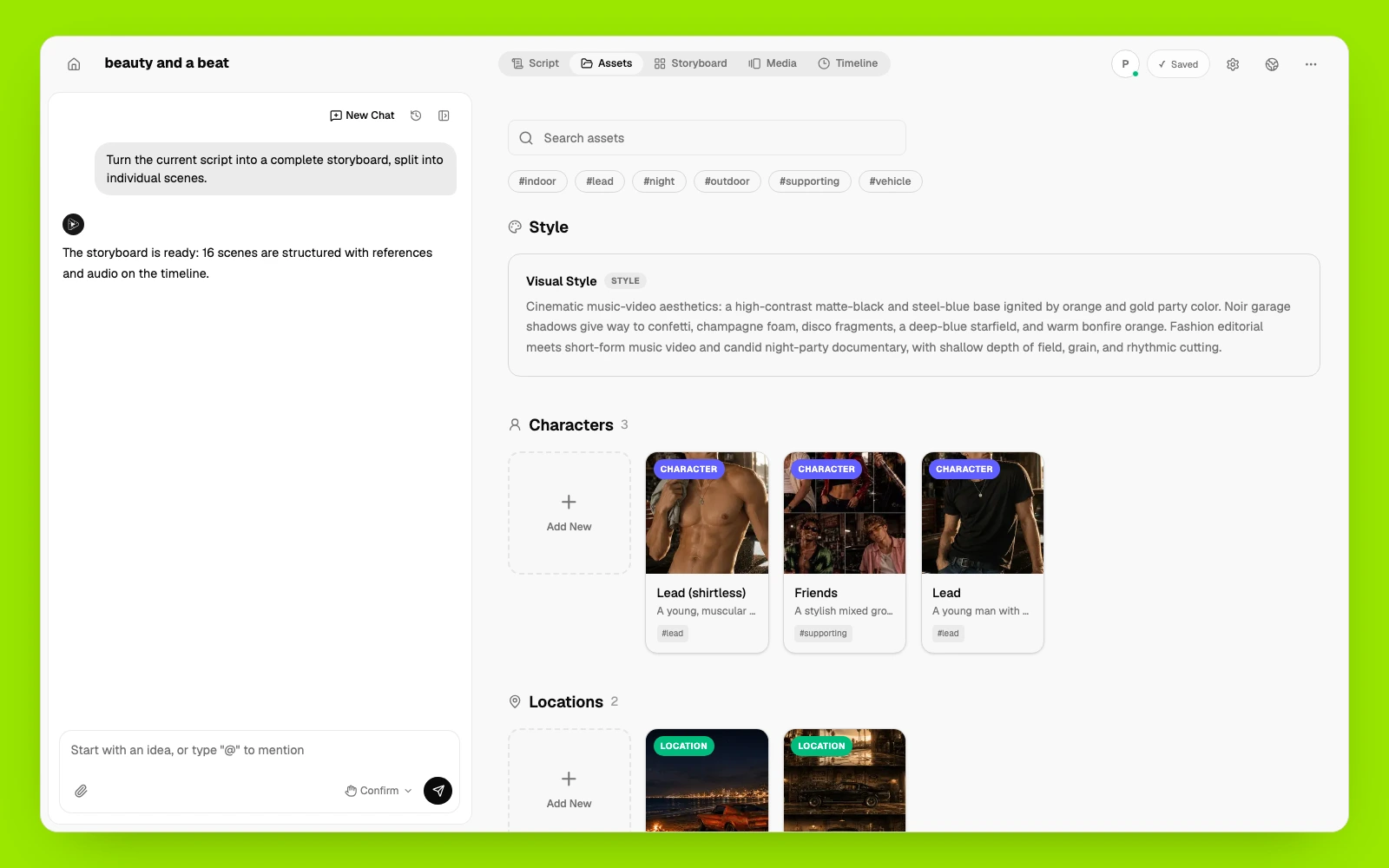
Pixo AI manages and reuses the same characters, products, locations, voices, and visual styles across every scene.
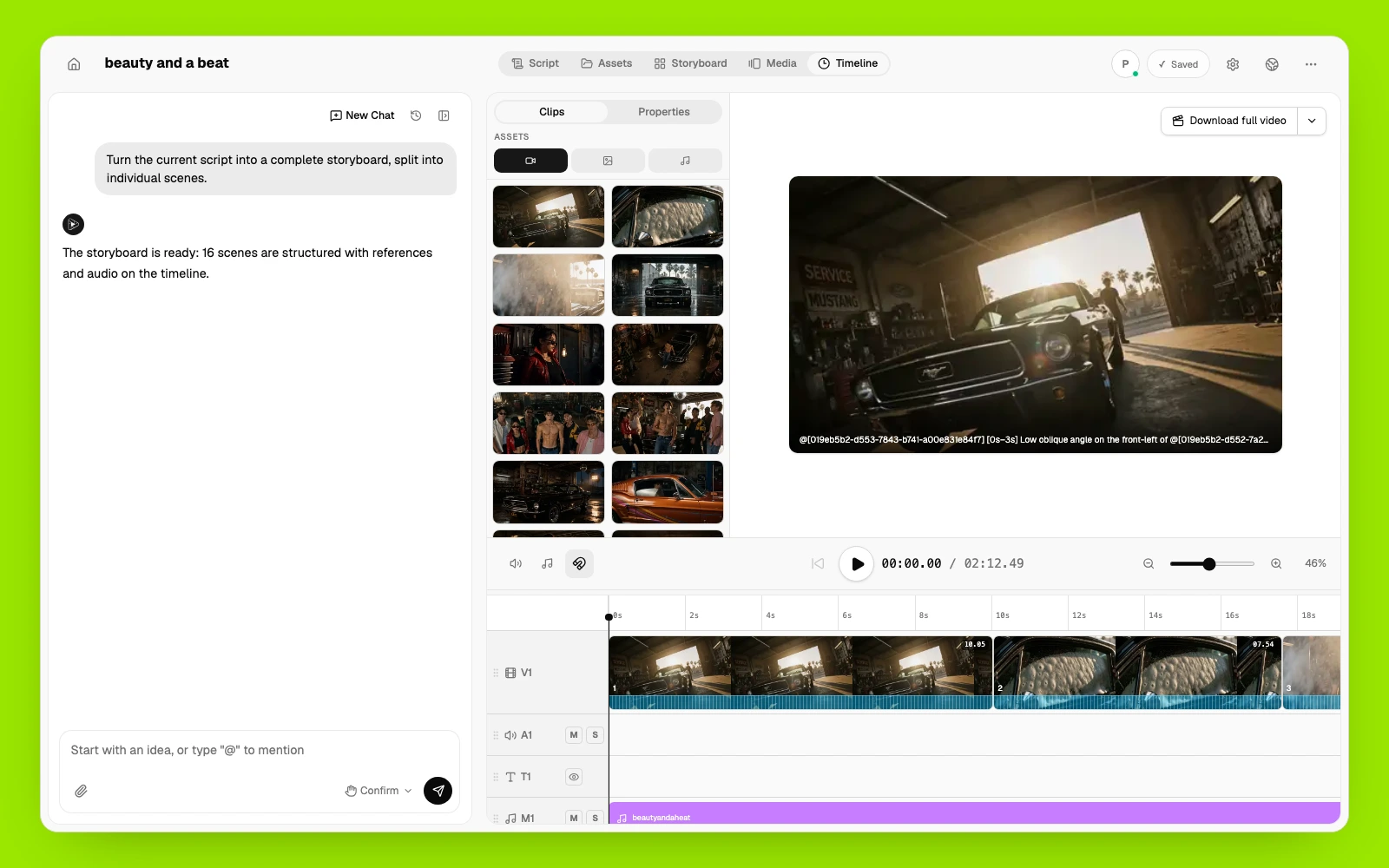
Pixo AI arranges clips, voiceover, music, and sound on one timeline. Regenerate what changed, keep what works, and export the finished video.
If the model library, training, and node-graph control are what you actually want, these are the direct comparisons — Pixo does not replace them.
The largest community hub for Stable Diffusion checkpoints, LoRAs, and embeddings, with on-site generation.
Best for: browsing and downloading the widest selection of community models.
A community generation platform with a large model library, workflow tools, and an active social feed.
Best for: creators who want a Tensor.Art-style library with a stronger social feed.
A polished image platform with fine-tuned in-house models, dataset training, and production-oriented tooling.
Best for: teams who want managed image generation without running node graphs.
Commercially-licensed generation for stills and short clips, integrated across Creative Cloud.
Best for: organisations that need clear content licensing and Adobe integration.
Nothing stops you generating character art, style frames, or reference images with your favourite checkpoints and LoRAs — Pixo accepts images as shot references.
Describe the video and attach those references as shared assets. The agent writes the script, storyboards the shots, and locks your characters and locations.
Pixo renders each shot with a video model chosen for the moment, adds voiceover, music, and effects, and exports a finished 1080p cut.
Common questions from creators comparing Tensor.Art with Pixo.
Adobe Firefly generates commercially-safe images and short video clips inside Creative Cloud. Pixo is a standalone AI agent that scripts, storyboards, and edits a complete 1080p video from a single prompt.
Vivago makes 5–10 second trend clips. Pixo's AI agents script, storyboard, and edit complete multi-scene videos in 1080p — with commercial rights from the start.
Pixo is your personal AI director — it scripts, storyboards, generates with PixVerse 4.5, Seedance, Kling & Veo, and edits the final cut. Free 200 credits, no card needed.
Pollo AI puts dozens of video models behind one interface. Pixo is multi-model too — but adds an AI agent that scripts, storyboards, keeps characters consistent, and edits a finished 1080p cut.
Turn a photo, illustration, product shot, or AI image into video. Describe the camera movement, subject motion, and atmosphere you want, then generate with leading models including Kling, Veo, and Hailuo—all in Pixo.
Describe the video you want in everyday language. Pixo turns your text into a scene-by-scene storyboard, generates each shot with leading AI video models, and helps assemble a complete video you can refine before export.
No credit card required • Free 200 credits