Create a Handcrafted Stop-Motion Scene
Build an original miniature scene with physical-looking props, visible handcrafted detail, and simple staging, then animate one object interaction with deliberate stepped movement.
Best for: handcrafted explainers · object stories · playful brand scenes
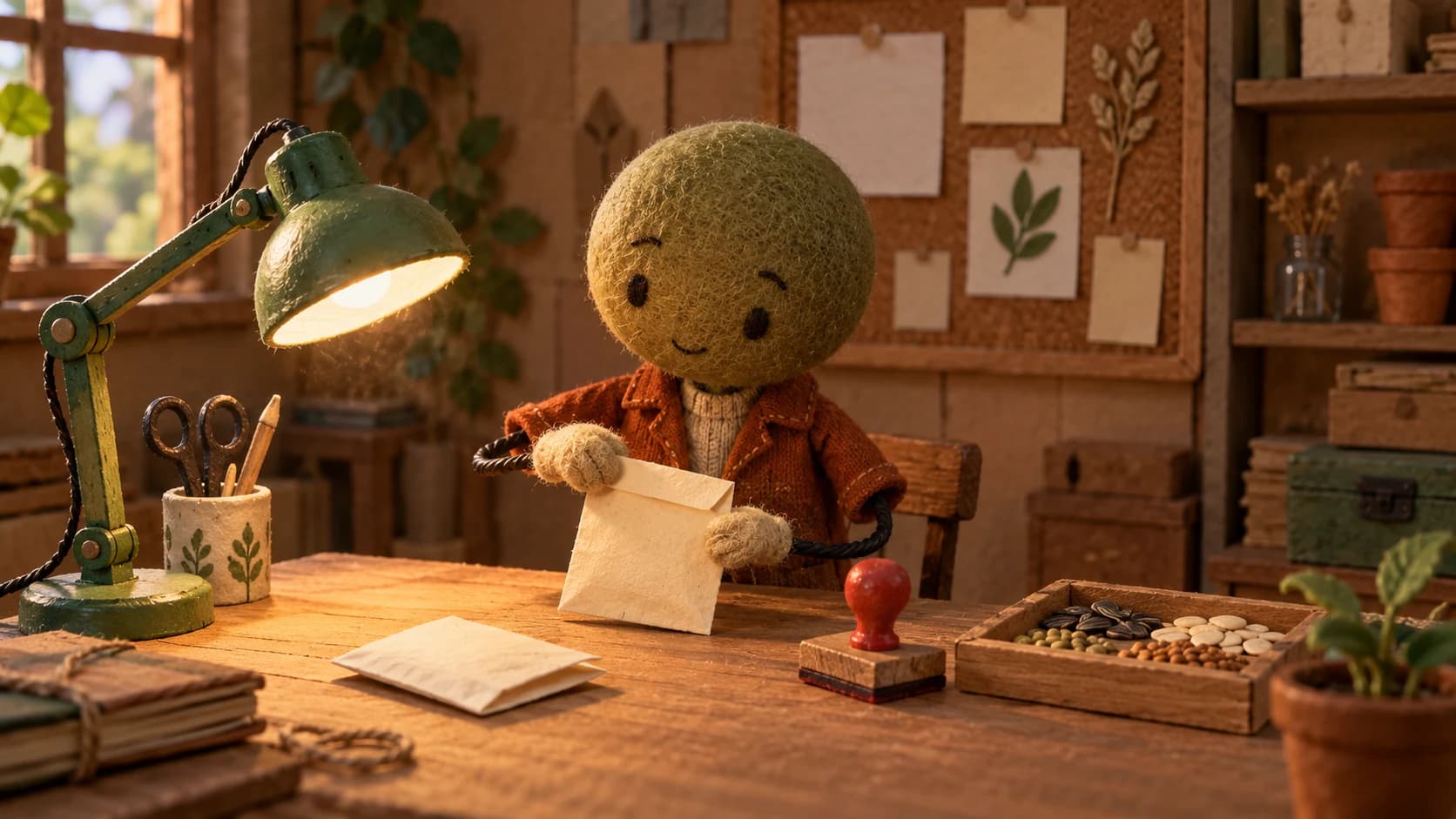
What defines the look
Composition
Stage the scene like a small theater set with a shallow depth plane, clear hand-to-prop spacing, and limited background objects.
Color
Use warm crafted materials with a controlled palette that separates puppet, hands, and working props.
Light
Create a warm artificial key light with visible contact shadows that make every object feel physically placed.
Material
Mix felt, paper, painted wood, wire, thread, cardboard, and small surface imperfections.
Motion
Use deliberate stepped timing and one physical interaction. The look suggests stop motion but does not guarantee an exact frame rate.
Build the key image
An original handcrafted stop-motion scene of a small felt field researcher seated at a miniature painted-wood desk, preparing a plain paper seed packet. The puppet has a round olive felt head, simple embroidered eyes, a short rust-colored fabric jacket, two clearly separated wire-supported arms, and small beige felt hands. On the desk are one blank folded packet, one red rubber stamp, a shallow tray of paper seeds, and a green desk lamp; every object is separate and fully visible. Medium 16:9 stage-like composition with shallow depth, a cardboard workshop wall, and a tiny corkboard with blank paper shapes in the background. Warm artificial spotlight from the left, soft fill from the front, and clear contact shadows. Felt fibers, paper edges, painted wood brush marks, thread seams, and subtle handmade asymmetry. No readable text, logos, extra limbs, clay surfaces, or polished CGI finish.Bring it into motion
Use the supplied felt-researcher desk image as the exact visual reference and first frame. Keep the camera locked in the same stage-like composition with only tiny organic physical bumps. The researcher uses both hands to fold the single paper seed packet once, places it flat, lifts the red rubber stamp, presses it down once, and returns the stamp to its original position. Motion should appear deliberately stepped and handcrafted while all objects maintain physical contact with the desk. Preserve the puppet's head, embroidered eyes, jacket, two arms, two hands, packet, stamp, seed tray, lamp, wall, materials, warm spotlight, and contact shadows. No cuts, extra fingers or limbs, prop duplication, melting, smooth CGI motion, readable text, or camera move.Use this look for
A handcrafted explainer
Use separate shots for picking up, demonstrating, and placing an object rather than one long multi-step action.
A product companion
Place an original puppet beside an authorized product and keep the product fixed while the puppet points or reacts.
Adjust the result
- The scene looks like smooth CGI: Reinforce real craft materials, contact shadows, surface imperfections, and stepped motion.
- Hands merge with the prop: Increase spacing in the key image and simplify the interaction to one grasp at a time.
- Props jump or duplicate: State exact object count and return positions; lock the camera.
Generation details
- Image model
- OpenAI ImageGen
- Video model
- Seedance 2.0 via BytePlus Ark
- Image reference used
- The key image shown above
- Aspect ratio
- 16:9
- Video duration
- 6.04 seconds
- Generation date
- 2026-10-19
- Selected output notes
- Felt, paper, and wood remain visible throughout the small hand-crafted action.
FAQ
Is this the same as claymation?
Claymation uses clay as its defining material. Stop-motion can use felt puppets, paper, wood, found objects, or mixed materials.
Does the prompt create a true frame-by-frame production?
No. It requests a stop-motion-inspired visual quality; the actual generation process and output cadence depend on the model and export.
Why use a locked camera?
It protects the miniature set and makes small physical interactions easier to read and evaluate.
Can I create a recurring puppet?
Yes. Reuse an approved reference and repeat construction, proportions, seams, colors, and facial details in every shot.
Create your own stop-motion scene
Adapt the image and motion prompts to your puppet or object, then continue the scene in Pixo.