Start With the Brief
Give Pixo a lesson plan, learning objective, audience, and source material. Add the audience, goal, visual direction, and target length so the agent can prepare a production plan.
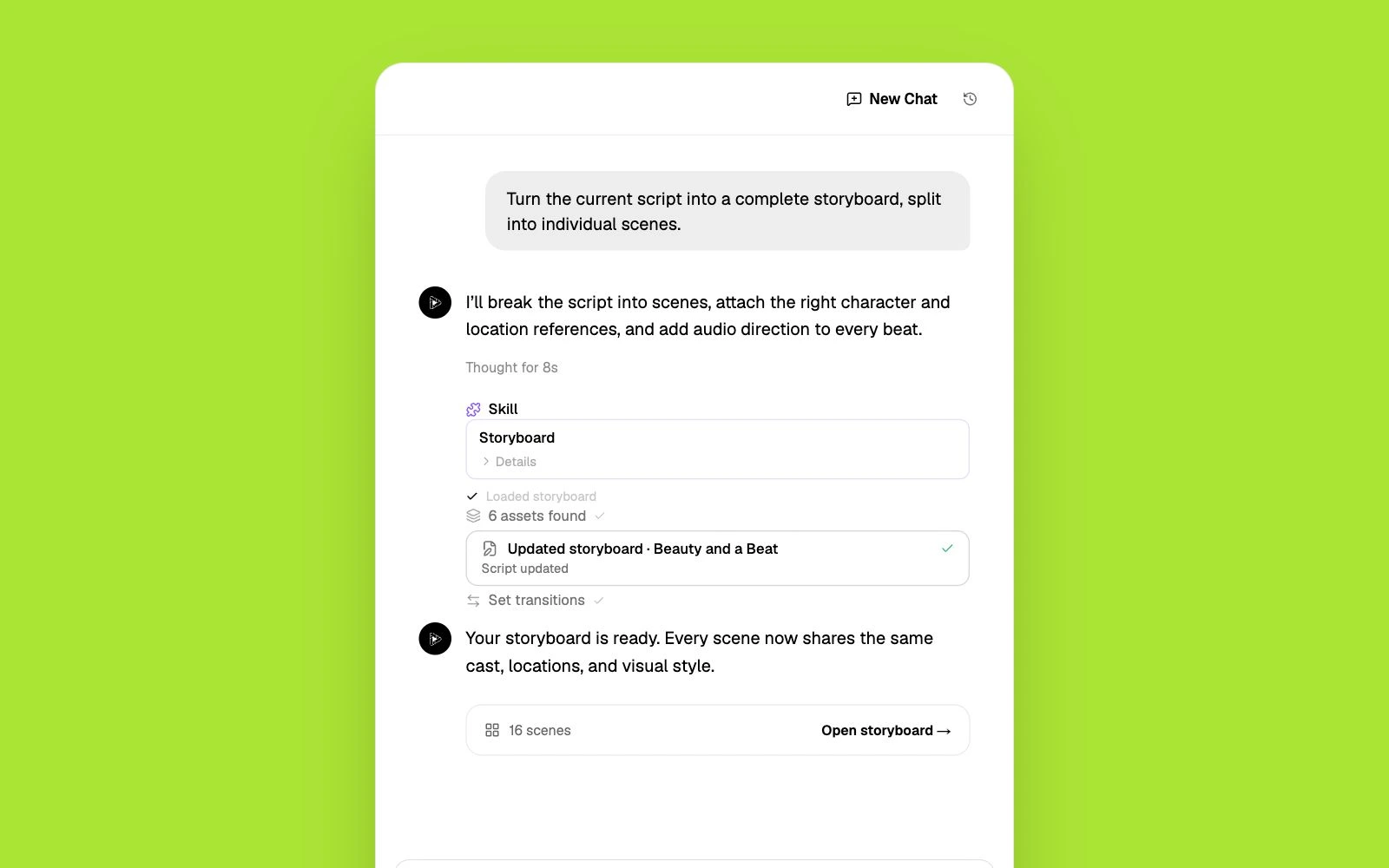
Turn a lesson plan, learning objective, audience, and source material into a structured educational video with clear visuals, narration, and reviewable scenes. Pixo's AI agent helps plan the storyboard, generate individual scenes with leading video models, add voice and sound, and refine the complete video in one workspace.
New users receive 200 credits on sign-up. Video generation requires a paid plan and sufficient credits.
A lecture without supporting visuals can leave an idea hard to follow. Plan examples beside the narration in a storyboard that serves the learning objective. For repeatable workplace skills or processes, build a training video around a defined learning outcome. For a longer factual narrative, create a documentary video from verified research and clearly identified illustrative scenes.
Preparing a separate visual for every explanation takes time. Organize the lesson into scenes before generating the images and motion it needs. When the idea needs a clear visual explanation, create an explainer video around the audience’s main questions. For scripture-based lessons, create a Bible story video from an approved translation, interpretation, and script.
Producing each lesson from scratch can stretch a course budget. Reuse approved references and revise individual storyboard scenes as the material develops. When viewers need to follow a specific process, make a tutorial video with one clear action per step. For younger audiences, create a kids story video with an age-appropriate brief and adult review of every scene.
Give Pixo a lesson plan, learning objective, audience, and source material. Add the audience, goal, visual direction, and target length so the agent can prepare a production plan.
Review the script and storyboard scene by scene. Adjust the visual direction, camera movement, references, dialogue, and sound cues before generating video.
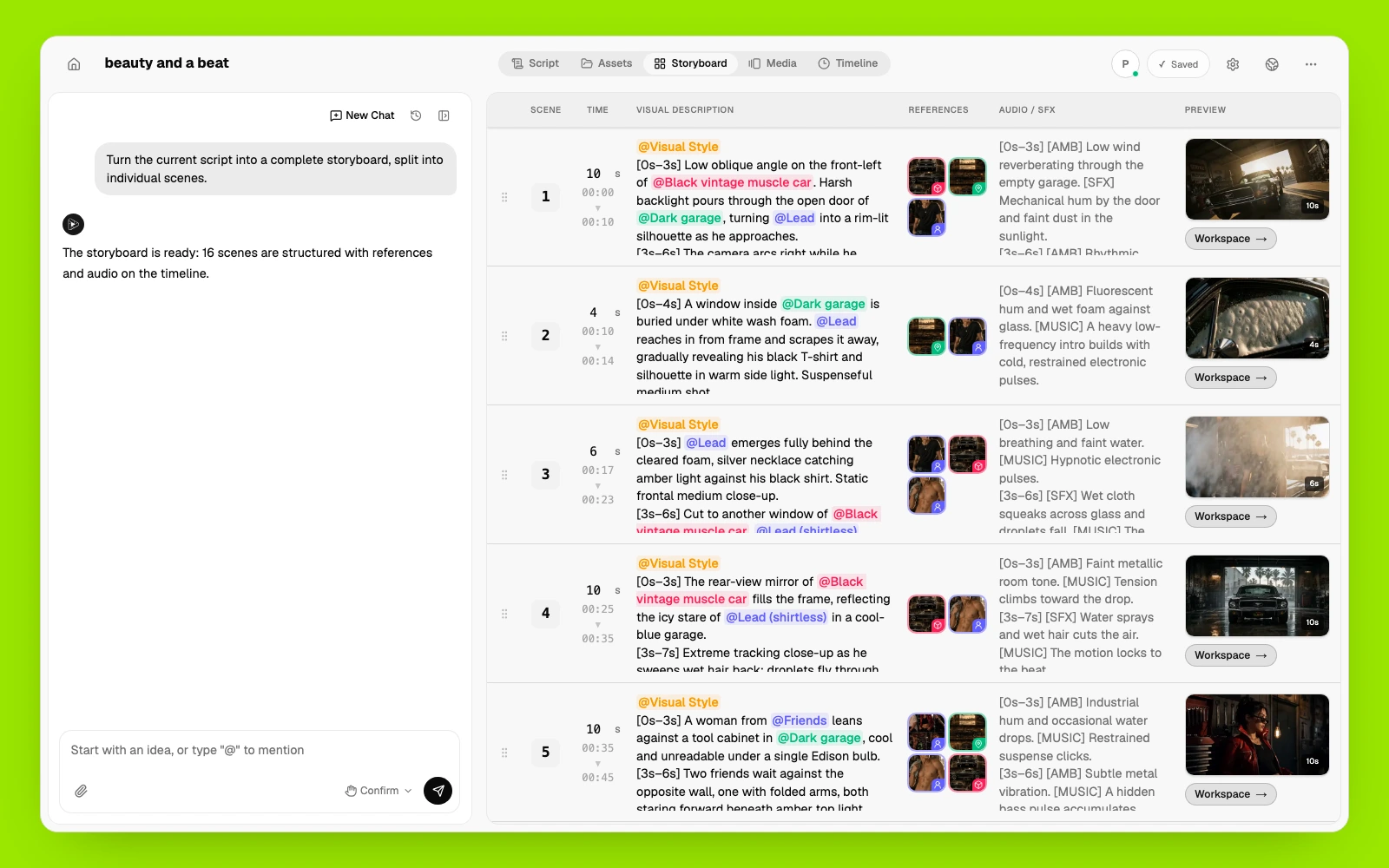
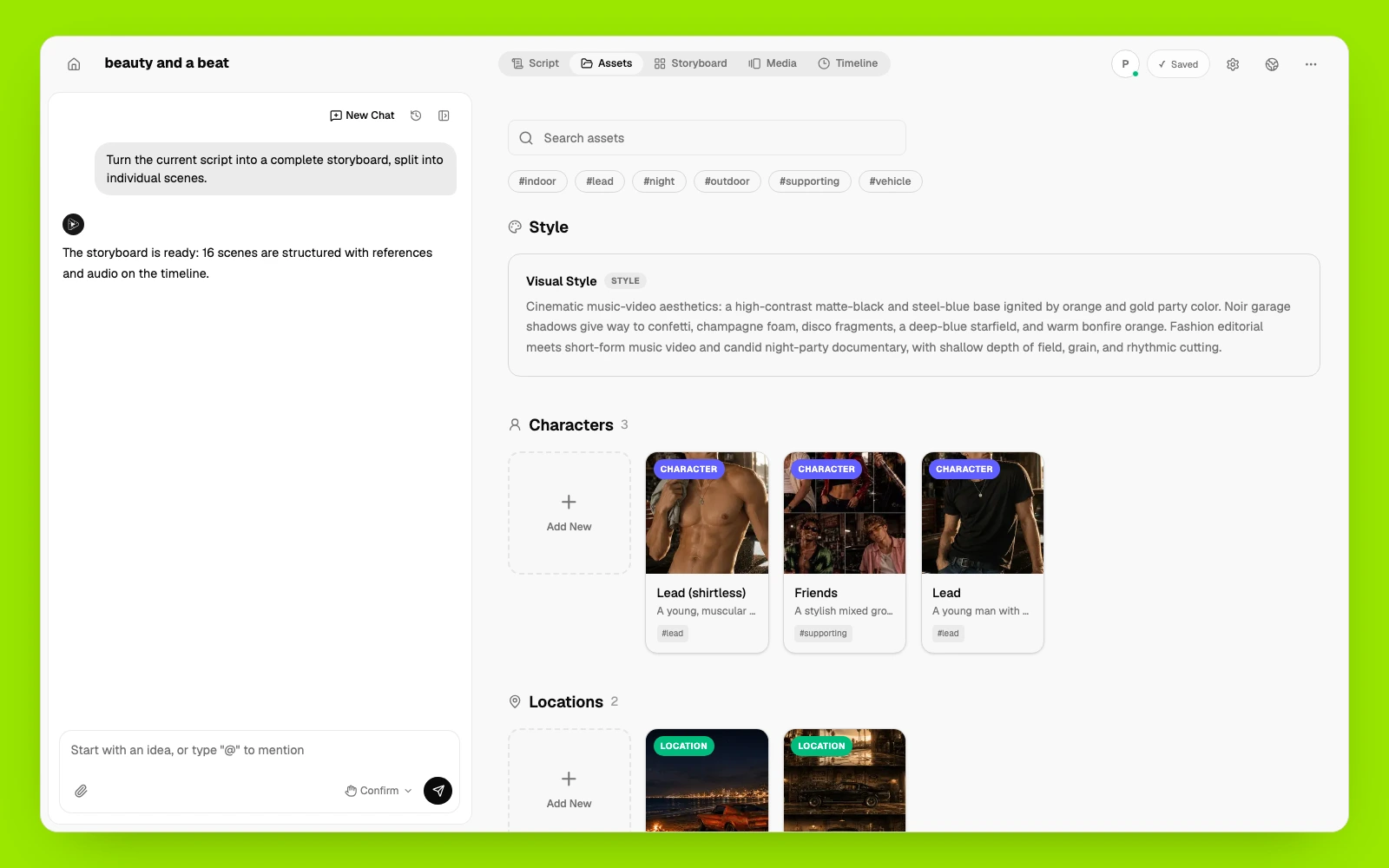
Reuse approved characters, products, locations, voices, and visual references so separate generated scenes belong in the same video.
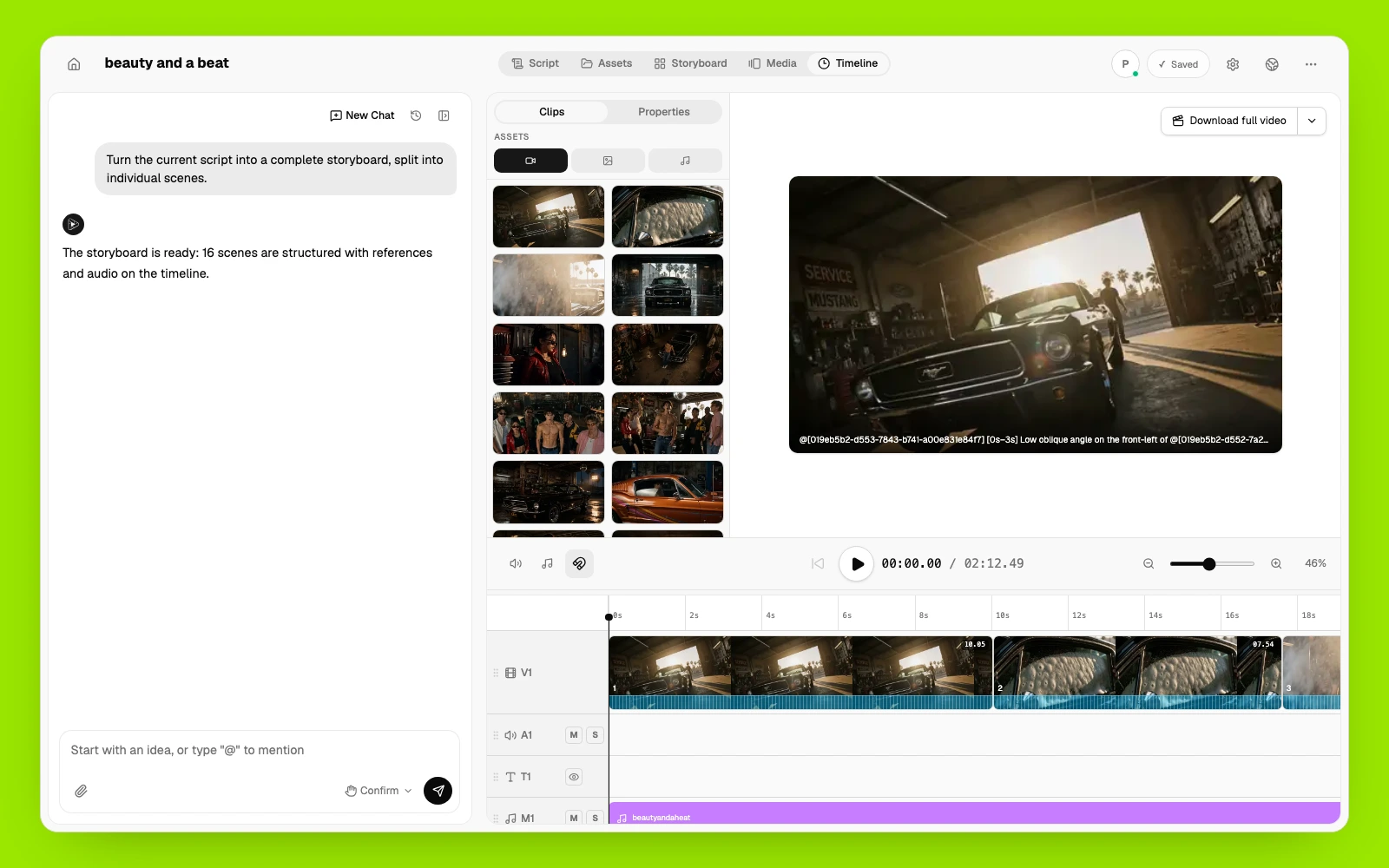
Review the generated scenes after generation. Regenerate only the shots that need changes, then arrange the approved video, voice, music, and sound in the final timeline.
Add a lesson plan, learning objective, audience, and source material. Define the audience, purpose, visual style, target length, and any details that must remain accurate.
Review the AI-generated script and storyboard. Rewrite individual scenes, reorder the sequence, and confirm the creative direction before generation.
Generate each scene with a supported AI video model suited to the shot. Change the prompt, references, or model when a scene needs a different result.
Review the complete sequence, add voice, music, and sound where needed, and refine individual scenes before exporting the finished video.
Provide the learning objective and approved source information, then review the resulting script and storyboard.
Plan visual examples for abstract ideas and have an appropriate reviewer check the generated facts and representations.
Reuse approved instructor, setting, and style references across lessons while reviewing each generated scene.
Choose a leading supported model for each demonstration or scenario and regenerate scenes that need correction.
Assemble approved visuals with narration, music, and sound and export a complete lesson for your chosen distribution workflow.
Explore related Pixo workflows and AI video models that can help you plan, generate, and refine a structured educational video with clear visuals, narration, and reviewable scenes.
Synthesia puts an AI avatar in front of your script for training and corporate comms. Pixo generates original video from a prompt — AI agents script, storyboard, and edit finished 1080p videos with real scenes, not a presenter.
Vyond assembles explainers from a per-seat character library. Pixo's AI agent scripts, storyboards, generates, and edits a finished 1080p video from one brief.
From bedroom studios to agency pipelines — hear it from the people making videos every day.
1,000,000+
videos generated
100,000+
creators worldwide
190+
countries
Hago videos para clientes de tres países y Pixo me resuelve la producción completa. Storyboard en la mañana, revisiones en la tarde, entrega el mismo día.
I run two faceless channels and this is the whole production stack. Script goes in, storyboard comes out, I tweak three panels and hit generate.
歌ってみた動画のMVを自分で作れるようになりました。絵コンテを直すだけで世界観が変わるのが楽しいです。
Clients ask for changes on Friday afternoon. I regenerate one scene instead of rebooking a crew — that alone pays for the subscription.
Every single I released this year has a video now. I storyboard the whole thing in an afternoon, regenerate the scenes that feel off, and export for YouTube and Reels in one go.
我做短剧账号,以前一集要剪两天。现在分镜自动生成,我只改镜头描述,当天就能更新。
Product demos used to take two weeks with a freelancer. Now I draft a script in the morning and the team reviews a finished cut after lunch. The scene-by-scene control is what sold me.
Je réalise des clips pour des artistes indépendants. Pixo me permet de tester trois directions artistiques dans la même journée — impensable avant.
브랜드 협찬 영상을 매주 두 편씩 만드는데, 장면별로 다시 생성할 수 있어서 수정 요청이 와도 무섭지 않아요.
Pixo thinks in shots, not clips. I can hold a location and a character across an entire sequence — that's the part every other AI tool gets wrong.
Common questions about creating a structured educational video with clear visuals, narration, and reviewable scenes with AI.
Create educational content with photorealistic visuals that bring lessons to life. Veo generates natural-looking scenes that make complex subjects concrete and memorable.
Create educational content with Kling's cinematic quality and dynamic camera work. Guide student attention with precise camera movements and engaging visual demonstrations.
New users receive 200 credits on sign-up. Video generation requires a paid plan and sufficient credits.