10 Real Estate Marketing Ideas for Video and Ads
Explore practical real estate marketing ideas for listing videos, social ads, open houses, neighborhood stories, follow-up content, and campaign planning.

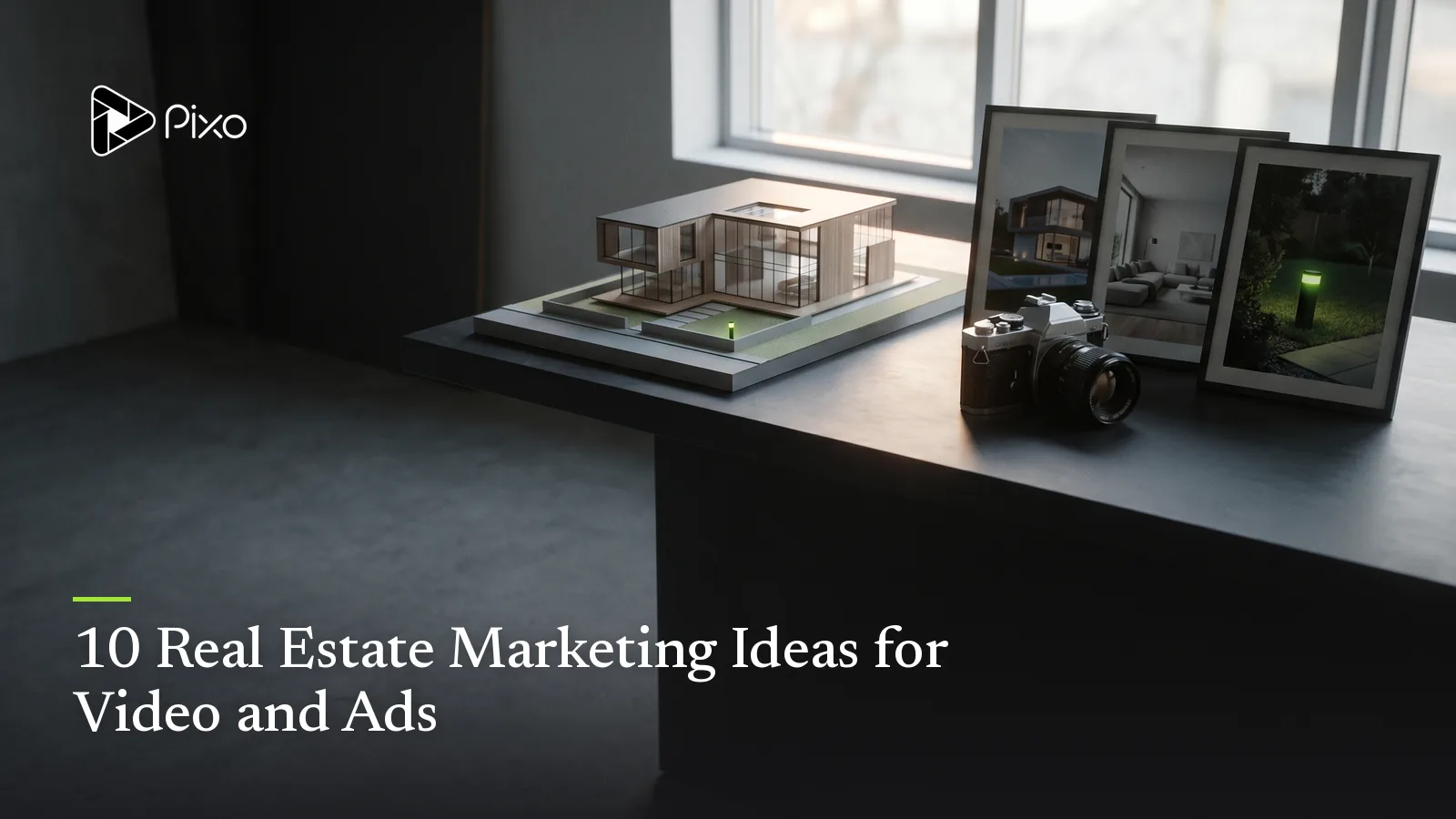
A property tour answers “what rooms are here?” Real estate marketing has a harder job: it must show why this property matters to a particular buyer or renter, in a format that earns attention and leads to a useful next step.
The strongest campaign does not need dozens of disconnected posts. It needs one accurate property story, then a small set of channel-specific variations. The ideas below are organized by campaign purpose so you can choose the angle that fits the listing rather than copying a trend that belongs to another home.
Real estate marketing ideas at a glance
| Campaign goal | Content idea | Best next action |
|---|---|---|
| Introduce a listing | One-benefit listing story | View details or book a showing |
| Build urgency | Open-house countdown | Save the date or register |
| Explain the space | Layout-led walkthrough | Request the floor plan |
| Reach a specific audience | “A day here” lifestyle sequence | Explore the neighborhood or inquire |
| Re-engage interest | New detail, price, or availability update | Return to the listing |
| Build agent trust | Local market or buying-process explainer | Follow, subscribe, or schedule a call |
Choose ideas the listing can support
Choose the campaign from decisions the property marketer controls: audience, supported selling point, channel, timing, and CTA. Exclude ideas that depend on inventing unavailable views, amenities, renovations, or neighborhood claims.
Give each video one clear communication job and reuse accurate listing information across the campaign. This keeps the variations connected without turning every post into the same full property tour.
1. Lead with one property advantage
“Beautiful three-bedroom home” could describe thousands of listings. Choose one supported reason to care: a connected kitchen and dining space, morning light, a flexible second bedroom, a recent price change, a genuine view, or proximity to a clearly identified destination.
Build the short video around that advantage. Establish the property, show the evidence, connect it to the intended audience, and end with the next step. The remaining listing features can live on the property page instead of competing for five seconds of attention.
2. Turn the floor plan into a story
Room-by-room tours often feel like a sequence of unrelated doors. A layout-led video explains movement: entry to living space, kitchen to dining area, bedroom separation, indoor-outdoor connection, or the relationship between work and family areas.
Use consistent screen direction and transitions that preserve orientation. If the real footage cannot show the connection in one move, combine several accurate angles and use simple labels added during editing.
3. Create an open-house countdown
An open-house campaign has a date-driven reason to return. Start with the strongest property image, show two or three specific spaces, then present the confirmed date, time, location information, and registration or contact action.
Create a main announcement and one shorter reminder instead of publishing the same video repeatedly. Update exact event details from the approved listing source before release.
4. Show a real use of one flexible space
A small room can become a useful marketing story when the listing supports more than one practical use. Show how the space could function as a home office, guest room, studio, reading room, or nursery through staging and sequencing.
Keep the permanent room structure unchanged. The creative value comes from helping the viewer imagine a use, not making the physical property look larger or materially different.
5. Build a morning-to-evening property story
Instead of another tour, organize the home around time: morning light in the kitchen, focused work in a quiet room, afternoon use of the shared space, and evening on the balcony or in the living area.
This format works when the real property media supports each moment. It also provides a natural sound arc, moving from quiet ambience to conversation, exterior sound, and an evening music cue.
6. Make a neighborhood route, not a claim montage
A useful neighborhood video follows a specific route: front door to transit, building to a park, or property to a named local destination. Use current, accurate locations and distances from the approved listing information.
Avoid generic superlatives. Showing the route and named places gives the viewer something concrete to evaluate without turning the video into a list of unsupported lifestyle claims.
7. Answer one buyer or renter question
Each repeated inquiry can become a focused short video: where storage is located, how parking works, what the second room fits, how the outdoor area connects, or what is included with the rental.
Use the exact answer from the listing team and pair it with the relevant footage. These clips can support direct follow-up, the listing page, social posts, and an FAQ section without rebuilding the main campaign.
8. Create a renovation or staging concept carefully
Illustrative staging can help viewers understand furniture scale or layout potential. Keep walls, windows, doors, fixtures, and room proportions aligned with the real space, and identify the visualization as illustrative.
Use the concept as a supporting asset rather than replacing the genuine listing photos and footage. The real property should remain easy to distinguish.
9. Turn a price or availability change into a new message
A campaign update deserves new context, not merely a sticker on the old video. State what changed, repeat the most relevant property advantage, and give the viewer one direct route back to the current listing information.
Keep the update concise. The purpose is to re-open consideration among people who already recognize the property.
10. Build an agent knowledge series
Not every real estate video needs to sell one listing. Short explainers can answer local process questions, prepare first-time buyers, clarify terminology, or show how to evaluate a property feature.
Connect each educational video to a logical next step: a checklist, neighborhood guide, saved search, consultation, or related listing category. This creates useful content between listing launches and gives the agent a reason to earn repeat attention.
Turn one listing into a small campaign
Use a simple campaign matrix before producing assets:
| Asset | Audience | Message | Format | CTA |
|---|---|---|---|---|
| Main listing story | Qualified buyers | Strongest supported property advantage | Website and feed video | View listing |
| Vertical cut | Local discovery audience | Visual hook plus one benefit | 9:16 short video | Learn more |
| Open-house reminder | Warm prospects | Date, time, and reason to attend | Story/email clip | Register or save date |
| Question clip | Interested viewers | One practical answer | Social or direct follow-up | Book a showing |
This prevents the campaign from becoming four copies of the same edit. Each version inherits the approved facts and media but performs a different job.

Plan the real estate video in Pixo
Start with the property and one marketing goal. The Agent can propose a campaign direction and storyboard from that simple starting point. If you already know the target audience, supported selling point, channel, duration, CTA, or available media, add them as controls rather than prerequisites. The AI Real Estate Video Maker provides the production path for turning verified property material into a planned sequence. Review whether every shot has a role and every property claim is supported before generating any additional scene.
Use real listing media wherever the exact property must be represented. Add graphic text, price, dates, measurements, contact details, and disclosures from the approved campaign copy during assembly. For the wider campaign, the AI Marketing Video Maker connects the brief, scene plan, references, and final sequence.
Choose ideas by funnel stage
For discovery, lead with a strong visual or one property advantage. For consideration, explain layout, neighborhood route, and practical questions. For action, use open-house reminders, availability changes, and direct showing CTAs.
Do not ask one video to complete the entire funnel. A discovery clip can earn the next view; the listing page and follow-up content can carry the full details.

Create AI videos with Pixo
Turn any idea into a publish-worthy video. One sentence is all it takes.
FAQ
What is the best real estate marketing idea for a new listing?
Start with one short listing video built around the strongest verified selling point, then adapt it into vertical clips, email content, and an open-house reminder.
What should a real estate video include?
Include a clear property hook, an understandable sequence of spaces, verified details, a reason the property fits the intended audience, and one direct next step.
Can AI help make real estate marketing videos?
AI can help structure the campaign, draft the storyboard, develop supporting scenes, and assemble audio, while the property facts and exact listing media remain the campaign source of truth.
How do I market a property without making another generic tour?
Give each asset one angle, such as morning light, flexible layout, walkability, entertaining space, renovation potential, or an upcoming open house.
How many videos should I make for one listing?
Create only the versions the campaign can use: one main listing story, shorter channel cuts, and specific follow-ups for an open house, price change, or availability update.
Plan the next property campaign
Use the AI Real Estate Video Maker to organize verified property material into a clear sequence, then adapt the approved story for the campaign formats you actually need.
Generate AI summary
From idea to finished video.
In one conversation.
Start CreatingNo credit card required • Free 200 credits