Start with a conversation.
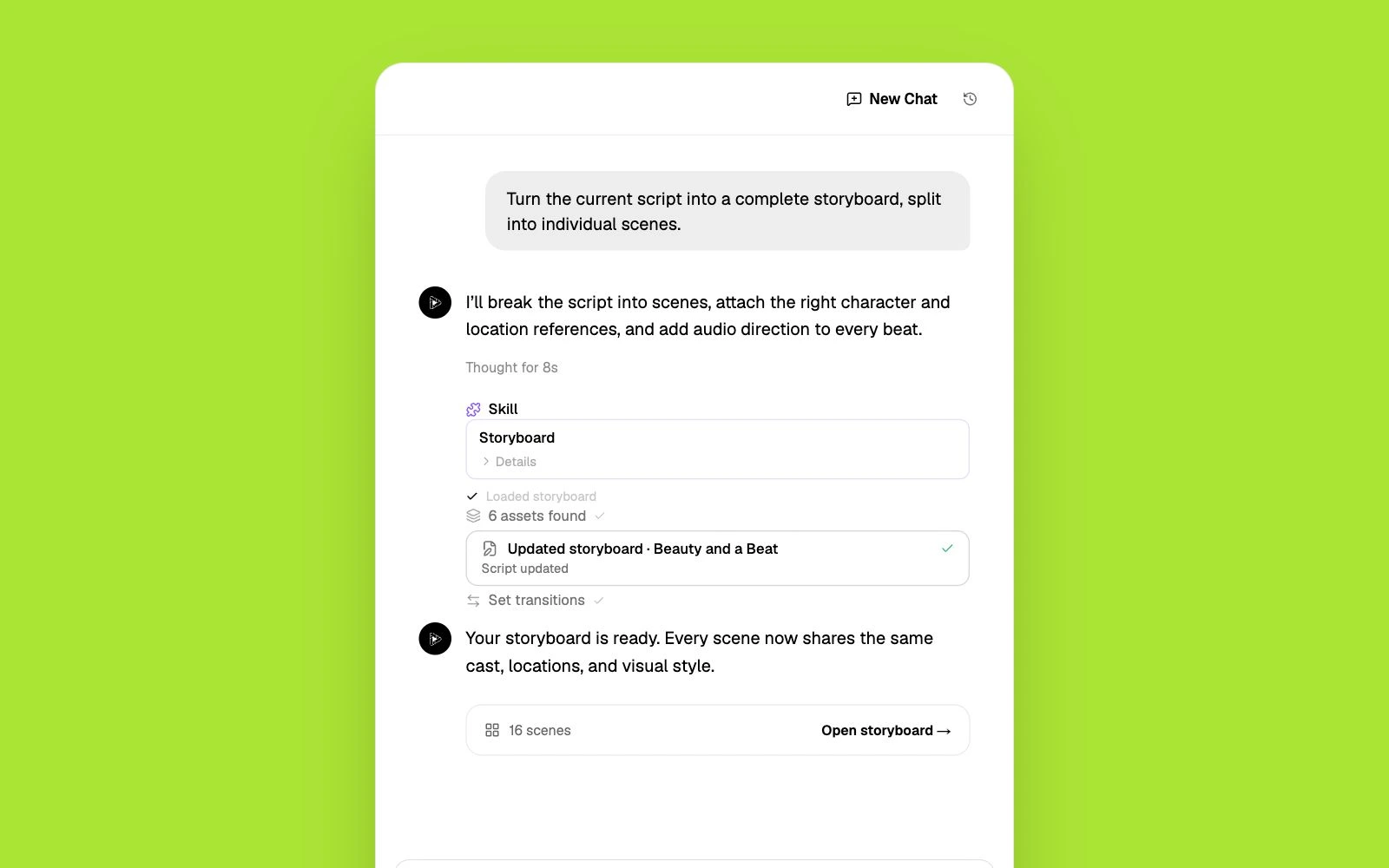
Tell Pixo what you’re making—your idea, audience, style, and length. The agent turns your brief into a script and a production-ready plan.
MagicLight turns prose into long story videos and gives you a scene-level storyboard. Pixo goes a level deeper — shot-by-shot direction, a named model chosen per shot, and cost you can see before you spend it.
MagicLight AI is a long-form story-video generator. You paste up to twelve thousand characters of ordinary prose, it detects where scenes change, and it builds a storyboard you can edit — merging, splitting, or moving scene breaks before anything renders. It adds narration in a dozen languages, voice cloning, lipsync, subtitles, and background music, and it markets single projects up to fifty minutes long. Characters you create can carry into later stories. It is a real product with a real workflow, and it is cheap to start. Two things send people looking for an alternative. The first is cost visibility: the most common complaint in public reviews is that credit consumption per generation is not shown before you generate, so a short clip can quietly take a large share of a monthly allowance. The second is granularity — the storyboard segments your text into scenes, but within a scene there is no camera, framing, or timing to direct, and users regularly report characters changing appearance or wardrobe between scenes despite the consistency feature. If you want to direct shots rather than approve scene breaks, that is where MagicLight stops.
Credit consumption varies by model and setting, and it is not surfaced before you press generate. The recurring complaint in public reviews is short clips consuming a disproportionate share of a monthly plan with no warning.
The storyboard works at the level of scene breaks detected in your prose. Inside a scene there is no shot list to direct — no framing, no camera move, no per-shot reference — so the visual decisions are made for you.
Persistent characters are the headline feature, but reviewers frequently report the same character rendering differently from one scene to the next, with clothing and features changing between generations.
Both start from text and both give you a storyboard. The difference is how much of the direction you control, and how much you know before spending credits.
| Criterion | Pixo | MagicLight AI |
|---|---|---|
| Built for | Directing a multi-shot video shot by shot — ads, product demos, music videos, short films | Turning long prose into long narrated story video, aimed at kids' stories, explainers, and faceless channels |
| Storyboard granularity | Shot level — every shot has its own prompt, references, model, and duration, and you can change any of them | Scene level — you merge, split, and move the scene breaks it detects in your text |
| Model choice | The agent picks a named model per shot from Seedance, Kling, Veo, Sora, Hailuo and PixVerse, and you can override it | Aggregates many third-party models; the roster changes and per-model credit cost is not published |
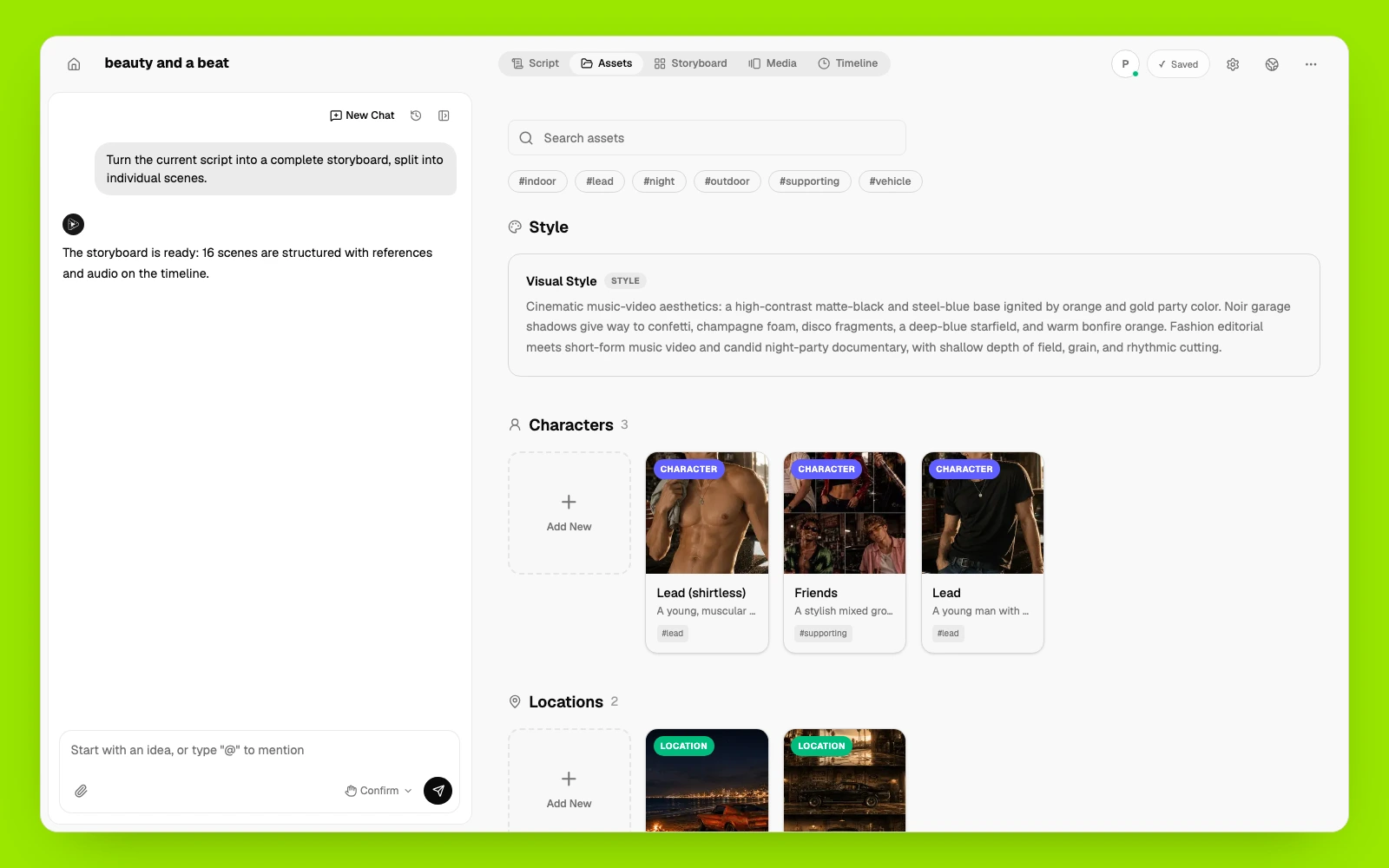
| Character consistency | Shared assets anchor each shot so faces, wardrobe, and locations stay fixed across the whole video | Reusable characters across projects, though users commonly report drift between scenes |
| Maximum length | Built for short and mid-length pieces — length comes from the number of shots you storyboard | Markets single projects up to 50 minutes, which is longer than Pixo targets |
| Pricing approach | 200 free credits to start, then monthly plans with top-ups; per-generation cost is visible in the workspace | Free tier without commercial rights; paid plans from about $6 to $75 per month on a credit meter |
Competitor details are based on publicly available information as of each page's last update and may change. Always verify current pricing and features on the vendor's site.
Tell Pixo what you’re making—your idea, audience, style, and length. The agent turns your brief into a script and a production-ready plan.
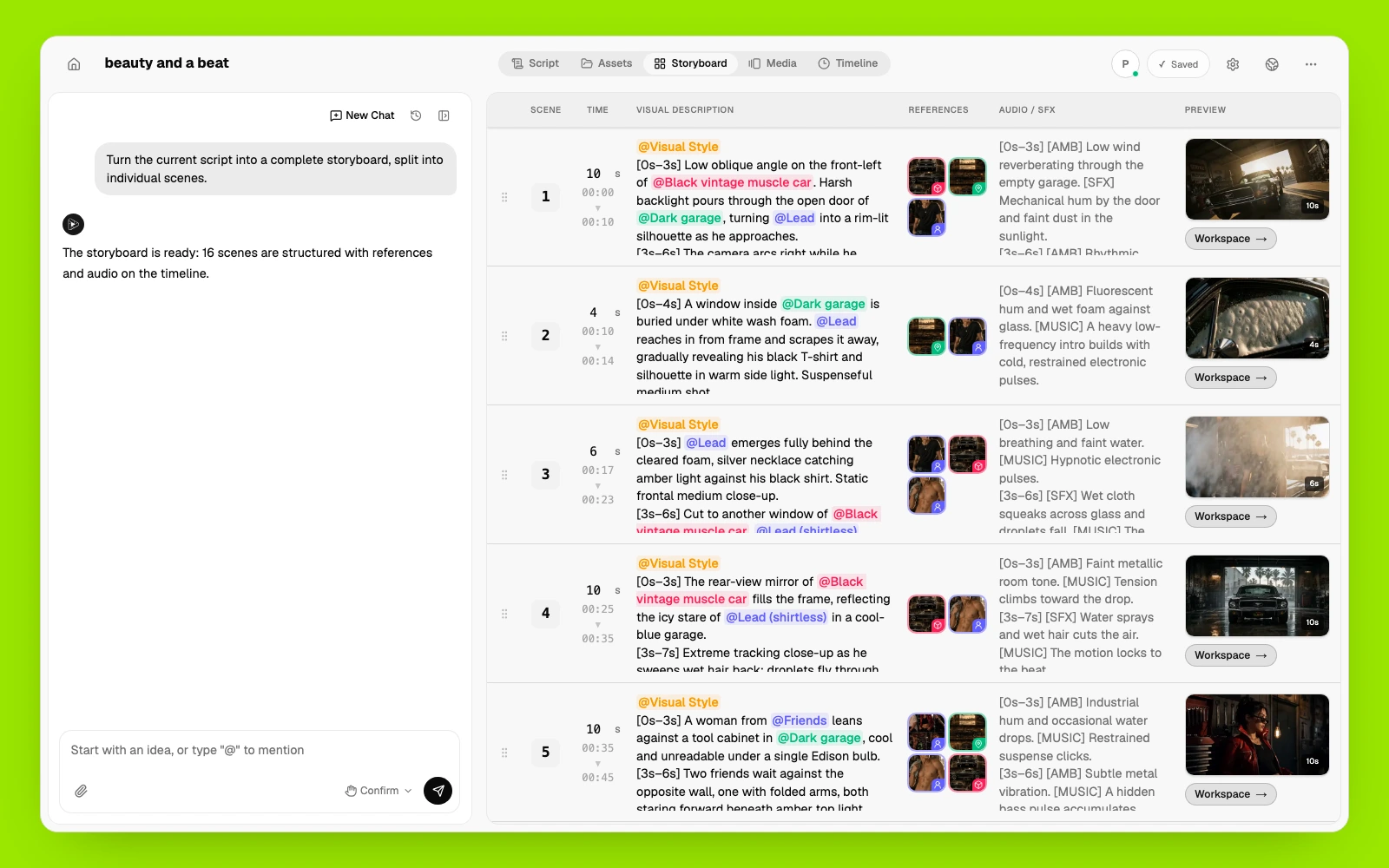
Pixo AI reviews every scene, camera move, reference, and sound cue before generation. Change one shot without starting the whole video over.
Pixo AI manages and reuses the same characters, products, locations, voices, and visual styles across every scene.
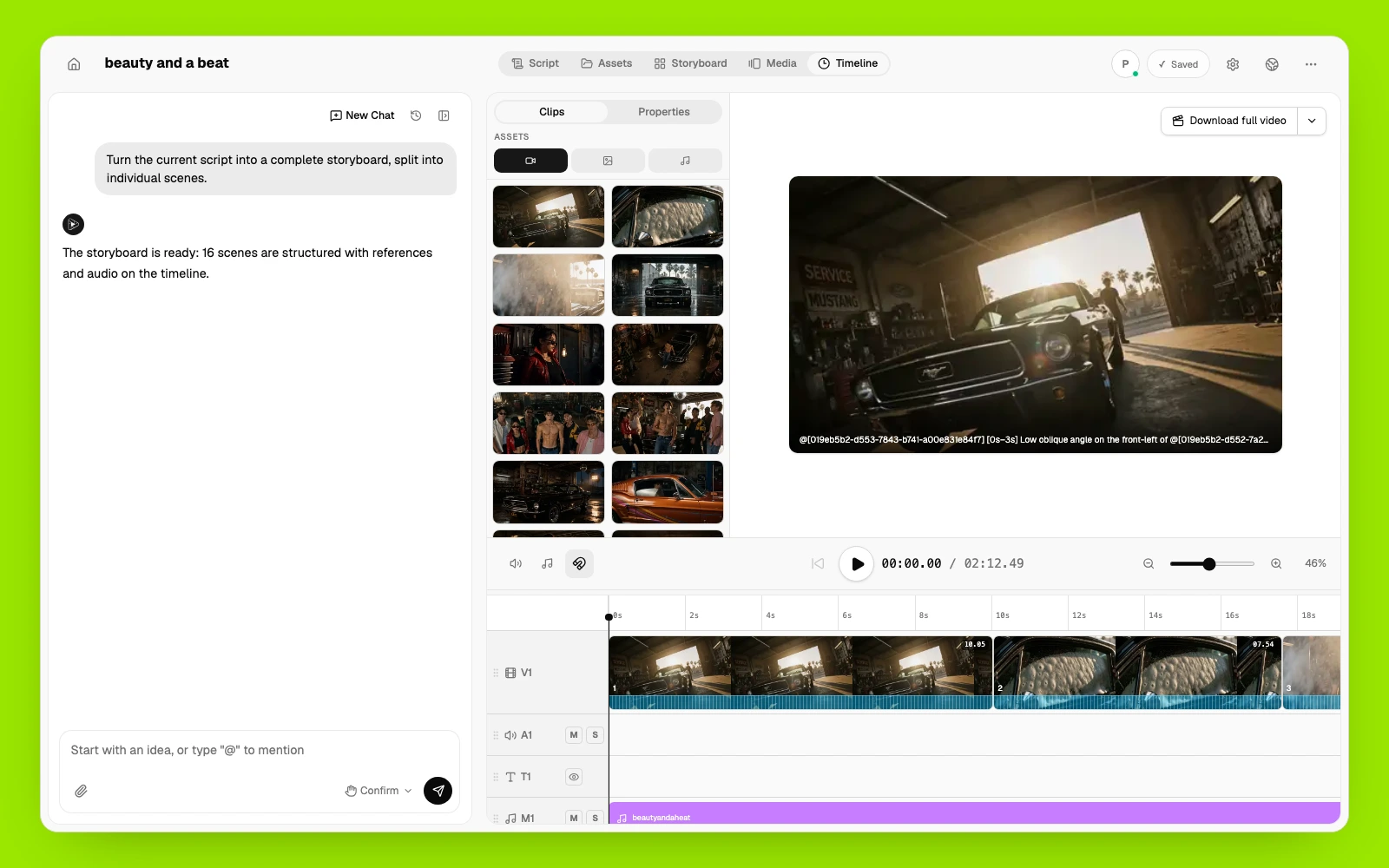
Pixo AI arranges clips, voiceover, music, and sound on one timeline. Regenerate what changed, keep what works, and export the finished video.
If long-form narration or a script-to-slideshow workflow is what you actually need, these compete with MagicLight directly.
Turns blog posts and long scripts into narrated videos assembled from stock footage, with automatic captions.
Best for: faceless channels repurposing written content on a tight schedule.
Script-to-video with a very large multilingual voice library and stock-backed scene assembly.
Best for: creators who care most about narration quality and language coverage.
Template-driven video creation with a large stock library and a text-based editing workflow.
Best for: marketers producing volume from templates rather than generating original footage.
A storyboard-first pre-production suite with detailed control over frames, characters, and camera.
Best for: filmmakers who want to control the setup of every frame themselves.
Paste the script or premise you would have given MagicLight. The agent writes or reworks it into a shot list rather than segmenting it into scenes.
Every shot shows its prompt, its references, its model, and its cost. Adjust framing, swap a model, lock a character, or cut a shot before anything renders.
Approve the shots that work and regenerate only the ones that don't. Pixo assembles the cut with voiceover, music, and effects and exports 1080p.
Common questions from creators comparing MagicLight AI with Pixo.
Describe your video and Pixo's AI agent does the rest — script, storyboard, generation with Seedance, Kling & Veo, and a finished edit. Free 200 credits, no credit card.
Pictory turns scripts and blog posts into stock-footage slideshows. Pixo generates original footage — an AI agent storyboards your script and renders every shot with top video models.
Fliki assembles stock clips under a voiceover. Pixo generates original footage — AI agents script, storyboard, and edit real generative video in 1080p.
Pixo generates original footage from one prompt — an AI director scripts, storyboards, and edits a finished 1080p video with voiceover and music. Free 200 credits to start.
Turn a finished script or draft into a storyboarded, multi-scene video that follows the script. Pixo's AI agent helps plan the storyboard, generate individual scenes with leading video models, add voice and sound, and refine the complete video in one workspace.
Plan first, generate second. Pixo's storyboard-first workflow gives you scene-by-scene control over your video — with multi-model generation, voiceover, and SFX built in.
Turn a topic, outline, or script into a structured YouTube video with a hook, connected scenes, voice, sound, and a final cut. Pixo's AI agent helps plan the storyboard, generate individual scenes with leading video models, add voice and sound, and refine the complete video in one workspace.
No credit card required • Free 200 credits